


 Cart
Cart
 sales@molnova.com



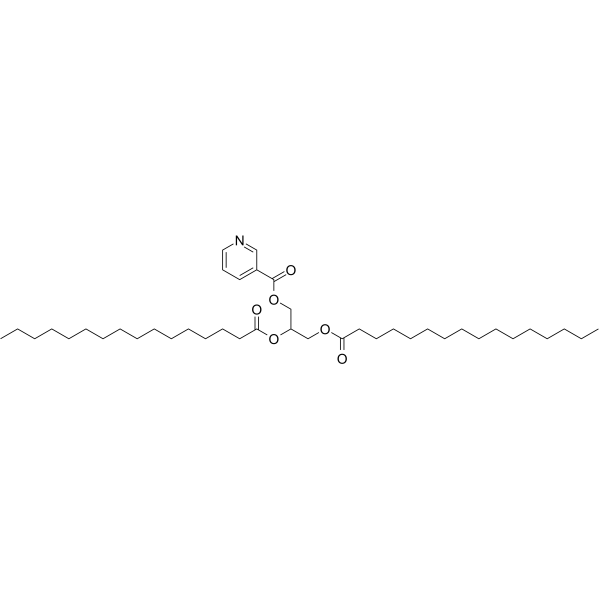
S16961
CAS No. 153874-14-7
S16961( S169611 )
Catalog No. M26429 CAS No. 153874-14-7
S16961 is an agonist of nicotinic receptor.
Purity : >98% (HPLC)
 COA
Datasheet
HNMR
HPLC
MSDS
Handing Instructions
COA
Datasheet
HNMR
HPLC
MSDS
Handing Instructions
| Size | Price / USD | Stock | Quantity |
| 2MG | 67 | In Stock |


|
| 5MG | 117 | In Stock |
|
| 10MG | 186 | In Stock |
|
| 25MG | 373 | In Stock |
|
| 50MG | 537 | In Stock |
|
| 100MG | 762 | In Stock |
|
| 200MG | 1004 | In Stock |
|
| 500MG | Get Quote | In Stock |
|
| 1G | Get Quote | In Stock |
|
Biological Information
-
Product NameS16961
-
NoteResearch use only, not for human use.
-
Brief DescriptionS16961 is an agonist of nicotinic receptor.
-
DescriptionS16961 is an agonist of nicotinic receptor.
-
In Vitro——
-
In Vivo——
-
SynonymsS169611
-
PathwayOthers
-
TargetOther Targets
-
Recptor——
-
Research Area——
-
Indication——
Chemical Information
-
CAS Number153874-14-7
-
Formula Weight674.02
-
Molecular FormulaC41H71NO6
-
Purity>98% (HPLC)
-
Solubility——
-
SMILESCCCCCCCCCCCCCCCC(=O)OCC(COC(=O)c1cccnc1)OC(=O)CCCCCCCCCCCCCCC
-
Chemical Name——
Shipping & Storage Information
-
Storage(-20℃)
-
ShippingWith Ice Pack
-
Stability≥ 2 years
Reference
1.Synthesis of Substituted β‐Functionalised Styrenes by Microwave‐Assisted Olefin
molnova catalog



related products
-
Lysipressin
Lysipressin,?Induces contraction of the rabbit urinary bladder smooth muscle, activate adenylate-cyclase.?
-
1,4-Dipierazino-2,3,...
1,4-Dipierazino-2,3,5,6-tetrafluorobenzene is a chemical compound.
-
Methyl 4-caffeoylqui...
Methyl 4-caffeoylquinate is a natural product for research related to life sciences.
