


 Cart
Cart
 sales@molnova.com



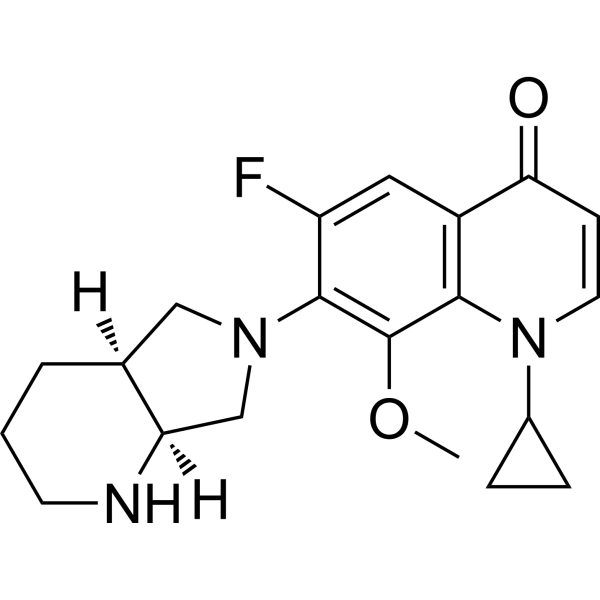
Decarboxy Moxifloxacin
CAS No. 1322062-57-6
Decarboxy Moxifloxacin( —— )
Catalog No. M26147 CAS No. 1322062-57-6
Decarboxylated moxifloxacin is a decarboxylated compound of moxifloxacin.
Purity : >98% (HPLC)
 COA
Datasheet
HNMR
HPLC
MSDS
Handing Instructions
COA
Datasheet
HNMR
HPLC
MSDS
Handing Instructions
| Size | Price / USD | Stock | Quantity |
| 1 mL x 10 mM in DMSO | 89 | In Stock |


|
| 5MG | 82 | In Stock |
|
| 10MG | 122 | In Stock |
|
| 25MG | 204 | In Stock |
|
| 50MG | 298 | In Stock |
|
| 100MG | 423 | In Stock |
|
| 200MG | Get Quote | In Stock |
|
| 500MG | Get Quote | In Stock |
|
| 1G | Get Quote | In Stock |
|
Biological Information
-
Product NameDecarboxy Moxifloxacin
-
NoteResearch use only, not for human use.
-
Brief DescriptionDecarboxylated moxifloxacin is a decarboxylated compound of moxifloxacin.
-
DescriptionDecarboxylated moxifloxacin is a decarboxylated compound of moxifloxacin. Moxifloxacin is an oral active 8-methoxy quinolone antibiotic used in acute bacterial sinusitis, chronic bronchitis, acute bacterial deterioration, and community-acquired pneumonia.
-
In Vitro——
-
In Vivo——
-
Synonyms——
-
PathwayOthers
-
TargetOther Targets
-
RecptorTrk
-
Research Area——
-
Indication——
Chemical Information
-
CAS Number1322062-57-6
-
Formula Weight357.429
-
Molecular FormulaC20H24FN3O2
-
Purity>98% (HPLC)
-
Solubility——
-
SMILES[H][C@]12CN(C[C@@]1([H])NCCC2)c1c(F)cc2c(c1OC)n(ccc2=O)C1CC1
-
Chemical Name——
Shipping & Storage Information
-
Storage(-20℃)
-
ShippingWith Ice Pack
-
Stability≥ 2 years
Reference
1.Emiliano Cocco, et al. NTRK fusion-positive cancers and TRK inhibitor therapy. Nat Rev Clin Oncol. 2018 Dec;15(12):731-747.
molnova catalog



related products
-
Hydroxythiohomosilde...
Hydroxythiohomosildenafil (Sulfohydroxyhomo sildenafil) is a sildenafil analog that may be used to study erectile dysfunction.
-
DMAPP triammonium
DMAPP triammonium (Dimethylallyl diphosphate triammonium) is one of the prerequisite substances for an isoprenoid involved in the mevalonate (MVA) pathway, which can be used in the study of metabolism-related diseases.
-
3-Phenoxybenzaldehyd...
3-phenoxybenzaldehyde cyanohydrin is an intermediate of pyrethroid insecticides such as fenpermethrin.
