


 Cart
Cart
 sales@molnova.com



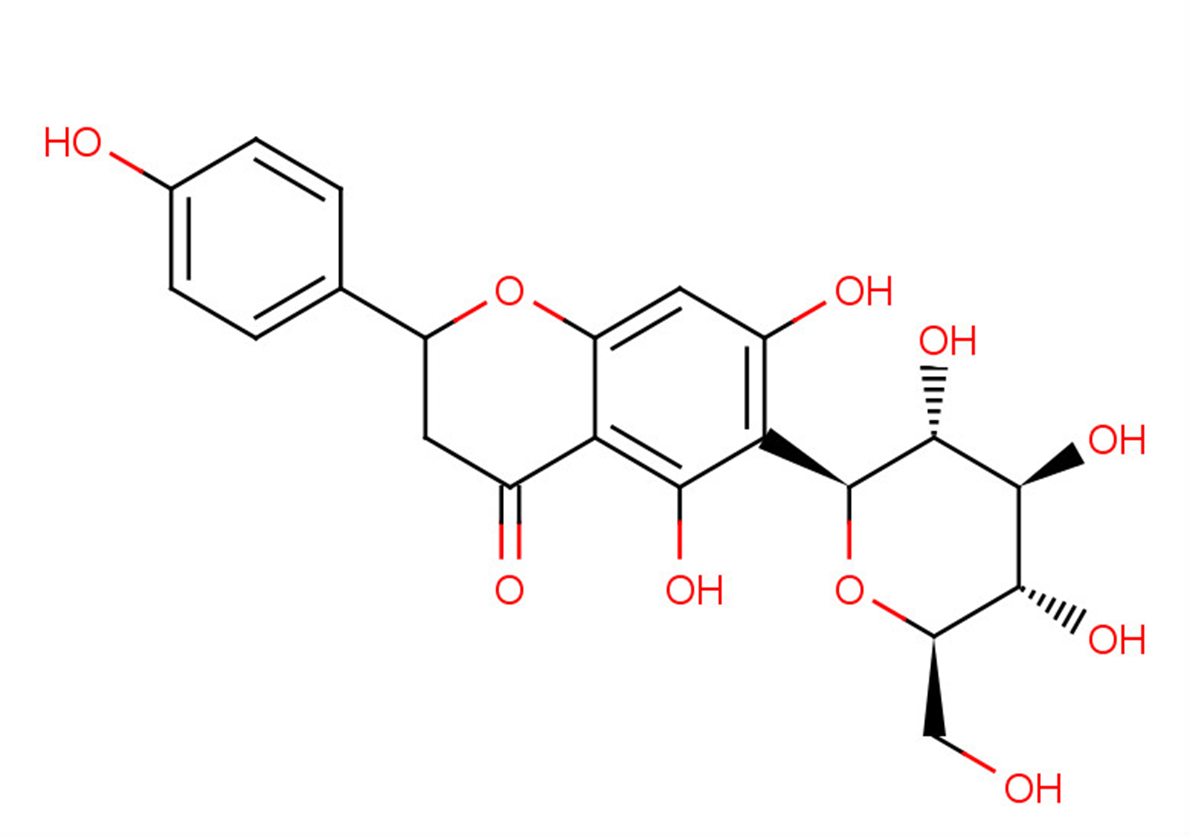
Hemiphloin
CAS No. 71963-94-5
Hemiphloin( —— )
Catalog No. M24730 CAS No. 71963-94-5
Hemiphloin is a natural flavonoid.
Purity : >98% (HPLC)
 COA
Datasheet
HNMR
HPLC
MSDS
Handing Instructions
COA
Datasheet
HNMR
HPLC
MSDS
Handing Instructions
| Size | Price / USD | Stock | Quantity |
| 1 mL x 10 mM in DMSO | 406 | In Stock |


|
| 5MG | 328 | In Stock |
|
| 10MG | 486 | In Stock |
|
| 25MG | 791 | In Stock |
|
| 50MG | 1070 | In Stock |
|
| 100MG | Get Quote | In Stock |
|
| 200MG | Get Quote | In Stock |
|
| 500MG | Get Quote | In Stock |
|
| 1G | Get Quote | In Stock |
|
Biological Information
-
Product NameHemiphloin
-
NoteResearch use only, not for human use.
-
Brief DescriptionHemiphloin is a natural flavonoid.
-
DescriptionHemiphloin is a natural flavonoid.
-
In Vitro——
-
In Vivo——
-
Synonyms——
-
PathwayOthers
-
TargetOther Targets
-
RecptorOthers
-
Research Area——
-
Indication——
Chemical Information
-
CAS Number71963-94-5
-
Formula Weight434.4
-
Molecular FormulaC21H22O10
-
Purity>98% (HPLC)
-
Solubility——
-
SMILESO=C1CC(C2=CC=C(O)C=C2)OC3=CC(O)=C([C@H]4[C@@H]([C@H]([C@@H]([C@@H](CO)O4)O)O)O)C(O)=C13
-
Chemical Name——
Shipping & Storage Information
-
Storage(-20℃)
-
ShippingWith Ice Pack
-
Stability≥ 2 years
Reference



-
4-Methylumbelliferyl...
4-Methylumbelliferyl-α-D-Glucopyranoside (4-Methylumbelliferyl-α-D-Glucose) is a fluorescent substrate for α-glucosidase, which releases the fluorescent moiety 4-methylumbelliferyl (4-MU) upon cleavage. 4-MU has pH-dependent fluorescence excitation activity, with excitation wavelengths of 320 nm at low pH (1.97-6.72) and 360 nm at high pH (7.12-10.3), respectively. The emission wavelength of 4-Methylumbelliferyl-α-D-Glucopyranoside increases with decreasing pH, ranging from 445-455 nm. 4-Methylumbelliferyl-α-D-Glucopyranoside can be used as a biomarker for Fabry and Pompe diseases to quantify α-glucosidase activity in infant blood spot samples.
-
Heptanoic acid
Heptanoic acid is an organic compound composed of a seven-carbon chain terminating in a carboxylic acid. It is an oily liquid with an unpleasant rancid odor. It contributes to the odor of some rancid oils. It is slightly soluble in water but well soluble in ethanol and ether.
-
Casein Kinase Substr...
Casein Kinase Substrates 3 is a substrate of casein kinase.
