


 Cart
Cart
 sales@molnova.com



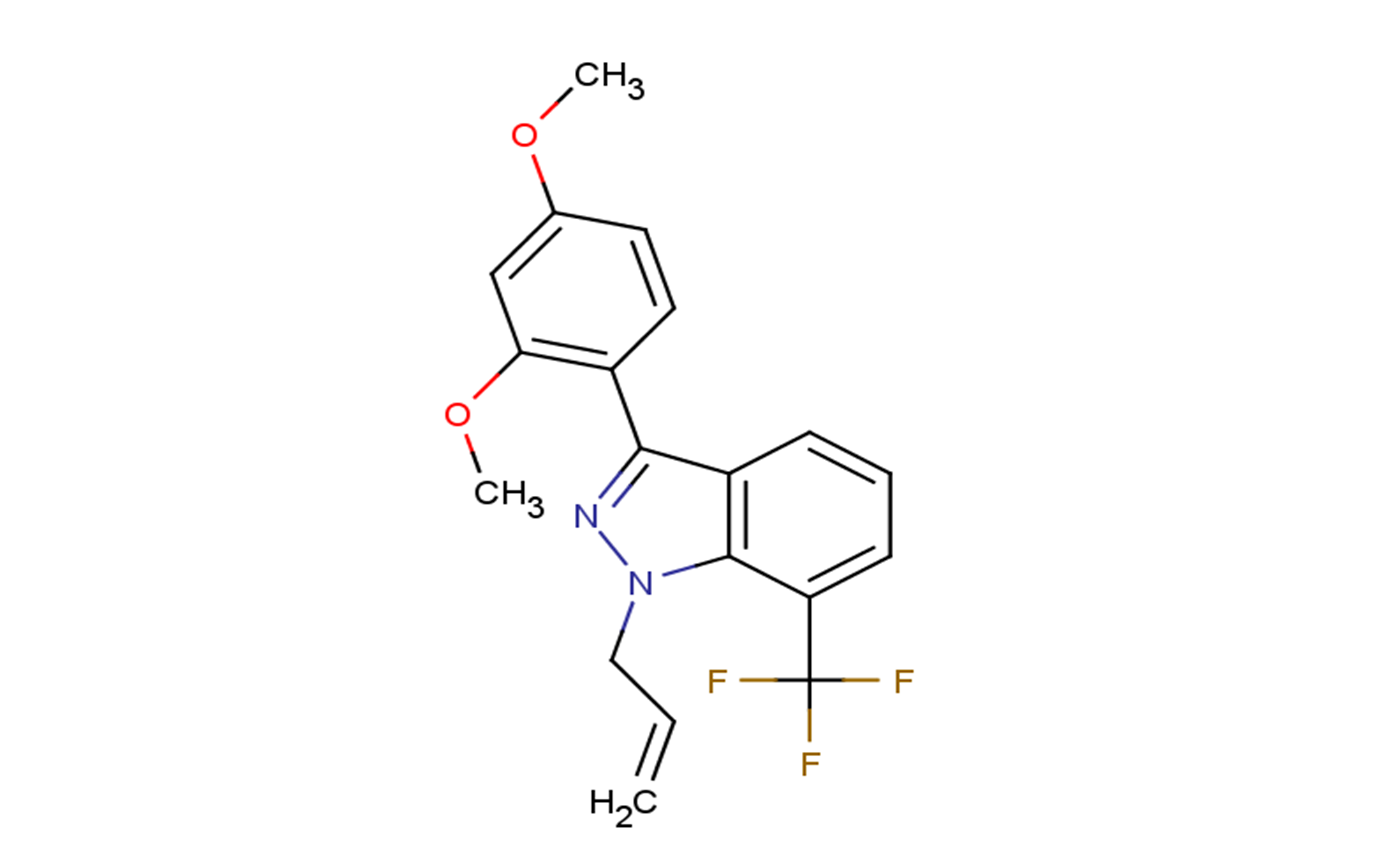
SGA360
CAS No. 680611-86-3
SGA360( —— )
Catalog No. M24693 CAS No. 680611-86-3
SGA360 is a selective aryl hydrocarbon (Ah) receptor modulator. It exhibits anti-inflammatory properties.
Purity : >98% (HPLC)
 COA
Datasheet
HNMR
HPLC
MSDS
Handing Instructions
COA
Datasheet
HNMR
HPLC
MSDS
Handing Instructions
| Size | Price / USD | Stock | Quantity |
| 1 mL x 10 mM in DMSO | 111 | In Stock |


|
| 5MG | 132 | In Stock |
|
| 10MG | 217 | In Stock |
|
| 25MG | 330 | In Stock |
|
| 50MG | 460 | In Stock |
|
| 100MG | 669 | In Stock |
|
| 200MG | 918 | In Stock |
|
| 500MG | Get Quote | In Stock |
|
| 1G | Get Quote | In Stock |
|
Biological Information
-
Product NameSGA360
-
NoteResearch use only, not for human use.
-
Brief DescriptionSGA360 is a selective aryl hydrocarbon (Ah) receptor modulator. It exhibits anti-inflammatory properties.
-
DescriptionSGA360 is a selective aryl hydrocarbon (Ah) receptor modulator. It exhibits anti-inflammatory properties.
-
In Vitro——
-
In VivoSGA360 exhibits anti-inflammatory activity in vivo.
-
Synonyms——
-
PathwayOthers
-
TargetOther Targets
-
Recptoraryl hydrocarbon receptor
-
Research Area——
-
Indication——
Chemical Information
-
CAS Number680611-86-3
-
Formula Weight362.3
-
Molecular FormulaC19H17F3N2O2
-
Purity>98% (HPLC)
-
SolubilityDMSO:10 mM
-
SMILESCOC1=CC(=C(C=C1)C2=NN(C3=C2C=CC=C3C(F)(F)F)CC=C)OC
-
Chemical Name——
Shipping & Storage Information
-
Storage(-20℃)
-
ShippingWith Ice Pack
-
Stability≥ 2 years
Reference
1.Muku G E , Lahoti T S , Murray I A , et al. Ligand-mediated cytoplasmic retention of the Ah receptor inhibits macrophage-mediated acute inflammatory responses[J]. Laboratory Investigation, 2017.
molnova catalog



related products
-
Tafenoquine Succinat...
Tafenoquine Succinate is an 8-aminoquinoline. and is an agent of anti-malarial prophylactic.
-
Benzyladenine
6-Benzylaminopurine, benzyl adenine or BAP is a first-generation synthetic cytokinin that elicits plant growth and development responses, setting blossoms and stimulating fruit richness by stimulating cell division.
-
Bendazac
Bendazac is an anticataract drug. It may act by preventing protein denaturation.
