


 Cart
Cart
 sales@molnova.com



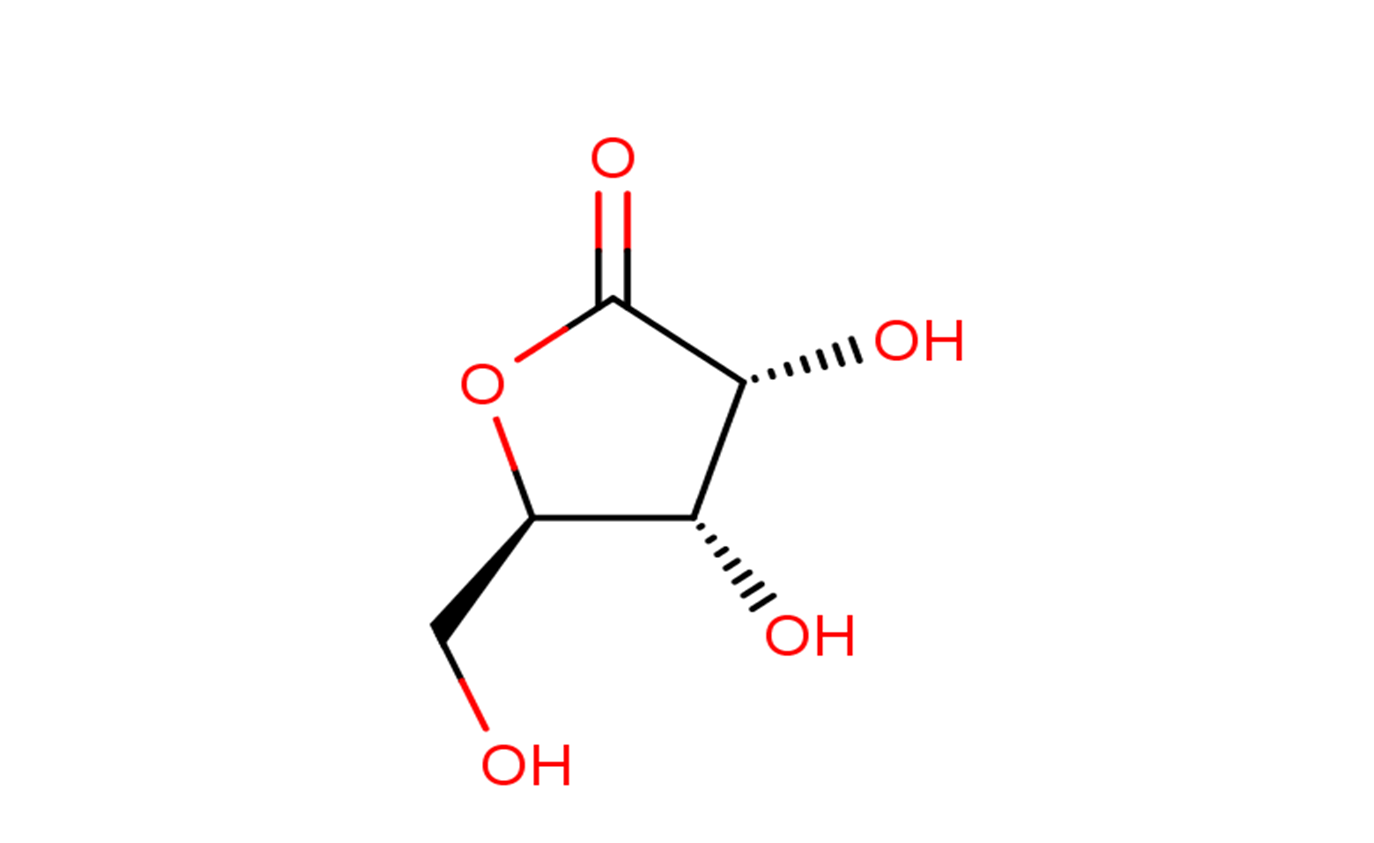
D-Ribonolactone
CAS No. 5336-08-3
D-Ribonolactone( —— )
Catalog No. M24514 CAS No. 5336-08-3
D-Ribonolactone is sugar lactone and an inhibitor of β-galactosidase of Escherichia coli (Ki : 26 Mm).
Purity : >98% (HPLC)
 COA
Datasheet
HNMR
HPLC
MSDS
Handing Instructions
COA
Datasheet
HNMR
HPLC
MSDS
Handing Instructions
| Size | Price / USD | Stock | Quantity |
| 1 mL x 10 mM in DMSO | 29 | In Stock |


|
| 100MG | Get Quote | In Stock |
|
| 200MG | 26 | In Stock |
|
| 500MG | Get Quote | In Stock |
|
| 1G | Get Quote | In Stock |
|
Biological Information
-
Product NameD-Ribonolactone
-
NoteResearch use only, not for human use.
-
Brief DescriptionD-Ribonolactone is sugar lactone and an inhibitor of β-galactosidase of Escherichia coli (Ki : 26 Mm).
-
DescriptionD-Ribonolactone is sugar lactone and an inhibitor of β-galactosidase of Escherichia coli (Ki : 26 Mm).
-
In Vitro——
-
In Vivo——
-
Synonyms——
-
PathwayProteasome/Ubiquitin
-
TargetEndogenous Metabolite
-
RecptorHuman Endogenous Metabolite
-
Research Area——
-
Indication——
Chemical Information
-
CAS Number5336-08-3
-
Formula Weight148.11
-
Molecular FormulaC5H8O5
-
Purity>98% (HPLC)
-
SolubilityDMSO:250 mg/mL (1687.93 mM; Need ultrasonic)
-
SMILESO=C1[C@H](O)[C@H](O)[C@@H](CO)O1
-
Chemical Name——
Shipping & Storage Information
-
Storage(-20℃)
-
ShippingWith Ice Pack
-
Stability≥ 2 years
Reference
1.Huber RE, et al. Strong inhibitory effect of furanoses and sugar lactones on beta-galactosidase Escherichia coli. Biochemistry. 1987 Mar 24;26(6):1526-31.
molnova catalog



related products
-
1,4-Cineole
1,4-Cineole is a natural, oxygenated monoterpene. 1,4-Cineole can activate both human TRPM8 and human TRPA1.
-
Glucagon-Like Peptid...
Glucagon-like peptide 2 (GLP-2) is a recently identified intestinal epithelium-specific growth factor that has been shown to reduce the severity of inflammatory disorders of the intestine in rodent models. Currently Glucagon-Like Peptide 2 is used as a potential therapeutic agent for the human subjects with a broad variety of intestinal diseases characterized by intestinal damage and insufficiency.
-
(±)-Propionylcarniti...
(±)-Propionylcarnitine chloride (Propionyl-DL-carnitine chloride) is a mixture of short-chain acylcarnitines used as a dietary supplement for the study of chronic diabetes.
