


 Cart
Cart
 sales@molnova.com



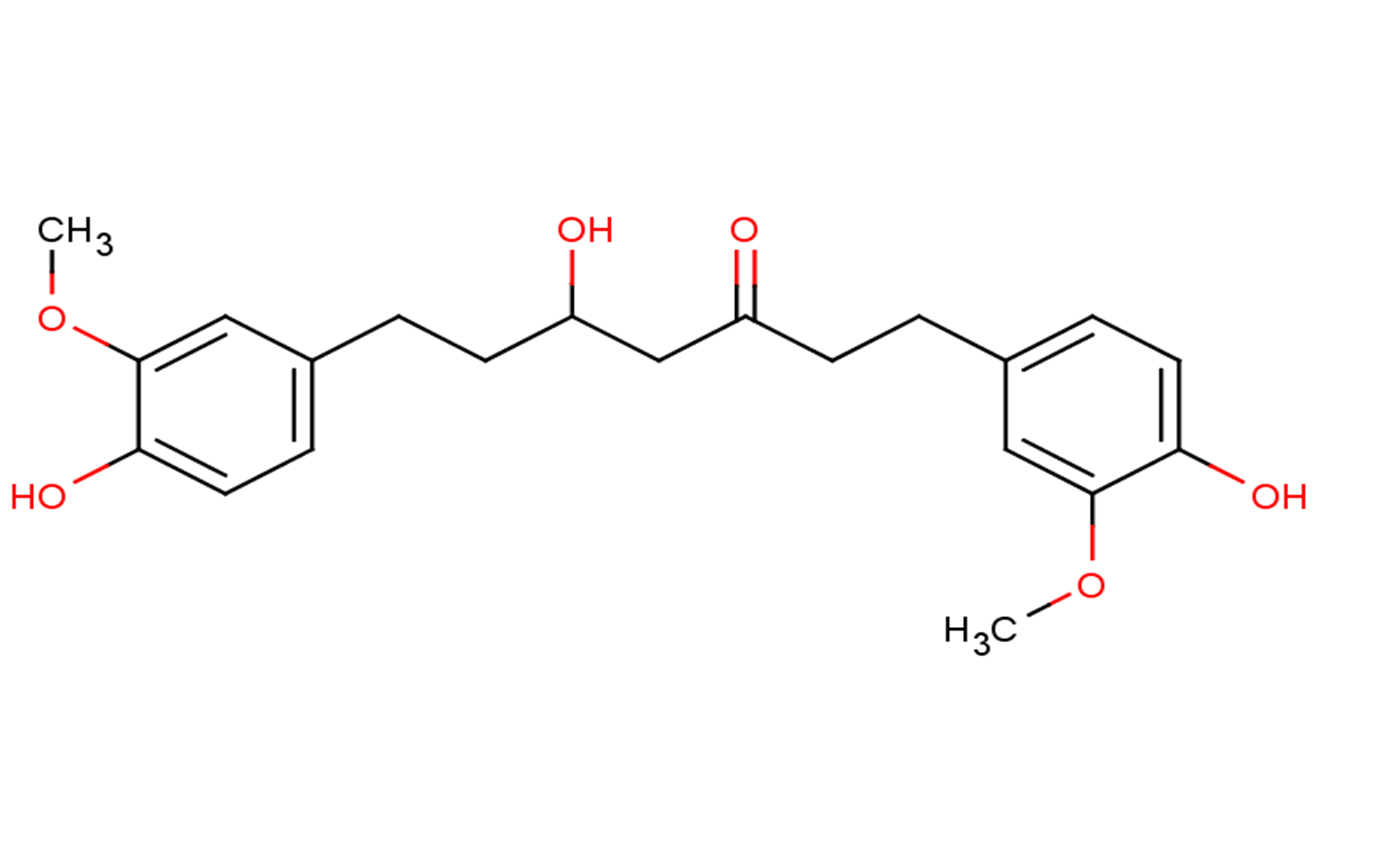
Hexahydrocurcumin
CAS No. 36062-05-2
Hexahydrocurcumin( —— )
Catalog No. M24319 CAS No. 36062-05-2
Hexahydrocurcumin is a selective, orally active COX-2 inhibitor and inactive against COX-1.
Purity : >98% (HPLC)
 COA
Datasheet
HNMR
HPLC
MSDS
Handing Instructions
COA
Datasheet
HNMR
HPLC
MSDS
Handing Instructions
| Size | Price / USD | Stock | Quantity |
| 1 mL x 10 mM in DMSO | 311 | In Stock |


|
| 5MG | 188 | In Stock |
|
| 10MG | 312 | In Stock |
|
| 25MG | 629 | In Stock |
|
| 50MG | 918 | In Stock |
|
| 100MG | 1293 | In Stock |
|
| 200MG | Get Quote | In Stock |
|
| 500MG | Get Quote | In Stock |
|
| 1G | Get Quote | In Stock |
|
Biological Information
-
Product NameHexahydrocurcumin
-
NoteResearch use only, not for human use.
-
Brief DescriptionHexahydrocurcumin is a selective, orally active COX-2 inhibitor and inactive against COX-1.
-
DescriptionHexahydrocurcumin is a selective, orally active COX-2 inhibitor and inactive against COX-1.
-
In VitroHexahydrocurcumin (0-25 μM; 24-48 hours; HT-29 cells) treatment significantly decreased the viability of HT-29 colon cancer cells in a time- and concentration-dependent. The respective IC50 values for 24 and 48 h of Hexahydrocurcumin exposureare 77.05 and 56.95, respectively.Hexahydrocurcumin (0-25 μM; 24-48 hours; HT-29 cells) combined with 5-fluorouracil (5-FU; 5 μM) markedly reduces the COX-2 expression. The level of COX-1 is not altered.Hexahydrocurcumin (0-25 μM; 24-48 hours; HT-29 cells) combined with 5-fluorouracil (5-FU; 5 μM) markedly reduces the COX-2 protein. The level of COX-1 protein is not altered.Hexahydrocurcumin (7-14 μM; 24 hours) attenuates lipopolysaccharide (LPS)-elicited increase of prostaglandin E2 (PGE2) in murine macrophages (RAW 264.7) in a concentration-dependent manner. Cell Viability Assay Cell Line:HT-29 cells Concentration:0 μM, 5 μM, 10 μM, 25 μM Incubation Time:24 hours or 48 hours Result:Significantly decreased the viability of HT-29 colon cancer cells.RT-PCR Cell Line:HT-29 cells Concentration:25 μM Incubation Time:24 hours Result:Combined with 5-fluorouracil (5-FU; 5 μM) markedly reduced the COX-2 expression.Western Blot Analysis Cell Line:HT-29 cells Concentration:25 μM Incubation Time:24 hours Result:Combined with 5-fluorouracil (5-FU; 5 μM) markedly reduced the COX-2 protein.
-
In VivoHexahydrocurcumin (50 mg/kg; oral administration; daily; for 16 weeks; male Wistar rats) treatment significantly reduces the numbers of aberrant crypt foci (ACF) in colon cancer rats. Hexahydrocurcumin also markedly decreases COX-2 protein expression. The levels of COX-1 protein is not different from normal rats. Animal Model:Male Wistar rats (100-120 g) injected with dimethylhydrazine (DMH) Dosage:50 mg/kg Administration:Oral administration; daily; for 16 weeks Result:Significantly reduced the numbers of ACF in colon cancer rats. Also markedly decreased COX-2 protein expression.
-
Synonyms——
-
PathwayChromatin/Epigenetic
-
TargetCOX
-
RecptorCOX-1|ROS
-
Research Area——
-
Indication——
Chemical Information
-
CAS Number36062-05-2
-
Formula Weight374.43
-
Molecular FormulaC21H26O6
-
Purity>98% (HPLC)
-
SolubilityDMSO:45 mg/mL (120.19 mM; Need ultrasonic)
-
SMILESO=C(CC(O)CCC1=CC=C(O)C(OC)=C1)CCC2=CC=C(O)C(OC)=C2
-
Chemical Name——
Shipping & Storage Information
-
Storage(-20℃)
-
ShippingWith Ice Pack
-
Stability≥ 2 years
Reference
1.Srimuangwong K, et al. Hexahydrocurcumin enhances inhibitory effect of 5-fluorouracil on HT-29 human colon cancer cells. World J Gastroenterol. 2012 May 21;18(19):2383-9.
molnova catalog



related products
-
Gaultherin
Gaultherin has analgesic, and anti-inflammatory activities.Gaultherin lacks gastric ulcerogenic effect, because of it released salicylate in intestine slowly, not in stomach and it left the cyclooxygenase-1 unaffected, which was the source of cytoprotective prostaglandins in gastric epithelium.
-
Nitroflurbiprofen
Nitroflurbiprofen is a NO-releasing COX inhibitor and modulates the increased intrahepatic vascular tone in portal hypertensive cirrhotic rats.
-
Agnuside
Agnuside inhibits COX-2 (IC50: 0.026 mg/ml) but exhibits less than 10% inhibition of COX-1 at this concentration. It also inhibits 46.3 66.8 and 82.1% of P-glycoprotein (P-gp) ATPase activity at concentrations of 5 25 and 100 μM respectively.
