


 Cart
Cart
 sales@molnova.com



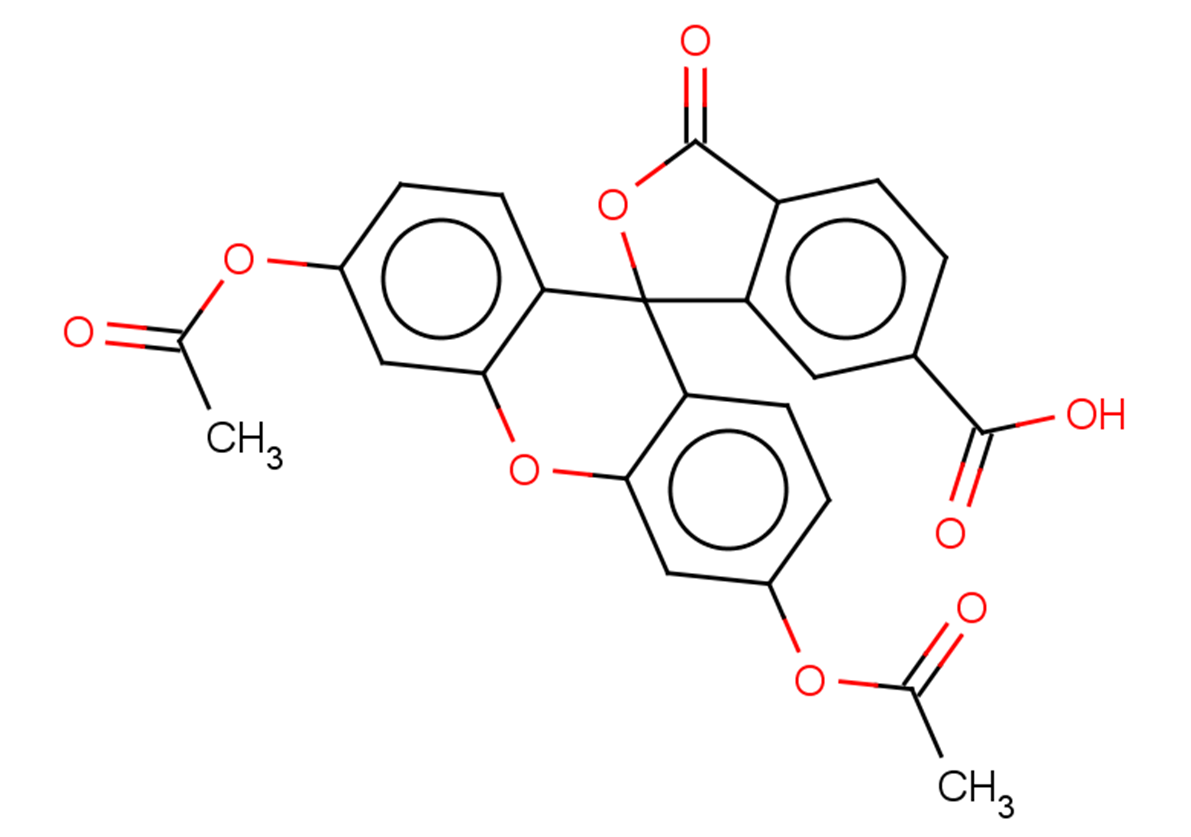
6-CFDA
CAS No. 3348-03-6
6-CFDA( 6-Carboxyfluorescein diacetate )
Catalog No. M24277 CAS No. 3348-03-6
6-CFDA is fluorescent polyanionic probe that used to measure changes in intracellular pH (pHi) and processes such as dendrimer aggregation and absorption.
Purity : >98% (HPLC)
 COA
Datasheet
HNMR
HPLC
MSDS
Handing Instructions
COA
Datasheet
HNMR
HPLC
MSDS
Handing Instructions
| Size | Price / USD | Stock | Quantity |
| 1 mL x 10 mM in DMSO | 43 | In Stock |


|
| 10MG | 45 | In Stock |
|
| 50MG | 66 | In Stock |
|
| 100MG | Get Quote | In Stock |
|
| 200MG | Get Quote | In Stock |
|
| 500MG | Get Quote | In Stock |
|
| 1G | Get Quote | In Stock |
|
Biological Information
-
Product Name6-CFDA
-
NoteResearch use only, not for human use.
-
Brief Description6-CFDA is fluorescent polyanionic probe that used to measure changes in intracellular pH (pHi) and processes such as dendrimer aggregation and absorption.
-
Description6-CFDA is fluorescent polyanionic probe that used to measure changes in intracellular pH (pHi) and processes such as dendrimer aggregation and absorption.
-
In Vitro——
-
In Vivo——
-
Synonyms6-Carboxyfluorescein diacetate
-
PathwayOthers
-
TargetOther Targets
-
RecptorOthers
-
Research Area——
-
Indication——
Chemical Information
-
CAS Number3348-03-6
-
Formula Weight460.39
-
Molecular FormulaC25H16O9
-
Purity>98% (HPLC)
-
SolubilityDMSO:97 mg/mL (210.69 mM; Need ultrasonic)
-
SMILESCC(Oc1cc(Oc2c(C3(c4c5ccc(C(O)=O)c4)OC5=O)ccc(OC(C)=O)c2)c3cc1)=O
-
Chemical Name——
Shipping & Storage Information
-
Storage(-20℃)
-
ShippingWith Ice Pack
-
Stability≥ 2 years
Reference
1.Babcock DF. Examination of the intracellular ionic environment and of ionophore action by null point measurements employing the fluorescein chromophore. J Biol Chem. 1983 May 25;258(10):6380-9.
molnova catalog



related products
-
Gelsemine
Gelsemine has marked antinociception in inflammatory, neuropathic and bone cancer pains without inducing antinociceptive tolerance.
-
Thymosin β4 (16-38)
Thymosin β4 (16-38)
-
16alpha-Hydroxypredn...
16alpha-Hydroxyprednisolone is a stereoselective metabolite of the 22(R) epimer of the glucocorticoid budesonide.
