


 Cart
Cart
 sales@molnova.com



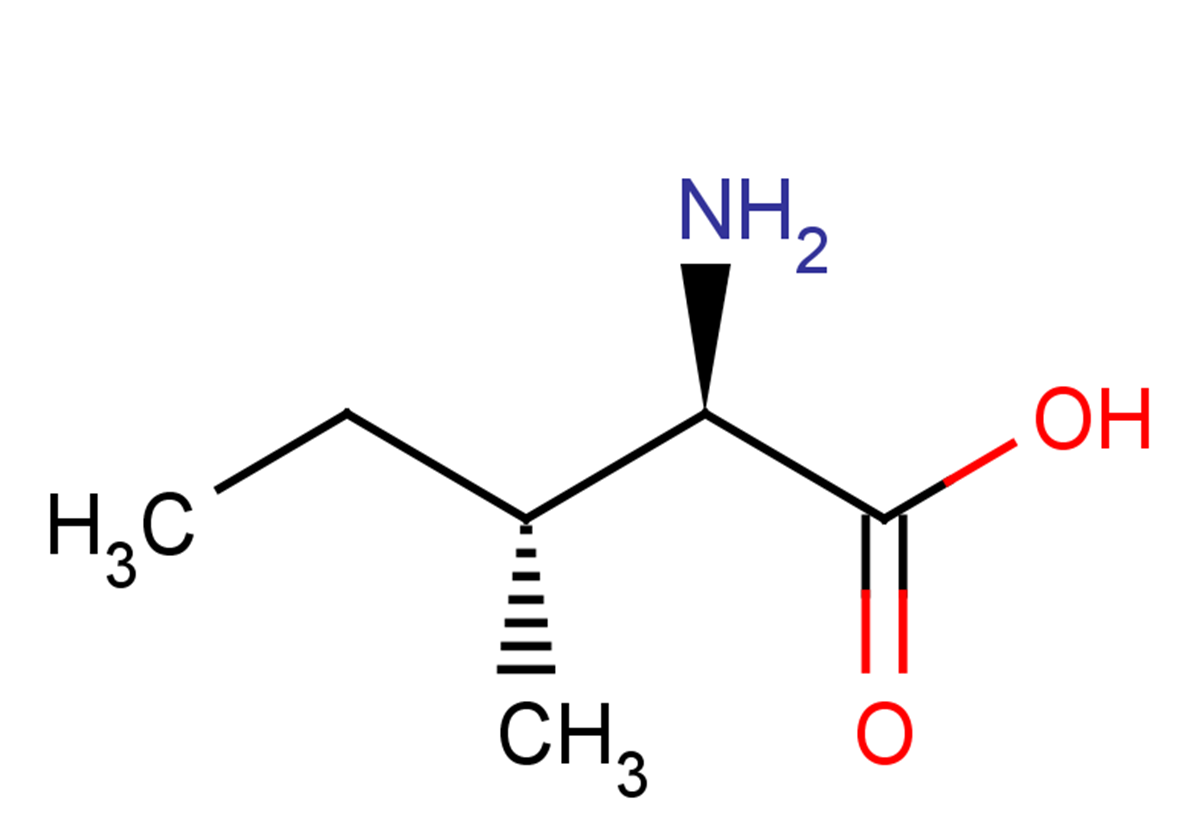
D-Isoleucine
CAS No. 319-78-8
D-Isoleucine( (2R,3R)-2-Amino-3-methylpentanoic acid | (R)-Isoleucine )
Catalog No. M24252 CAS No. 319-78-8
D-Isoleucine is a selective activator of Asc-1 antiporter, which enhances long-term potentiation at the hippocampal CA1-CA3 via release of endogenous D-serine.
Purity : >98% (HPLC)
 COA
Datasheet
HNMR
HPLC
MSDS
Handing Instructions
COA
Datasheet
HNMR
HPLC
MSDS
Handing Instructions
| Size | Price / USD | Stock | Quantity |
| 1 mL x 10 mM in DMSO | 37 | In Stock |


|
| 25MG | 29 | In Stock |
|
| 50MG | 47 | In Stock |
|
| 100MG | 74 | In Stock |
|
| 200MG | Get Quote | In Stock |
|
| 500MG | 166 | In Stock |
|
| 1G | Get Quote | In Stock |
|
Biological Information
-
Product NameD-Isoleucine
-
NoteResearch use only, not for human use.
-
Brief DescriptionD-Isoleucine is a selective activator of Asc-1 antiporter, which enhances long-term potentiation at the hippocampal CA1-CA3 via release of endogenous D-serine.
-
DescriptionD-Isoleucine is a selective activator of Asc-1 antiporter, which enhances long-term potentiation at the hippocampal CA1-CA3 via release of endogenous D-serine.
-
In Vitro——
-
In Vivo——
-
Synonyms(2R,3R)-2-Amino-3-methylpentanoic acid | (R)-Isoleucine
-
PathwayOthers
-
TargetOther Targets
-
RecptorAsc-1
-
Research Area——
-
Indication——
Chemical Information
-
CAS Number319-78-8
-
Formula Weight131.17
-
Molecular FormulaC6H13NO2
-
Purity>98% (HPLC)
-
SolubilityIn Vitro:?H2O : 6.25 mg/mL (47.65 mM)
-
SMILESCC[C@@H](C)[C@H](C(O)=O)N
-
Chemical Name——
Shipping & Storage Information
-
Storage(-20℃)
-
ShippingWith Ice Pack
-
Stability≥ 2 years
Reference
1.Rosenberg D, et, al. Neuronal D-serine and glycine release via the Asc-1 transporter regulates NMDA receptor-dependent synaptic activity. J Neurosci. 2013 Feb 20;33(8):3533-44.
molnova catalog



related products
-
Sodium taurolithocho...
The major human metabolite a bile acid which inhibits radioligand binding to muscarinic M1 but not to M2 or M3 receptors.
-
4-Amino-5-Chloro-2-M...
Used as organic synthesis and medicine intermediate.
-
Isethionic acid sodi...
2-Hydroxyethanesulfonate (2-Hydroxyethanesulfonic acid or isethionic acid) is an organosulfur compound containing a short chain alkane sulfonate linked to a hydroxyl group. Mammals are able to endogenously synthesize 2-hydroxyethanesulfonate via taurine through a possible enzymatic deamination process.
