


 Cart
Cart
 sales@molnova.com



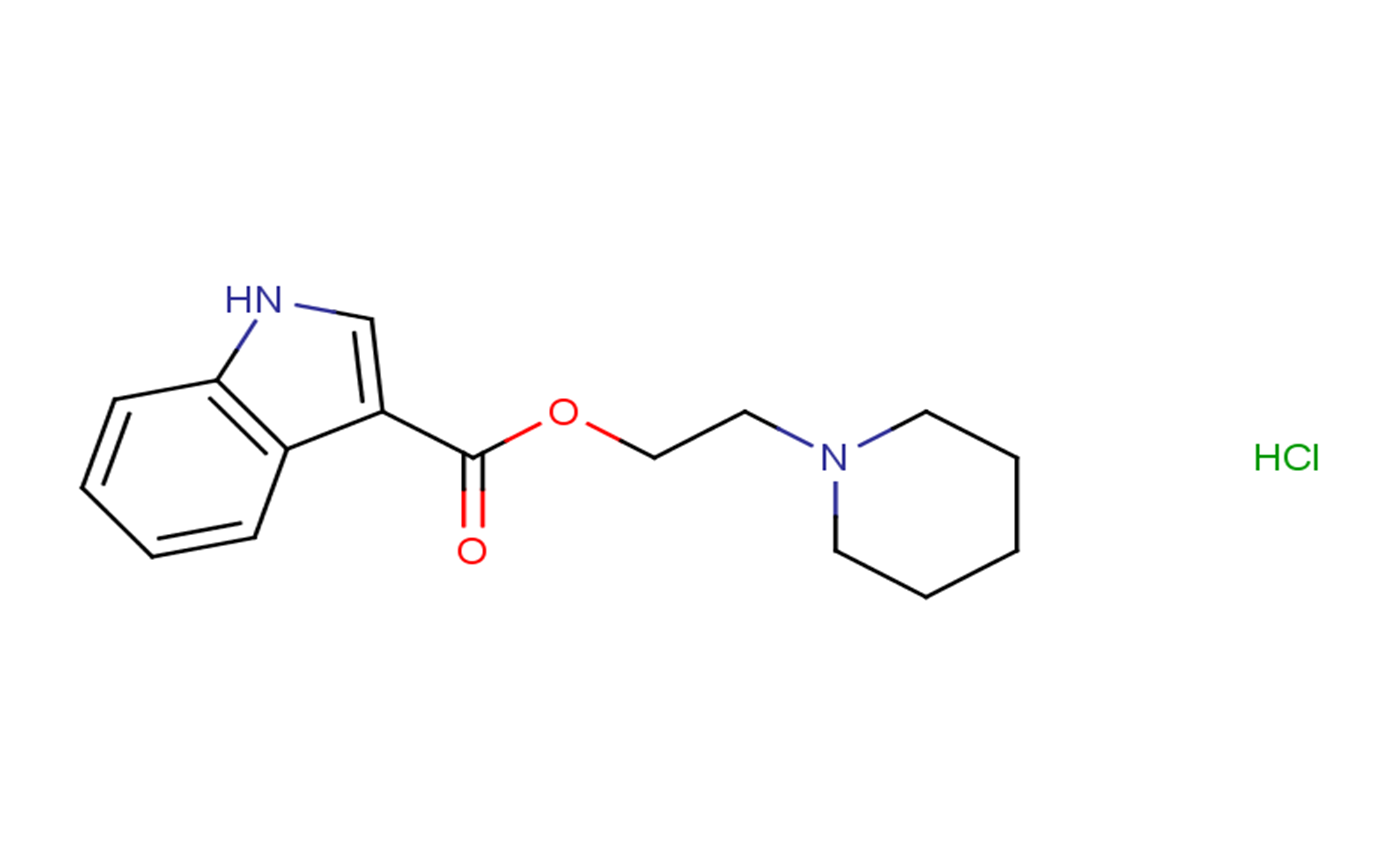
SB 203186 hydrochloride
CAS No. 207572-69-8
SB 203186 hydrochloride( —— )
Catalog No. M23932 CAS No. 207572-69-8
SB 203186 hydrochloride is a potent 5-HT4 receptor antagonist.
Purity : >98% (HPLC)
 COA
Datasheet
HNMR
HPLC
MSDS
Handing Instructions
COA
Datasheet
HNMR
HPLC
MSDS
Handing Instructions
| Size | Price / USD | Stock | Quantity |
| 25MG | 48 | In Stock |


|
| 50MG | 77 | In Stock |
|
| 100MG | 114 | In Stock |
|
| 200MG | 161 | In Stock |
|
| 500MG | Get Quote | In Stock |
|
| 1G | Get Quote | In Stock |
|
Biological Information
-
Product NameSB 203186 hydrochloride
-
NoteResearch use only, not for human use.
-
Brief DescriptionSB 203186 hydrochloride is a potent 5-HT4 receptor antagonist.
-
DescriptionSB 203186 hydrochloride is a potent 5-HT4 receptor antagonist.
-
In VitroPretreatment with SB-203186 (10 μM) enhances the 5-HT-induced contractions of the antral strips.
-
In VivoIntraduodenally administered SB-203186 (0.3-3 mg/kg) to new-born Camborough piglets produced blockade of 5-HT-evoked tachycardia which was maximal after 20 min and lasted for more than 3 h with 0.3 mg/kg.SB-203186 (0.1-3mg/kg, i.v.) surmountably antagonised 5-HT-evoked tachycardia in anaesthetized Yucatan minipigs or new-born Camborough piglets with similar potency.
-
Synonyms——
-
PathwayEndocrinology/Hormones
-
Target5-HT Receptor
-
Recptor5-HT4
-
Research Area——
-
Indication——
Chemical Information
-
CAS Number207572-69-8
-
Formula Weight308.81
-
Molecular FormulaC16H20N2O2·HCl
-
Purity>98% (HPLC)
-
SolubilityH2O:100 mM
-
SMILESO=C(C1=CNC2=C1C=CC=C2)OCCN3CCCCC3.Cl
-
Chemical Name——
Shipping & Storage Information
-
Storage(-20℃)
-
ShippingWith Ice Pack
-
Stability≥ 2 years
Reference
1.Parker S G , Taylor E M , Hamburger S A , et al. Blockade of human and porcine myocardial 5-HT4 receptors by SB 203186[J]. Naunyn Schmiedebergs Arch Pharmacol, 1995, 353(1):28-35.
molnova catalog



related products
-
Ataractan
Azacyclonol, also known as γ-pipradol, is a drug used to diminish hallucinations in psychotic individuals.
-
Mosapride Citrate
Mosapride Citrate is a gastroprokinetic agent that acts as a selective 5HT4 agonist.
-
Palonosetron hydroch...
Palonosetron (INN, trade name Aloxi) is a 5-HT3 antagonist used in the prevention and treatment of chemotherapy-induced nausea and vomiting (CINV).
