


 Cart
Cart
 sales@molnova.com



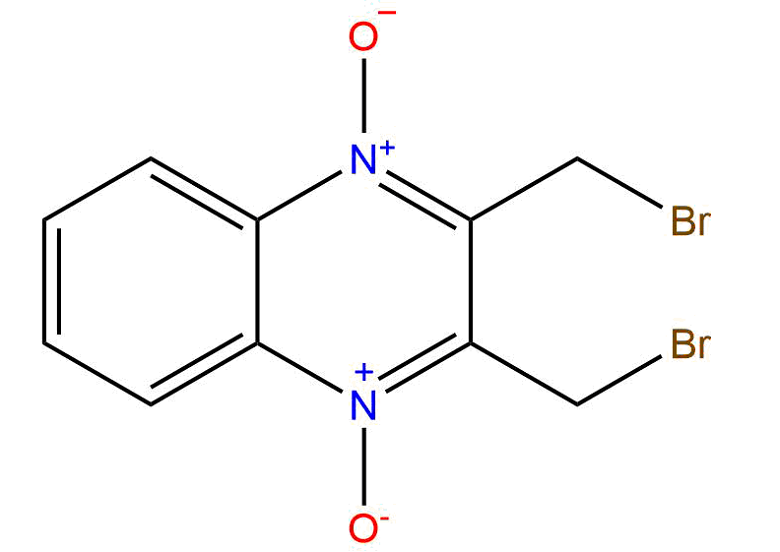
Conoidin A
CAS No. 18080-67-6
Conoidin A( —— )
Catalog No. M23821 CAS No. 18080-67-6
Conoidin A is a cell permeable inhibitor of T. gondii enzyme peroxiredoxin II (TgPrxII) with nematicidal properties.
Purity : >98% (HPLC)
 COA
Datasheet
HNMR
HPLC
MSDS
Handing Instructions
COA
Datasheet
HNMR
HPLC
MSDS
Handing Instructions
| Size | Price / USD | Stock | Quantity |
| 1 mL x 10 mM in DMSO | 43 | In Stock |


|
| 25MG | 41 | In Stock |
|
| 50MG | 57 | In Stock |
|
| 100MG | Get Quote | In Stock |
|
| 200MG | Get Quote | In Stock |
|
| 500MG | Get Quote | In Stock |
|
| 1G | Get Quote | In Stock |
|
Biological Information
-
Product NameConoidin A
-
NoteResearch use only, not for human use.
-
Brief DescriptionConoidin A is a cell permeable inhibitor of T. gondii enzyme peroxiredoxin II (TgPrxII) with nematicidal properties.
-
DescriptionConoidin A is a cell permeable inhibitor of T. gondii enzyme peroxiredoxin II (TgPrxII) with nematicidal properties. It covalently binds to the peroxidatic Cys47 of TgPrxII, irreversibly inhibiting its hyperperoxidation activity with an IC50 of 23 μM. It also inhibits hyperoxidation of mammalian PrxI and PrxII (but not PrxIII). Conoidin A has antioxidant, neuroprotective effects and can be used for the research of ischaemic heart disease.
-
In VitroPeroxiredoxins are a widely conserved family of enzymes that function in antioxidant defense and signal transduction. And the changes in PrxII expression are associated with a variety of human diseases, including cancer.Conoidin A binds to the peroxidatic cysteine of TgPrxII, inhibiting its enzymatic activity?in vitro. Conoidin A also shown to alkylate or crosslink catalytic cysteines of wild type AcePrx-1 in?Ancylostoma ceylanicum?and human PrxII and PrxIV with similar efficiency. But it is ineffective to mitochondrial hPrxIII.Conoidin A (5 μM) can inhibit the glucose oxidase-mediated hyperoxidation of mammalian peroxiredoxin I and II.
-
In VivoConoidin A (intraperitoneal injection; 5?mg/kg; for three successive days before MI/R injury) blocks the effect of Luteolin (HY-N0162) on the ST‐segment elevation.?Furthermore, an increase in the infarct size presented of the MI/R group can be reduced by Luteolin. But pre‐treatment with conoidin A abolishs the effect of Luteolin. Pre‐treatment with conoidin A also prevents Luteolin-reduced activities of CK‐MB, AST and LDH in vivo. Animal Model:Rat myocardial I/R model Dosage:5?mg/kg Administration:Intraperitoneal injection; 5?mg/kg; for three successive days before MI/R injury Result:Significantly reversed the antioxidative effect of Luteolin.
-
Synonyms——
-
PathwayMicrobiology/Virology
-
TargetParasite
-
RecptorParasite
-
Research Area——
-
Indication——
Chemical Information
-
CAS Number18080-67-6
-
Formula Weight347.99
-
Molecular FormulaC10H8Br2N2O2
-
Purity>98% (HPLC)
-
SolubilityDMSO:14.29 mg/mL?(41.06 mM;?Need ultrasonic)
-
SMILES[O-][N+]1=C(CBr)C(CBr)=[N+]([O-])C2=CC=CC=C21
-
Chemical Name——
Shipping & Storage Information
-
Storage(-20℃)
-
ShippingWith Ice Pack
-
Stability≥ 2 years
Reference
1.Gu Liu, et al. Optimisation of conoidin A, a peroxiredoxin inhibitor. ChemMedChem. 2010 Jan;5(1):41-5.
molnova catalog



related products
-
SCYX-7158
SCYX-7158 (AN-5568, Acoziborole) is an orally-active, CNS permeable benzoxaborole antiprotozoal agent.
-
CRK12-IN-2
CRK12-IN-2 is a potent inhibitor of CRK12.CRK12-IN-2 inhibits the parasite, with EC50 values of 3.2 and 0.08 nM for Trypanosoma congolense and Trypanosoma vivax, respectively.
-
2-Benzoxazolinone
2-Benzoxazolol is found in cereals and cereal products. 2-Benzoxazolol is found in rye seedlings.
