


 Cart
Cart
 sales@molnova.com



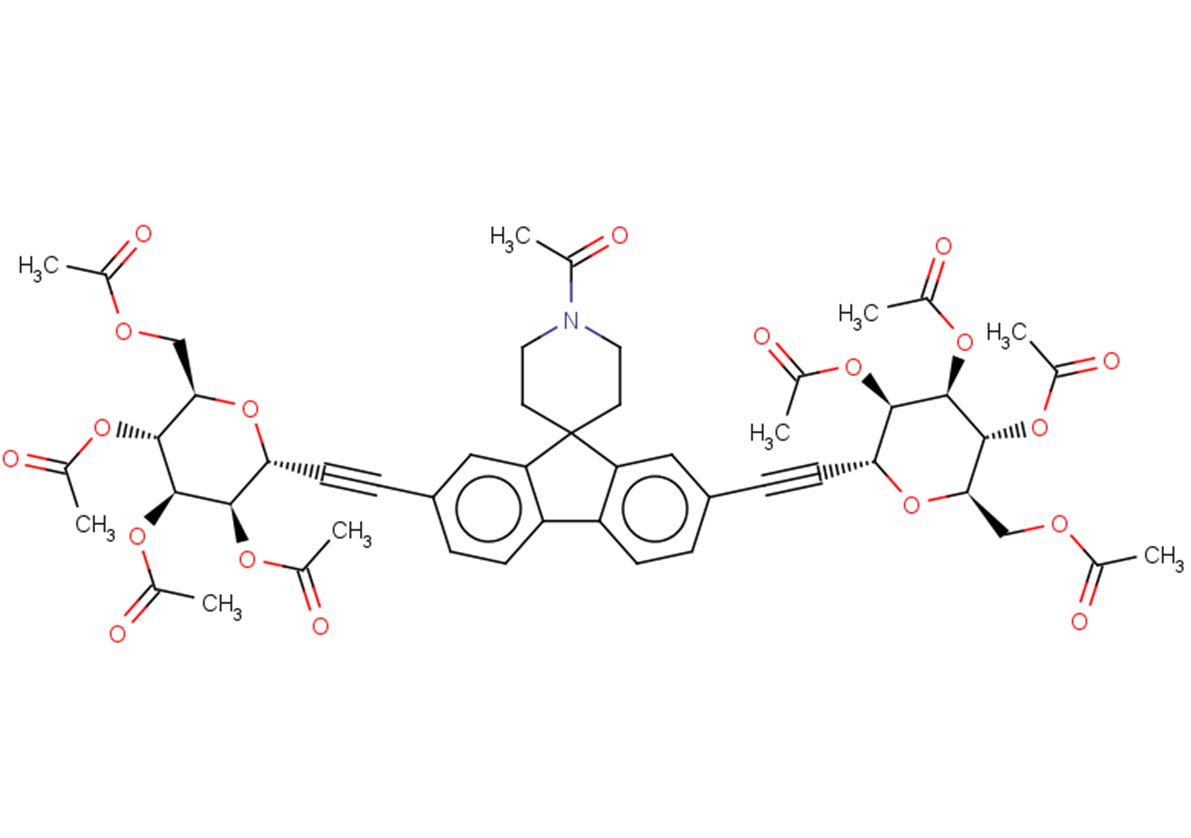
CPFX4158
CAS No. 1804962-84-2
CPFX4158( —— )
Catalog No. M23817 CAS No. 1804962-84-2
CPFX4158 is a mannose deriviative and an antibacterial agent that is potentially useful in transgenic humanized- CEACAM6 mouse.
Purity : >98% (HPLC)
 COA
Datasheet
HNMR
HPLC
MSDS
Handing Instructions
COA
Datasheet
HNMR
HPLC
MSDS
Handing Instructions
| Size | Price / USD | Stock | Quantity |
| 1 mL x 10 mM in DMSO | 198 | In Stock |


|
| 5MG | 104 | In Stock |
|
| 10MG | 155 | In Stock |
|
| 25MG | 312 | In Stock |
|
| 50MG | 439 | In Stock |
|
| 100MG | 603 | In Stock |
|
| 200MG | 812 | In Stock |
|
| 500MG | Get Quote | In Stock |
|
| 1G | Get Quote | In Stock |
|
Biological Information
-
Product NameCPFX4158
-
NoteResearch use only, not for human use.
-
Brief DescriptionCPFX4158 is a mannose deriviative and an antibacterial agent that is potentially useful in transgenic humanized- CEACAM6 mouse.
-
DescriptionCPFX4158 is a mannose deriviative and an antibacterial agent that is potentially useful in transgenic humanized- CEACAM6 mouse.
-
In Vitro——
-
In Vivo——
-
Synonyms——
-
PathwayGPCR/G Protein
-
TargetAntibacterial
-
RecptorBacterial
-
Research Area——
-
Indication——
Chemical Information
-
CAS Number1804962-84-2
-
Formula Weight985.98
-
Molecular FormulaC51H55NO19
-
Purity>98% (HPLC)
-
Solubility——
-
SMILESCC(N(CC1)CCC11c(cc(cc2)C#C[C@H]([C@H]([C@H]3OC(C)=O)OC(C)=O)O[C@H](COC(C)=O)[C@H]3OC(C)=O)c2-c(cc2)c1cc2C#C[C@H]([C@H]([C@H]1OC(C)=O)OC(C)=O)O[C@H](COC(C)=O)[C@H]1OC(C)=O)=O
-
Chemical Name——
Shipping & Storage Information
-
Storage(-20℃)
-
ShippingWith Ice Pack
-
Stability≥ 2 years
Reference
molnova catalog



related products
-
Polyquaternium-1
Polyquaternium-1 exerts strong bacteriostasis and little eye irritation and can be used as a polycationic ophthalmic preservative.
-
Glycol chitosan
Glycol chitosan is a chitosan derivative with hydrophilic ethylene glycol branches.
-
NXL101
NXL101 is a novel quinoline bacterial DNA gyrase and topoisomerase IV inhibitor that shows potent activity against gram-positive bacteria.
