


 Cart
Cart
 sales@molnova.com



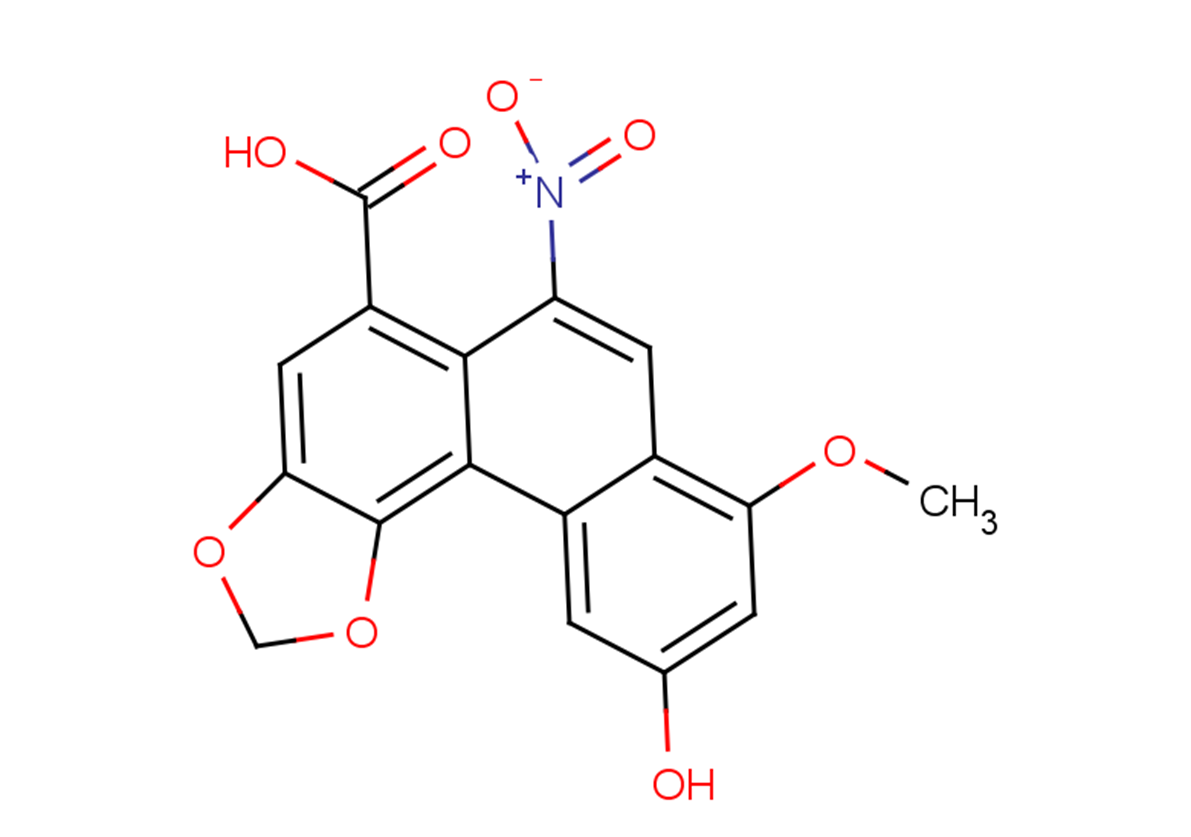
Aristolochic acid D
CAS No. 17413-38-6
Aristolochic acid D( —— )
Catalog No. M23786 CAS No. 17413-38-6
Aristolochic acid D is an aristolochic acid derivative isolated from stems of Aristolochia indica. Aristolochic acid is nephrotoxin and carcinogen.
Purity : >98% (HPLC)
 COA
Datasheet
HNMR
HPLC
MSDS
Handing Instructions
COA
Datasheet
HNMR
HPLC
MSDS
Handing Instructions
| Size | Price / USD | Stock | Quantity |
| 1 mL x 10 mM in DMSO | 188 | In Stock |


|
| 5MG | 250 | In Stock |
|
| 10MG | 372 | In Stock |
|
| 100MG | Get Quote | In Stock |
|
| 200MG | Get Quote | In Stock |
|
| 500MG | Get Quote | In Stock |
|
| 1G | Get Quote | In Stock |
|
Biological Information
-
Product NameAristolochic acid D
-
NoteResearch use only, not for human use.
-
Brief DescriptionAristolochic acid D is an aristolochic acid derivative isolated from stems of Aristolochia indica. Aristolochic acid is nephrotoxin and carcinogen.
-
DescriptionAristolochic acid D is an aristolochic acid derivative isolated from stems of Aristolochia indica. Aristolochic acid is nephrotoxin and carcinogen.
-
In Vitro——
-
In Vivo——
-
Synonyms——
-
PathwayOthers
-
TargetOther Targets
-
RecptorOthers
-
Research Area——
-
Indication——
Chemical Information
-
CAS Number17413-38-6
-
Formula Weight357.27
-
Molecular FormulaC17H11NO8
-
Purity>98% (HPLC)
-
SolubilityIn Vitro:?DMSO : 25 mg/mL (69.98 mM)
-
SMILESO=C(C1=C2C([N+]([O-])=O)=CC3=C(OC)C=C(O)C=C3C2=C(OCO4)C4=C1)O
-
Chemical Name——
Shipping & Storage Information
-
Storage(-20℃)
-
ShippingWith Ice Pack
-
Stability≥ 2 years
Reference
molnova catalog



related products
-
Resorufin sodium sal...
Resorufin sodium salt is a fluorescent pink dye.
-
JAK2/STAT3-IN-1
JAK2/STAT3-IN-1 is a GP130 inhibitor with anti-tumor effects and can be used to study inflammation, autoimmunity and cancer.
-
[Trp11]-Neurotensin
[Trp11]-Neurotensin
