


 Cart
Cart
 sales@molnova.com



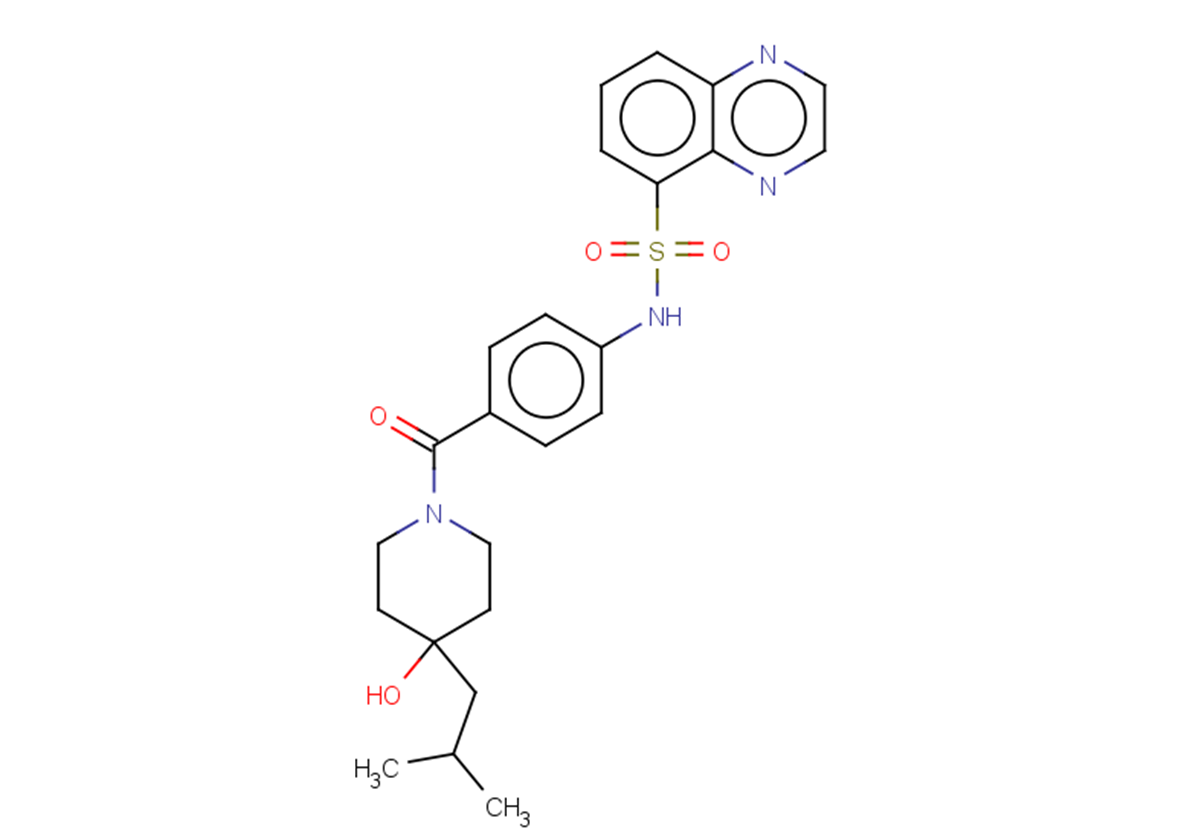
PKR-IN-2
CAS No. 1628428-01-2
PKR-IN-2( —— )
Catalog No. M23724 CAS No. 1628428-01-2
PKR-IN-2 is a activator of pyruvate kinase (PKR).
Purity : >98% (HPLC)
 COA
Datasheet
HNMR
HPLC
MSDS
Handing Instructions
COA
Datasheet
HNMR
HPLC
MSDS
Handing Instructions
| Size | Price / USD | Stock | Quantity |
| 1 mL x 10 mM in DMSO | 144 | In Stock |


|
| 5MG | 141 | In Stock |
|
| 10MG | 207 | In Stock |
|
| 25MG | 334 | In Stock |
|
| 50MG | 457 | In Stock |
|
| 100MG | 642 | In Stock |
|
| 200MG | 864 | In Stock |
|
| 500MG | Get Quote | In Stock |
|
| 1G | Get Quote | In Stock |
|
Biological Information
-
Product NamePKR-IN-2
-
NoteResearch use only, not for human use.
-
Brief DescriptionPKR-IN-2 is a activator of pyruvate kinase (PKR).
-
DescriptionPKR-IN-2 is a activator of pyruvate kinase (PKR).
-
In Vitro——
-
In Vivo——
-
Synonyms——
-
PathwayOthers
-
TargetOther Targets
-
Recptorpyruvate kinase
-
Research Area——
-
Indication——
Chemical Information
-
CAS Number1628428-01-2
-
Formula Weight468.57
-
Molecular FormulaC24H28N4O4S
-
Purity>98% (HPLC)
-
SolubilityDMSO:45mg/mL (96.04 mM; Need ultrasonic)
-
SMILESCC(C)CC(CC1)(CCN1C(c(cc1)ccc1NS(c1cccc2nccnc12)(=O)=O)=O)O
-
Chemical Name——
Shipping & Storage Information
-
Storage(-20℃)
-
ShippingWith Ice Pack
-
Stability≥ 2 years
Reference
1.Popovici-Muller, et al. Preparation of N-(piperidinecarbonylphenyl) sulfonamide compounds as pyruvate kinase modulators. From PCT Int. Appl. (2014), WO2014139144A1 20140918.
molnova catalog



related products
-
Algestone acetopheni...
Algestone acetophenide is progesterone that used in estrus synchronization and has been evaluated as an injectable contraceptive in combination with estradiol enanthate.
-
NCGC00092410
NCGC00092410 (ML008) is a glucocerebrosidase (GC) inhibitor with IC50 value of 31 nM. It can be used for the study of Gaucher disease caused by mutation of glucocerebrase gene.
-
Nandrolone propionat...
Nandrolone propionate is an anabolic steroid action primarily consisting of androgenic and nitrogen-retentive properties.
