


 Cart
Cart
 sales@molnova.com



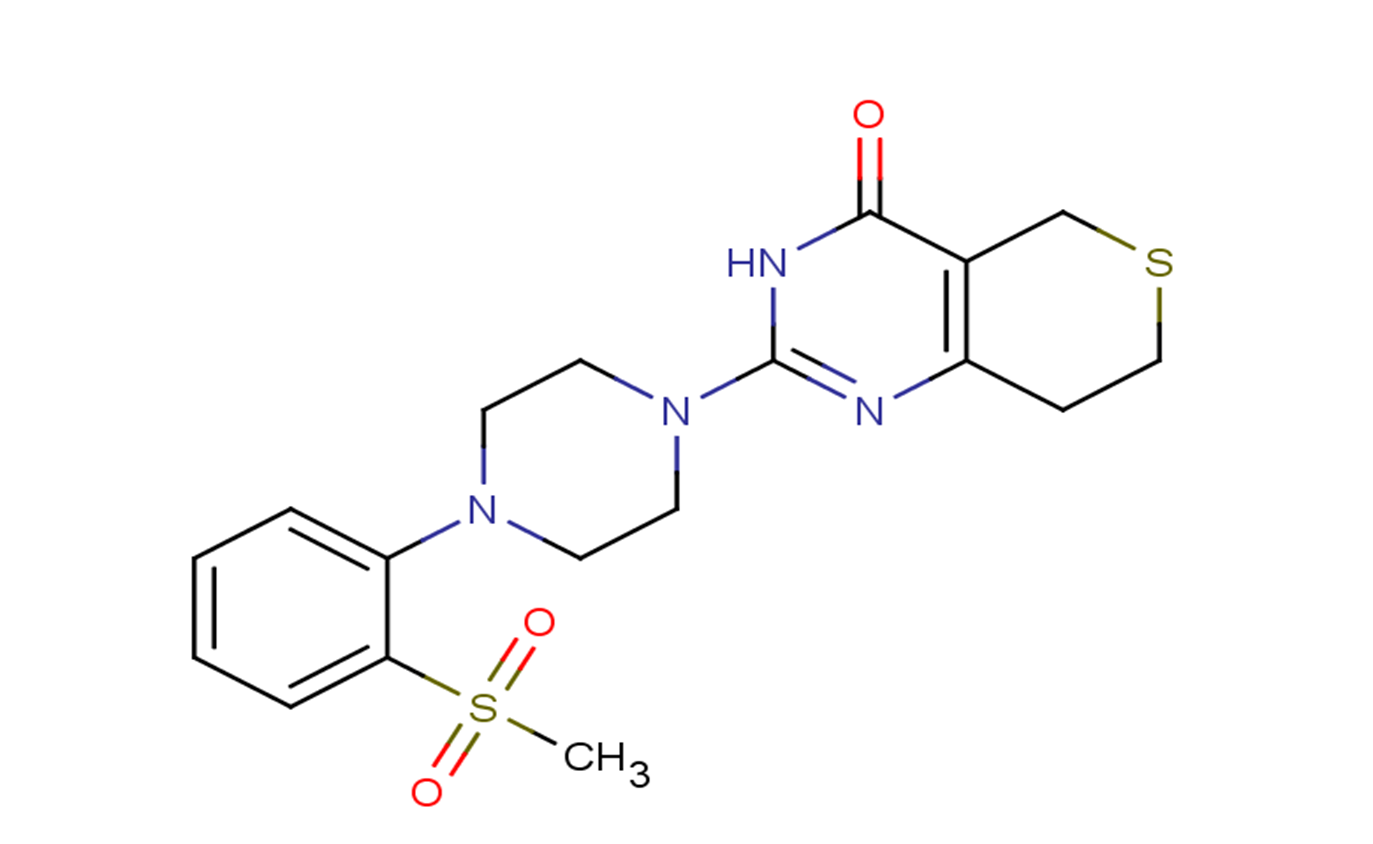
G244-LM
CAS No. 1563007-08-8
G244-LM( —— )
Catalog No. M23676 CAS No. 1563007-08-8
G244-LM is a potent and specific inhibitor of tankyrase 1/2 that inhibits Wnt signaling.
Purity : >98% (HPLC)
 COA
Datasheet
HNMR
HPLC
MSDS
Handing Instructions
COA
Datasheet
HNMR
HPLC
MSDS
Handing Instructions
| Size | Price / USD | Stock | Quantity |
| 5MG | 93 | In Stock |


|
| 10MG | 169 | In Stock |
|
| 25MG | 377 | In Stock |
|
| 50MG | 548 | In Stock |
|
| 100MG | Get Quote | In Stock |
|
| 200MG | Get Quote | In Stock |
|
| 500MG | Get Quote | In Stock |
|
| 1G | Get Quote | In Stock |
|
Biological Information
-
Product NameG244-LM
-
NoteResearch use only, not for human use.
-
Brief DescriptionG244-LM is a potent and specific inhibitor of tankyrase 1/2 that inhibits Wnt signaling.
-
DescriptionG244-LM is a potent and specific inhibitor of tankyrase 1/2 that inhibits Wnt signaling.
-
In Vitro——
-
In Vivo——
-
Synonyms——
-
PathwayOthers
-
TargetOther Targets
-
Recptortankyrase1/2
-
Research Area——
-
Indication——
Chemical Information
-
CAS Number1563007-08-8
-
Formula Weight406.5
-
Molecular FormulaC18H22N4O3S2
-
Purity>98% (HPLC)
-
SolubilityDMSO:5 mM
-
SMILESCS(=O)(=O)C1=CC=CC=C1N2CCN(CC2)C3=NC4=C(CSCC4)C(=O)N3
-
Chemical Name——
Shipping & Storage Information
-
Storage(-20℃)
-
ShippingWith Ice Pack
-
Stability≥ 2 years
Reference
1.Lau T , Chan E , Callow M , et al. A Novel Tankyrase Small-Molecule Inhibitor Suppresses APC Mutation–Driven Colorectal Tumor Growth[J]. Cancer Research, 2013, 73(10):3132-3144.
molnova catalog



related products
-
1-Phenyl-1,2-ethaned...
O-benzyl oxime ether derivatives and their use as pesticides.
-
Présure. 10. 145-148
Présure. 10. 145-148
-
3-O-Caffeoylquinic a...
3-O-Caffeoylquinic acid methyl ester is a natural product from Morus alba L.
