


 Cart
Cart
 sales@molnova.com



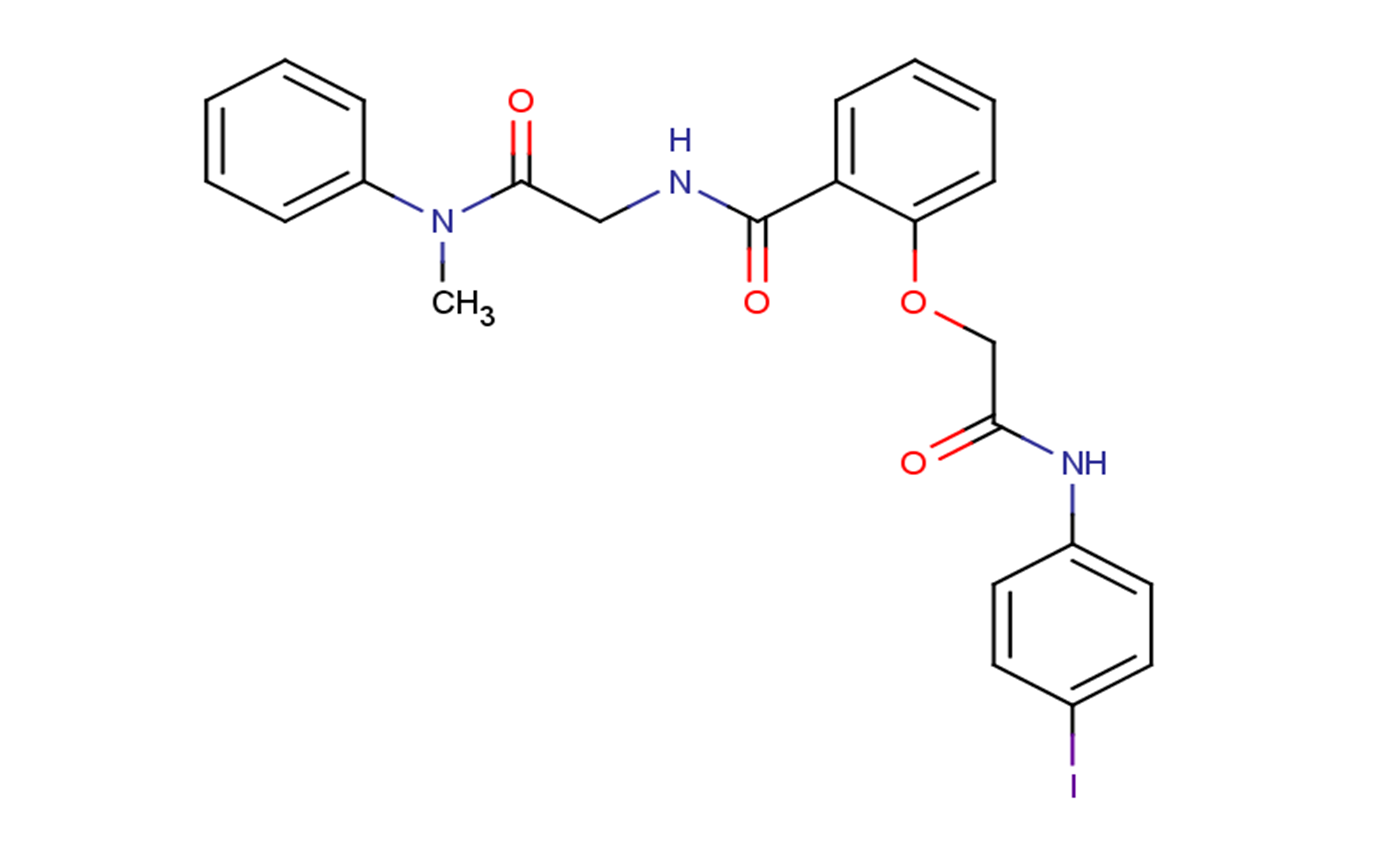
NCGC607
CAS No. 1462267-07-7
NCGC607( —— )
Catalog No. M23622 CAS No. 1462267-07-7
NCGC607 is a a noninhibitory chaperone of glucocerebrosidase (GCase).
Purity : >98% (HPLC)
 COA
Datasheet
HNMR
HPLC
MSDS
Handing Instructions
COA
Datasheet
HNMR
HPLC
MSDS
Handing Instructions
| Size | Price / USD | Stock | Quantity |
| 1 mL x 10 mM in DMSO | 102 | In Stock |


|
| 2MG | 39 | In Stock |
|
| 5MG | 79 | In Stock |
|
| 10MG | 126 | In Stock |
|
| 25MG | 214 | In Stock |
|
| 50MG | 309 | In Stock |
|
| 100MG | 440 | In Stock |
|
| 200MG | 617 | In Stock |
|
| 500MG | Get Quote | In Stock |
|
| 1G | Get Quote | In Stock |
|
Biological Information
-
Product NameNCGC607
-
NoteResearch use only, not for human use.
-
Brief DescriptionNCGC607 is a a noninhibitory chaperone of glucocerebrosidase (GCase).
-
DescriptionNCGC607 is a a noninhibitory chaperone of glucocerebrosidase (GCase).
-
In Vitro——
-
In Vivo——
-
Synonyms——
-
PathwayOthers
-
TargetOther Targets
-
RecptorOthers
-
Research Area——
-
Indication——
Chemical Information
-
CAS Number1462267-07-7
-
Formula Weight543.36
-
Molecular FormulaC24H22IN3O4
-
Purity>98% (HPLC)
-
SolubilityIn Vitro:?DMSO : 62.5 mg/mL (115.03 mM)
-
SMILESCN(C1=CC=CC=C1)C(=O)CNC(=O)C2=CC=CC=C2OCC(=O)NC3=CC=C(C=C3)I
-
Chemical Name——
Shipping & Storage Information
-
Storage(-20℃)
-
ShippingWith Ice Pack
-
Stability≥ 2 years
Reference
1.Aflaki E , Borger D K , Moaven N , et al. A New Glucocerebrosidase Chaperone Reduces α-Synuclein and Glycolipid Levels in iPSC-Derived Dopaminergic Neurons from Patients with Gaucher Disease and Parkinsonism[J]. Journal of Neuroscience the Official Journal of the Society for Neuroscience, 2016, 36(28):7441.
molnova catalog



related products
-
Isochlorogenic acid ...
35-Dicaffeoylquinic acid is a natural phenolic acid with antioxidant and anti-inflammatory activities.
-
Pulchinenoside E3
Raddeanoside R17 (Pulchinenoside E3) is a saponin compound that can be isolated from the root of Pulsatilla koreana. Raddeanoside R17 shows anti-inflammatory effects.
-
Aegeline
Aegeline is an alkaloidal-amide isolated from the leaves of Aegle marmelos and have shown antihyperglycemic as well as antidyslipidemic activities in the validated animal models of type 2 diabetes mellitus.?
