


 Cart
Cart
 sales@molnova.com



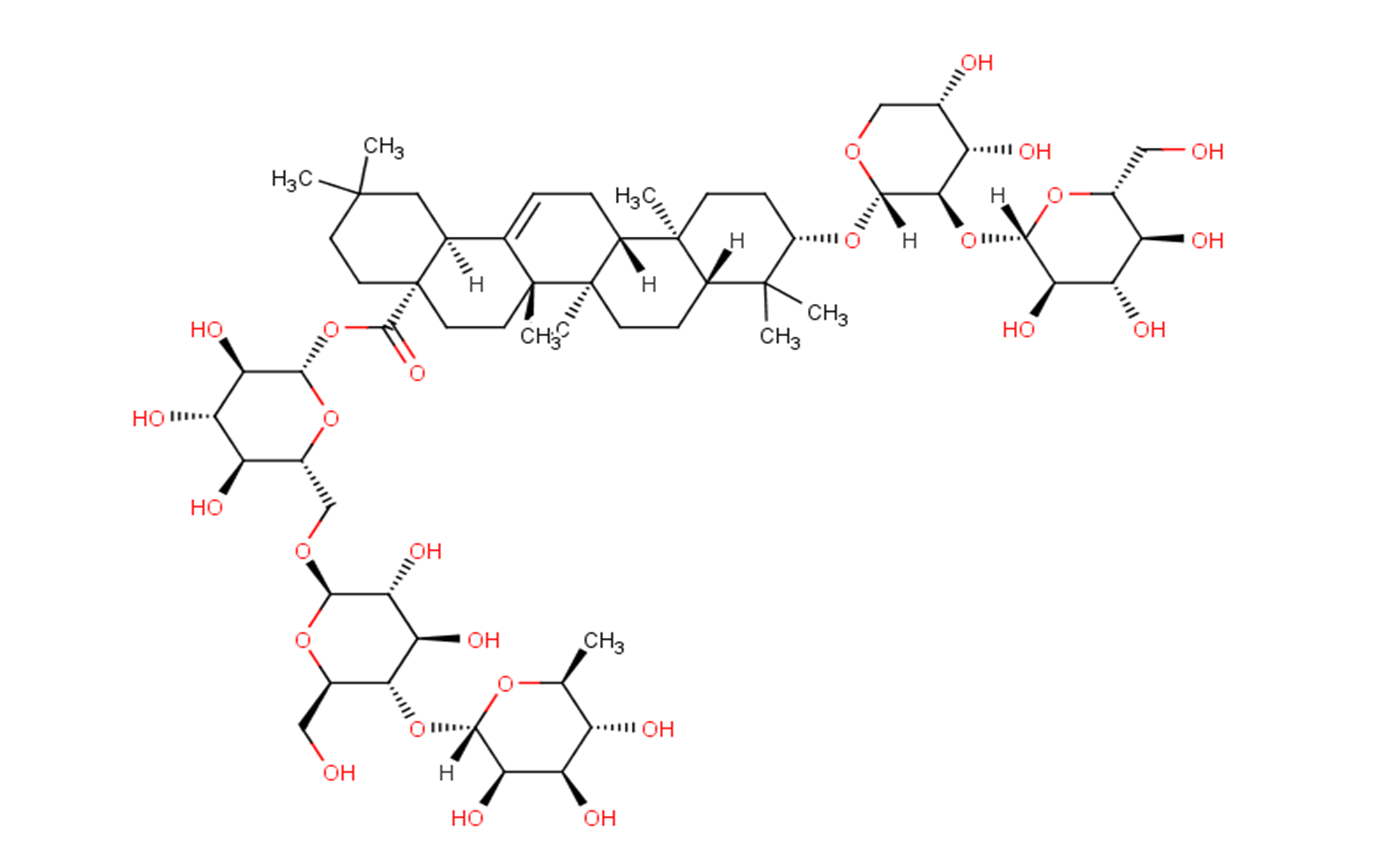
Ciwujianoside A1
CAS No. 120768-65-2
Ciwujianoside A1( —— )
Catalog No. M23378 CAS No. 120768-65-2
Ciwujianoside A1 comes from Acanthopanax senticosus.
Purity : >98% (HPLC)
 COA
Datasheet
HNMR
HPLC
MSDS
Handing Instructions
COA
Datasheet
HNMR
HPLC
MSDS
Handing Instructions
| Size | Price / USD | Stock | Quantity |
| 1 mL x 10 mM in DMSO | 415 | In Stock |


|
| 5MG | 219 | In Stock |
|
| 10MG | 321 | In Stock |
|
| 100MG | Get Quote | In Stock |
|
| 200MG | Get Quote | In Stock |
|
| 500MG | Get Quote | In Stock |
|
| 1G | Get Quote | In Stock |
|
Biological Information
-
Product NameCiwujianoside A1
-
NoteResearch use only, not for human use.
-
Brief DescriptionCiwujianoside A1 comes from Acanthopanax senticosus.
-
DescriptionCiwujianoside A1 comes from Acanthopanax senticosus.
-
In Vitro——
-
In Vivo——
-
Synonyms——
-
PathwayOthers
-
TargetOther Targets
-
RecptorOthers
-
Research Area——
-
Indication——
Chemical Information
-
CAS Number120768-65-2
-
Formula Weight1221.39
-
Molecular FormulaC59H96O26
-
Purity>98% (HPLC)
-
Solubility——
-
SMILESO=C([C@]1(CCC(C)(C)C2)[C@]2([H])C3=CC[C@@]4([H])[C@@](C)(CC[C@]5([H])[C@@]4(CC[C@H](O[C@@](OC[C@H](O)[C@@H]6O)([H])[C@@H]6O[C@]([C@@H]([C@@H](O)[C@@H]7O)O)([H])O[C@@H]7CO)C5(C)C)C)[C@]3(C)CC1)O[C@@H]([C@@H]([C@@H](O)[C@@H]8O)O)O[C@@H]8CO[C@@H]([C@@H]([C@@H](O)[C@@H]9O[C@@](O[C@@H](C)[C@H](O)[C@H]%10O)([H])[C@@H]%10O)O)O[C@@H]9CO
-
Chemical Name——
Shipping & Storage Information
-
Storage(-20℃)
-
ShippingWith Ice Pack
-
Stability≥ 2 years
Reference
molnova catalog



related products
-
Gluten Exorphin A5
Gluten Exorphin A5 is a fragment from wheat gluten with neuroprotective effects. Gluten Exorphin A5 produces various effects not only in the peripheral nervous systems but also in the central nervous system.
-
2-Hydroxypropiopheno...
2'-Hydroxypropiophenone is an agent that is derivatized salicylaldoxime.
-
Itolizumab
Itolizumab (Anti-Human CD6 Recombinant Antibody) is a recombinant anti-CD6 monoclonal antibody that targets the extracellular SRCR distal domain 1 of CD6, thereby slowing T cell proliferation and inhibiting pro-inflammatory cytokine production.
