


 Cart
Cart
 sales@molnova.com



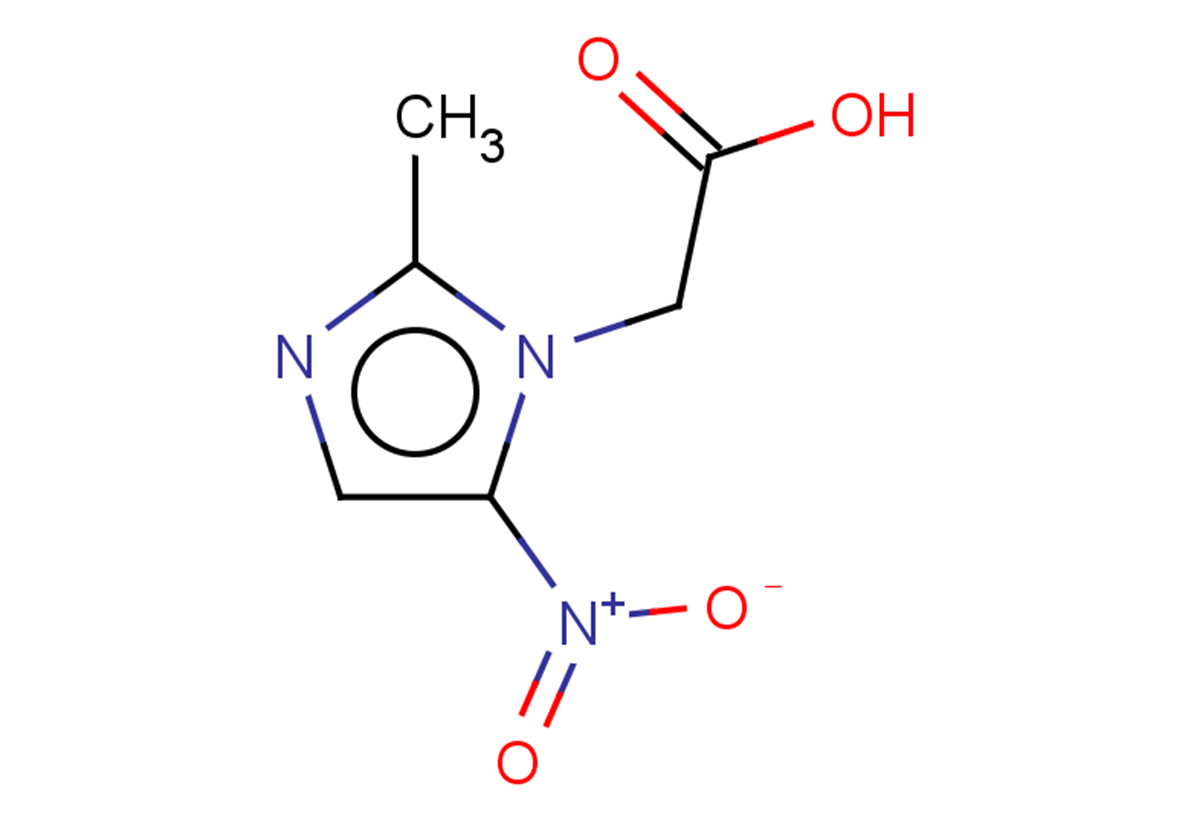
Metronidazole acetic acid
CAS No. 1010-93-1
Metronidazole acetic acid( —— )
Catalog No. M23217 CAS No. 1010-93-1
Metronidazole acetic acid is a metabolite of Metronidazole with mutagenic activity in bacteria.
Purity : >98% (HPLC)
 COA
Datasheet
HNMR
HPLC
MSDS
Handing Instructions
COA
Datasheet
HNMR
HPLC
MSDS
Handing Instructions
| Size | Price / USD | Stock | Quantity |
| 2MG | 49 | In Stock |


|
| 5MG | 54 | In Stock |
|
| 10MG | 93 | In Stock |
|
| 25MG | 168 | In Stock |
|
| 50MG | 251 | In Stock |
|
| 100MG | Get Quote | In Stock |
|
| 200MG | Get Quote | In Stock |
|
| 500MG | Get Quote | In Stock |
|
| 1G | Get Quote | In Stock |
|
Biological Information
-
Product NameMetronidazole acetic acid
-
NoteResearch use only, not for human use.
-
Brief DescriptionMetronidazole acetic acid is a metabolite of Metronidazole with mutagenic activity in bacteria.
-
DescriptionMetronidazole acetic acid is a metabolite of Metronidazole with mutagenic activity in bacteria. Metronidazole is a nitroimidazole antibiotic, amebicide, and antiprotozoal agent used particularly for anaerobic bacteria and protozoa.
-
In Vitro——
-
In Vivo——
-
Synonyms——
-
PathwayMicrobiology/Virology
-
TargetAntibiotic
-
RecptorAntibiotic| Bacterial|Parasite
-
Research Area——
-
Indication——
Chemical Information
-
CAS Number1010-93-1
-
Formula Weight185.14
-
Molecular FormulaC6H7N3O4
-
Purity>98% (HPLC)
-
SolubilityDMSO:200mg/ml(1080.26mM; need ultrasonic)
-
SMILESCc(n1CC(O)=O)ncc1[N+]([O-])=O
-
Chemical Name——
Shipping & Storage Information
-
Storage(-20℃)
-
ShippingWith Ice Pack
-
Stability≥ 2 years
Reference
1.M Chacko, et al. Studies on the Possible Mutagenic Action of Metronidazole. Indian J Exp Biol. 1987 Apr;25(4):240-3.
molnova catalog



related products
-
Lasalocid sodium
Lasalocid sodium is a cationic ionophore antibiotic obtained from Streptomyces lasaliensis that, among other effects, dissociates the calcium fluxes in muscle fibers.
-
Phleomycin
Phleomycin is one of the anticancer glycopeptide antibiotics which cause DNA cleavage.
-
Neamine tetrahydroch...
Neamine tetrahydrochloride is a broad-spectrum aminoglycoside antibiotic with antibacterial, antitumor and neuroprotective activities, inhibits the growth of pancreatic cancer cells, and inhibits the proliferation of oral cancer cells.
