


 Cart
Cart
 sales@molnova.com



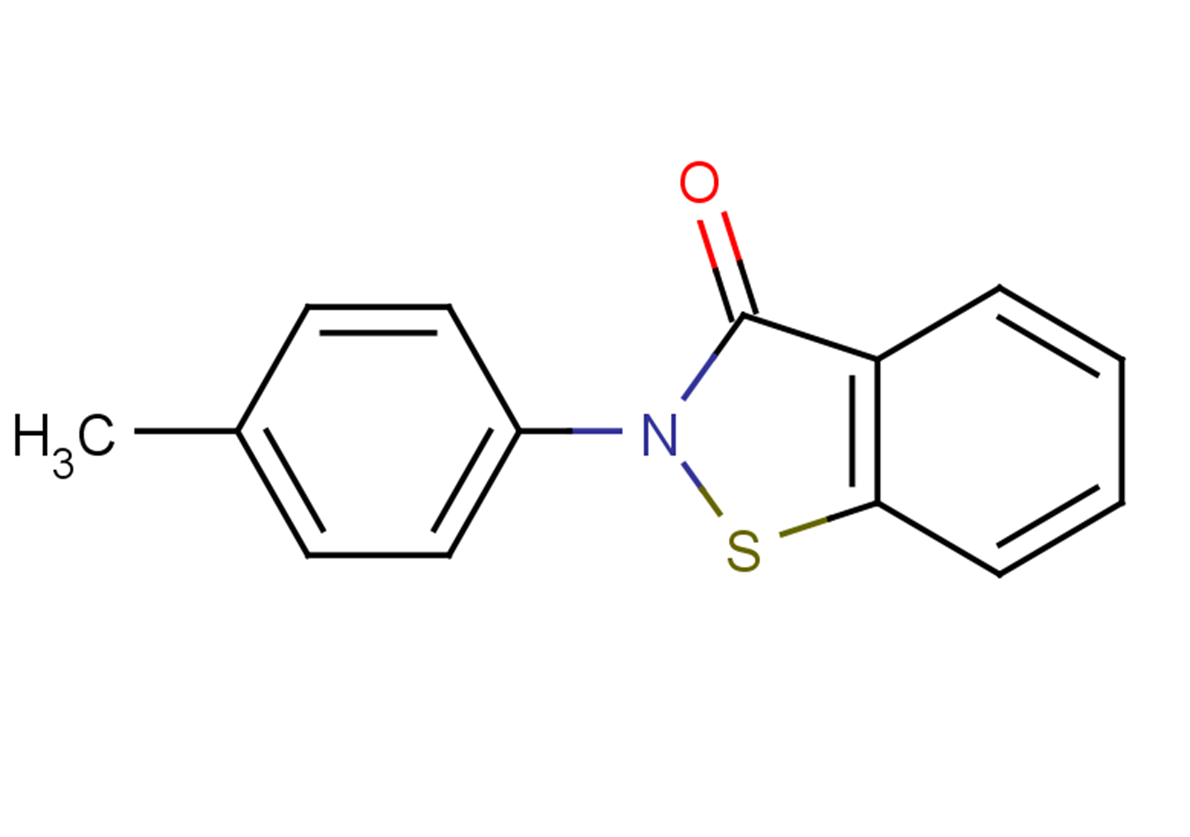
PBIT
CAS No. 2514-30-9
PBIT( —— )
Catalog No. M22946 CAS No. 2514-30-9
PBIT inhibits JARID1B histone demethylase (IC50 of about 3 μM). PBIT also inhibits JARID1A and JARID1C (IC50s of 6 μM and 4.9 μM, respectively). PBIT is a specific inhibitor of the Jumonji AT-rich Interactive Domain 1 (JARID1) enzymes . PBIT, which inhibits JARID1B with an IC50 of about 3 μm in vitro.
Purity : >98% (HPLC)
 COA
Datasheet
HNMR
HPLC
MSDS
Handing Instructions
COA
Datasheet
HNMR
HPLC
MSDS
Handing Instructions
| Size | Price / USD | Stock | Quantity |
| 1 mL x 10 mM in DMSO | 76 | In Stock |


|
| 2MG | 43 | In Stock |
|
| 5MG | 69 | In Stock |
|
| 10MG | 107 | In Stock |
|
| 25MG | 227 | In Stock |
|
| 50MG | 352 | In Stock |
|
| 100MG | 569 | In Stock |
|
| 200MG | 806 | In Stock |
|
| 500MG | Get Quote | In Stock |
|
| 1G | Get Quote | In Stock |
|
Biological Information
-
Product NamePBIT
-
NoteResearch use only, not for human use.
-
Brief DescriptionPBIT inhibits JARID1B histone demethylase (IC50 of about 3 μM). PBIT also inhibits JARID1A and JARID1C (IC50s of 6 μM and 4.9 μM, respectively). PBIT is a specific inhibitor of the Jumonji AT-rich Interactive Domain 1 (JARID1) enzymes . PBIT, which inhibits JARID1B with an IC50 of about 3 μm in vitro.
-
DescriptionPBIT inhibits JARID1B histone demethylase (IC50 of about 3 μM). PBIT also inhibits JARID1A and JARID1C (IC50s of 6 μM and 4.9 μM, respectively). PBIT is a specific inhibitor of the Jumonji AT-rich Interactive Domain 1 (JARID1) enzymes . PBIT, which inhibits JARID1B with an IC50 of about 3 μm in vitro. Consistent with this, PBIT treatment inhibited removal of H3K4me3 by JARID1B in cells. Furthermore, this compound inhibited proliferation of cells expressing higher levels of JARID1B.
-
In VitroCell Proliferation Assay Cell Line:Human breast cancer cell lines (UACC-812 and MCF7) and human mammary epithelial cells (MCF10A)Concentration:1, 3, and 10 μM for UACC-812 cells; 2.5, 5, and 10 μM for MCF7 and MCF10A cells Incubation Time:72 hours Result:Inhibited cell proliferation in a JARID1B level-dependent manner. 10 μM killed most of the UACC-812 cells, but showed minimal toxicity to MCF7 cells and MCF10A cells.
-
In Vivo——
-
Synonyms——
-
PathwayOthers
-
TargetOther Targets
-
RecptorJARID1B|JARID1A|JARID1C
-
Research Area——
-
Indication——
Chemical Information
-
CAS Number2514-30-9
-
Formula Weight241.31
-
Molecular FormulaC14H11NOS
-
Purity>98% (HPLC)
-
SolubilityDMSO:100 mg/mL (414.40 mM; Need ultrasonic)
-
SMILESO=C1N(C2=CC=C(C)C=C2)SC3=C1C=CC=C3
-
Chemical Name——
Shipping & Storage Information
-
Storage(-20℃)
-
ShippingWith Ice Pack
-
Stability≥ 2 years
Reference
1. Sayegh J, et al. Identification of small molecule inhibitors of Jumonji AT-rich interactive domain 1B (JARID1B) histone demethylase by a sensitive high throughput screen. J Biol Chem. 2013 Mar 29;288(13):9408-17.
molnova catalog



related products
-
Giganteone C
The herbs of Curcuma wenyujin Y.H.Chen & C.Ling.
-
RGD Trifluoroacetate
RGD Trifluoroacetate is a tripeptide that effectively triggers cell adhesion, addresses certain cell lines and elicits specific cell responses; RGD Trifluoroacetate binds to integrins.RGD Trifluoroacetate is the most effective and most often employed peptide sequence for stimulated cell adhesion on synthetic surfaces. There are 24 integrins binding to ECM molecules in a RGD dependent manner: α3β1, α5β1, α8β1, αIIbβ3, αvβ1, αvβ3, αvβ5, αvβ6, αvβ8, and to some extent α2β1 and α4β1.
-
beta-L-D4A
beta-L-D4A, a nucleoside HIV-1 reverse transcriptase inhibitor, exhibits biological activity by terminating DNA chain synthesis in the 5'-3' direction.
