


 Cart
Cart
 sales@molnova.com



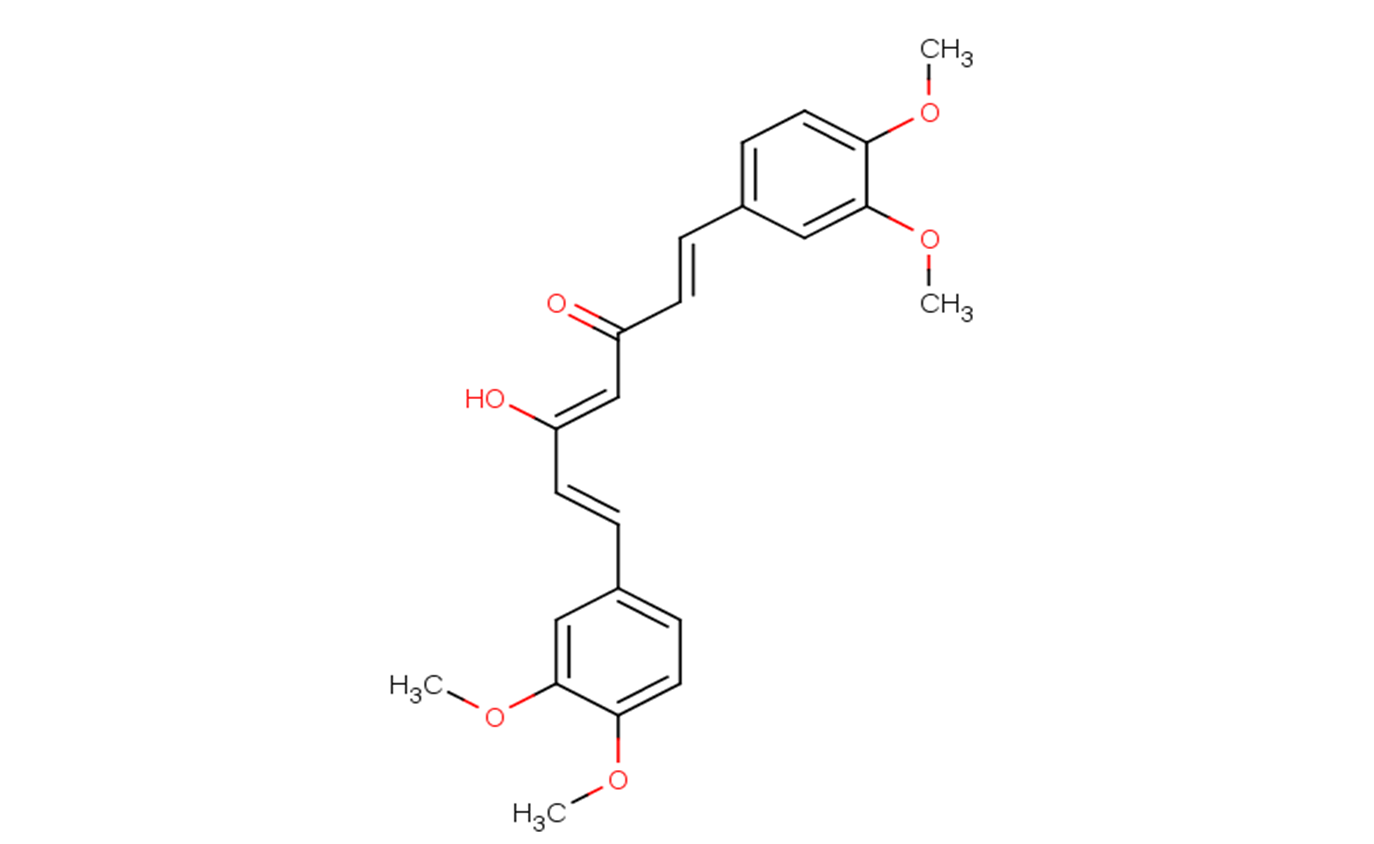
Dimethylcurcumin
CAS No. 52328-98-0
Dimethylcurcumin( ASC-J9,GO-Y025 )
Catalog No. M22795 CAS No. 52328-98-0
Dimethylcurcumin (ASC-J9) is an androgen receptor degradation enhancer. It effectively suppresses castration-resistant prostate cancer cell proliferation and invasion.Dimethylcurcumin is able to degrade fAR and AR3 in a dose-dependent manner in various human PCa cells. Dimethylcurcumin can also effectively suppress AR-targeted genes in CWR22Rv1-fARKD cells.
Purity : >98% (HPLC)
 COA
Datasheet
HNMR
HPLC
MSDS
Handing Instructions
COA
Datasheet
HNMR
HPLC
MSDS
Handing Instructions
| Size | Price / USD | Stock | Quantity |
| 1 mL x 10 mM in DMSO | 46 | In Stock |


|
| 2MG | 29 | In Stock |
|
| 5MG | 42 | In Stock |
|
| 10MG | 65 | In Stock |
|
| 25MG | 121 | In Stock |
|
| 50MG | 184 | In Stock |
|
| 100MG | 296 | In Stock |
|
| 200MG | Get Quote | In Stock |
|
| 500MG | Get Quote | In Stock |
|
| 1G | Get Quote | In Stock |
|
Biological Information
-
Product NameDimethylcurcumin
-
NoteResearch use only, not for human use.
-
Brief DescriptionDimethylcurcumin (ASC-J9) is an androgen receptor degradation enhancer. It effectively suppresses castration-resistant prostate cancer cell proliferation and invasion.Dimethylcurcumin is able to degrade fAR and AR3 in a dose-dependent manner in various human PCa cells. Dimethylcurcumin can also effectively suppress AR-targeted genes in CWR22Rv1-fARKD cells.
-
DescriptionDimethylcurcumin (ASC-J9) is an androgen receptor degradation enhancer. It effectively suppresses castration-resistant prostate cancer cell proliferation and invasion.Dimethylcurcumin is able to degrade fAR and AR3 in a dose-dependent manner in various human PCa cells. Dimethylcurcumin can also effectively suppress AR-targeted genes in CWR22Rv1-fARKD cells. Dimethylcurcumin (5 or 10 μM) significantly suppresses the DHT-induced cell growth in all three PCa cell lines. Dimethylcurcumin suppresses AR-targeted genes and cell growth by the degradation of fAR and ectopic AR3 in C81 and C4-2 cells. ASC-J9 reduces the AR aggregated AR-112Q in cells. Dimethylcurcumin suppresses the aggregation of AR-112Q in SBMA PC12/AR-112Q cells.Dimethylcurcumin (75 mg/kg, i.p.) degrades both fAR and AR3 in the xenografted tumors in vivo and ASC-J9-treated tumors have significantly decreased Ki67-positive cells. Dimethylcurcumin (50 mg/kg every 48 h, i.p.) substantially ameliorates the SBMA symptoms in AR-97Q mice and ameliorates neuromuscular pathological findings. ASC-J9-treated mice show significantly smaller prostate tumor sizes when compared with those receiving classic ADT/castration with little serum androgen.(In Vitro):Dimethylcurcumin (ASC-J9) is able to degrade fAR and AR3 in a dose-dependent manner in various human PCa cells. Dimethylcurcumin (ASC-J9) can also effectively suppress AR-targeted genes in CWR22Rv1-fARKD cells. Dimethylcurcumin (ASC-J9) (5 or 10 μM) significantly suppresses the DHT-induced cell growth in all three PCa cell lines. Dimethylcurcumin (ASC-J9) suppresses AR-targeted genes and cell growth by degradation of fAR and ectopic AR3 in C81 and C4-2 cells. Dimethylcurcumin (ASC-J9) selectively promotes AR degradation by disrupting the interaction between AR and AR coregulators. ASC-J9 reduces the AR aggregated AR-112Q in cells. Dimethylcurcumin (ASC-J9) suppresses the aggregation of AR-112Q in SBMA PC12/AR-112Q cells. (In Vivo):Dimethylcurcumin (ASC-J9) (75 mg/kg, i.p.) degrades both fAR and AR3 in the xenografted tumors in vivo, and SC-J9-treated tumors has significantly decreased Ki67-positive cells. Dimethylcurcumin (ASC-J9) (50 mg/kg every 48 h, i.p.) substantially ameliorates the SBMA symptoms in AR-97Q mice, and ameliorates neuromuscular pathological findings. The Dimethylcurcumin (ASC-J9)-treated SBMA mice have relatively normal serum testosterone concentrations. ASC-J9-treated mice show significantly smaller prostate tumor sizes when compared with those receiving classic ADT/castration with little serum androgen.
-
In VitroDimethylcurcumin (ASC-J9) is able to degrade fAR and AR3 in a dose-dependent manner in various human PCa cells. Dimethylcurcumin (ASC-J9) can also effectively suppress AR-targeted genes in CWR22Rv1-fARKD cells. Dimethylcurcumin (ASC-J9) (5 or 10 μM) significantly suppresses the DHT-induced cell growth in all three PCa cell lines. Dimethylcurcumin (ASC-J9) suppresses AR-targeted genes and cell growth by degradation of fAR and ectopic AR3 in C81 and C4-2 cells. Dimethylcurcumin (ASC-J9) selectively promotes AR degradation by disrupting the interaction between AR and AR coregulators. ASC-J9 reduces the AR aggregated AR-112Q in cells. Dimethylcurcumin (ASC-J9) suppresses the aggregation of AR-112Q in SBMA PC12/AR-112Q cells.
-
In VivoDimethylcurcumin (ASC-J9) (75 mg/kg, i.p.) degrades both fAR and AR3 in the xenografted tumors in vivo, and SC-J9-treated tumors has significantly decreased Ki67-positive cells. Dimethylcurcumin (ASC-J9) (50 mg/kg every 48 h, i.p.) substantially ameliorates the SBMA symptoms in AR-97Q mice, and ameliorates neuromuscular pathological findings. The Dimethylcurcumin (ASC-J9)-treated SBMA mice have relatively normal serum testosterone concentrations. ASC-J9-treated mice show significantly smaller prostate tumor sizes when compared with those receiving classic ADT/castration with little serum androgen.
-
SynonymsASC-J9,GO-Y025
-
PathwayEndocrinology/Hormones
-
TargetAndrogen Receptor (AR)
-
RecptorAndrogen Receptor
-
Research AreaOthers
-
IndicationAcne vulgaris
Chemical Information
-
CAS Number52328-98-0
-
Formula Weight396.43
-
Molecular FormulaC23H24O6
-
Purity>98% (HPLC)
-
SolubilityDMSO:48 mg/mL (121.08 mM);Water:Insoluble
-
SMILESO=C(/C=C(O)/C=C/C1=CC=C(OC)C(OC)=C1)/C=C/C2=CC=C(OC)C(OC)=C2
-
Chemical Name——
Shipping & Storage Information
-
Storage(-20℃)
-
ShippingWith Ice Pack
-
Stability≥ 2 years
Reference
1. Yamashita S, et al. ASC-J9 suppresses castration-resistant prostate cancer growth through degradation of full-length and splice variant androgen receptors. Neoplasia. 2012 Jan;14(1):74-83.
molnova catalog



related products
-
Ralaniten triacetate
Ralaniten triacetate (EPI-506), a precursor of Ralaniten, is a first-of-its-kind, orally active androgen receptor N-terminal structural domain (AR-NTD) inhibitor with anticancer activity and can be used to study prostate and breast cancer.
-
ODM-201
A potent wt/mutant androgen receptor (AR) inhibitor with Ki of 11 nM.
-
Dihydrotestosterone(...
Dihydrotestosterone is a potent androgenic metabolite of testosterone. It is an agonist of the androgen receptor.
