


 Cart
Cart
 sales@molnova.com



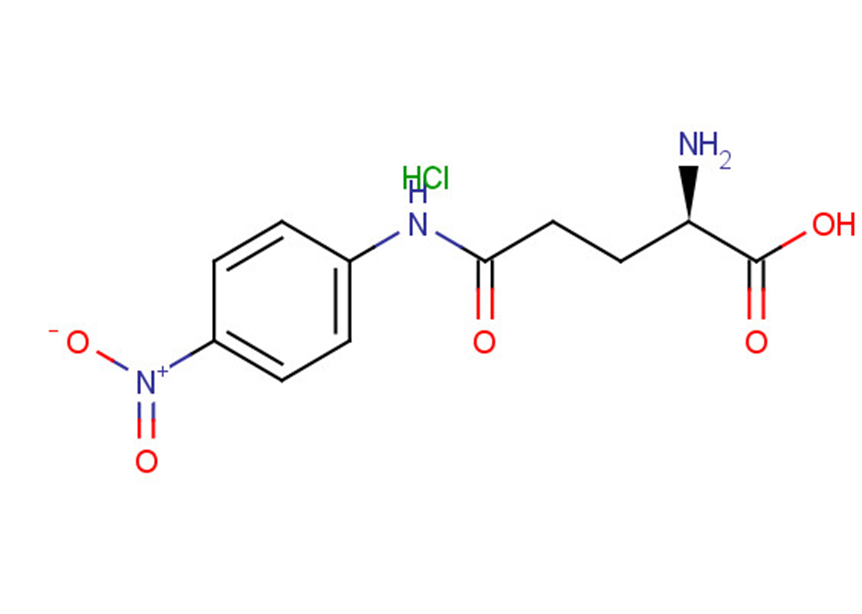
GPNA hydrochloride
CAS No. 67953-08-6
GPNA hydrochloride( —— )
Catalog No. M22681 CAS No. 67953-08-6
GPNA hydrochloride is specific glutamine (Gln) transporter ASCT2(SLC1A5) inhibitor. GPNA reversibly induces apoptosis in A549 cells. GPNA hydrochloride is a well-known substrate of the enzyme γ-glutamyltransferase (GGT).
Purity : >98% (HPLC)
 COA
Datasheet
HNMR
HPLC
MSDS
Handing Instructions
COA
Datasheet
HNMR
HPLC
MSDS
Handing Instructions
| Size | Price / USD | Stock | Quantity |
| 10MG | 29 | In Stock |


|
| 25MG | 58 | In Stock |
|
| 50MG | 99 | In Stock |
|
| 100MG | 137 | In Stock |
|
| 200MG | Get Quote | In Stock |
|
| 500MG | 342 | In Stock |
|
| 1G | Get Quote | In Stock |
|
Biological Information
-
Product NameGPNA hydrochloride
-
NoteResearch use only, not for human use.
-
Brief DescriptionGPNA hydrochloride is specific glutamine (Gln) transporter ASCT2(SLC1A5) inhibitor. GPNA reversibly induces apoptosis in A549 cells. GPNA hydrochloride is a well-known substrate of the enzyme γ-glutamyltransferase (GGT).
-
DescriptionGPNA hydrochloride is specific glutamine (Gln) transporter ASCT2(SLC1A5) inhibitor. GPNA reversibly induces apoptosis in A549 cells. GPNA hydrochloride is a well-known substrate of the enzyme γ-glutamyltransferase (GGT). GPNA hydrochloride also inhibits Na+-dependent carriers, such as SNAT family (SNAT1/2/4/5), and the Na+-independent leucine transporters LAT1/2.GPNA (10-1000 μM; 48 hours) induces a dose-dependent to reduce of cell viability in A549 cells.
-
In VitroGPNA (10-1000 μM; 48hours) induces a dose-dependent decrease of cell viability in A549 cells. Cell Viability AssayCell Line:A549 cells Concentration:10, 100, 250, 500 , and 1000 μM Incubation Time:48?hours Result:Induced a dose-dependent decrease of cell viability, with an IC50 roughly corresponding to ~250?μM.
-
In Vivo——
-
Synonyms——
-
PathwayOthers
-
TargetOther Targets
-
RecptorASCT2
-
Research Area——
-
Indication——
Chemical Information
-
CAS Number67953-08-6
-
Formula Weight303.7
-
Molecular FormulaC11H14ClN3O5
-
Purity>98% (HPLC)
-
SolubilityDMSO:124 mg/mL(408.3 mM)
-
SMILESCl.N[C@@H](CCC(=O)Nc1ccc(cc1)[N+]([O-])=O)C(O)=O
-
Chemical Name——
Shipping & Storage Information
-
Storage(-20℃)
-
ShippingWith Ice Pack
-
Stability≥ 2 years
Reference
1. Corti A, et al. γ-Glutamyltransferase enzyme activity of cancer cells modulates L-γ-glutamyl-p-nitroanilide (GPNA) cytotoxicity. Sci Rep. 2019 Jan 29;9(1):891.
molnova catalog



related products
-
20(21)-Dehydrolucide...
Methyl 20(21)-dehydrolucidenate A is a triterpenoid compound found in Ganoderma sinense.
-
Isonardosinone
Isonardosinone shows potential role in the treatment of neuroinflammation conditions, it inhibits NF-?oB- and MAPK-mediated inflammatory pathways.
-
(D-Pro4,D-Trp7·9·10,...
(D-Pro4,D-Trp7·9·10,Val8)-Substance P (4-11)
