


 Cart
Cart
 sales@molnova.com



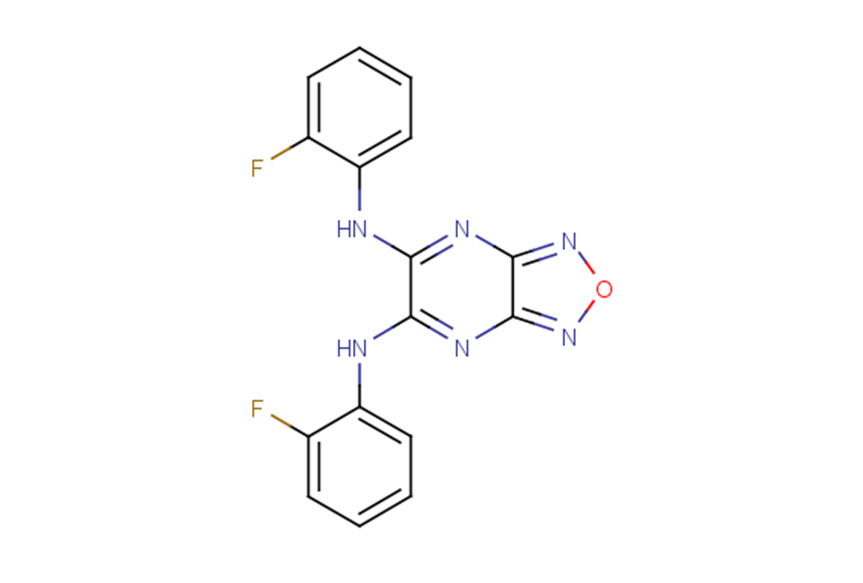
BAM 15
CAS No. 210302-17-3
BAM 15( —— )
Catalog No. M22567 CAS No. 210302-17-3
BAM 15 is an uncoupler of mitochondrial protonophore. BAM 15 is fully capable of increasing mitochondrial respiration in the presence of oligomycin and does so across a broader concentration range than FCCP in both myoblasts and hepatocytes and it is able to increase O2 consumption across a broad dosing range without increasing ROS.
Purity : >98% (HPLC)
 COA
Datasheet
HNMR
HPLC
MSDS
Handing Instructions
COA
Datasheet
HNMR
HPLC
MSDS
Handing Instructions
| Size | Price / USD | Stock | Quantity |
| 1 mL x 10 mM in DMSO | 63 | In Stock |


|
| 5MG | 56 | In Stock |
|
| 10MG | 104 | In Stock |
|
| 25MG | 187 | In Stock |
|
| 50MG | 305 | In Stock |
|
| 100MG | 462 | In Stock |
|
| 200MG | Get Quote | In Stock |
|
| 500MG | 1004 | In Stock |
|
| 1G | Get Quote | In Stock |
|
Biological Information
-
Product NameBAM 15
-
NoteResearch use only, not for human use.
-
Brief DescriptionBAM 15 is an uncoupler of mitochondrial protonophore. BAM 15 is fully capable of increasing mitochondrial respiration in the presence of oligomycin and does so across a broader concentration range than FCCP in both myoblasts and hepatocytes and it is able to increase O2 consumption across a broad dosing range without increasing ROS.
-
DescriptionBAM 15 is an uncoupler of mitochondrial protonophore. BAM 15 is fully capable of increasing mitochondrial respiration in the presence of oligomycin and does so across a broader concentration range than FCCP in both myoblasts and hepatocytes and it is able to increase O2 consumption across a broad dosing range without increasing ROS. BAM 15 and FCCP are structurally unrelated. Which is observed that low doses of BAM 15 from 100 nM to 1 μM increase cellular O2 consumption rate (OCR) to a similar degree as FCCP, However higher concentrations from 1 μM to 50 μM reveal that BAM 15 is able to maintain uncoupled respiration at a high rate in a range of cell lines. BAM 15 induces mitochondrial swelling, demonstrating that BAM 15 is a protonophore. BAM15-treated cells are more viable than FCCP-treated cells when administered across a broad dosing range up to 50 μM.Compare to vehicle-treated mice, animals that receive BAM 15 are protected from kidney injury as indicated by lower plasma creatinine levels at 24 and 48 h post-ischemia, reduced tubular necrosis, less obstruction of proximal tubules, less depletion of brush border villi, and less immune cell infiltration.
-
In VitroBAM 15 is able to increase O2 consumption across a broad dosing range without increasing ROS. BAM 15 and FCCP are structurally unrelated and it is observed that low doses of BAM 15 from 100 nM to 1 μM increase cellular O2 consumption rate (OCR) to a similar degree as FCCP, but higher concentrations from 1 μM to 50 μM reveal that BAM 15 is able to maintain uncoupled respiration at a high rate in a range of cell lines. BAM 15 is fully capable of increasing mitochondrial respiration in the presence of oligomycin and does so across a broader concentration range than FCCP in both myoblasts and hepatocytes.BAM 15 induces mitochondrial swelling, demonstrating that BAM 15 is a protonophore. BAM15-treated cells are more viable than FCCP-treated cells when administered across a broad dosing range up to 50 μM.
-
In VivoCompare to vehicle-treated mice, animals that receive BAM 15 are protected from kidney injury as indicated by lower plasma creatinine levels at 24 and 48 h post-ischemia, reduced tubular necrosis, less depletion of brush border villi, less obstruction of proximal tubules, and less immune cell infiltration.
-
Synonyms——
-
PathwayOthers
-
TargetOther Targets
-
Recptoroxidative phosphorylation (OXPHOS)
-
Research Area——
-
Indication——
Chemical Information
-
CAS Number210302-17-3
-
Formula Weight340.29
-
Molecular FormulaC16H10F2N6O
-
Purity>98% (HPLC)
-
SolubilityDMSO:72 mg/mL (211.58mM; Need ultrasonic)
-
SMILESFc1ccccc1Nc1nc2nonc2nc1Nc1ccccc1F
-
Chemical Name——
Shipping & Storage Information
-
Storage(-20℃)
-
ShippingWith Ice Pack
-
Stability≥ 2 years
Reference
1.Kenwood BM, et al. Identification of a novel mitochondrial uncoupler that does not depolarize the plasma membrane. Mol Metab. 2013 Nov 28;3(2):114-23.
molnova catalog



related products
-
Cefpodoxime (free ac...
Cefpodoxime (free acid) is an oral, third-generation cephalosporin antibiotic. It is active against most Gram-positive and Gram-negative organisms, except Pseudomonas aeruginosa, Enterococcus, and Bacteroides fragilis.
-
NSC19005
NSC19005 is structurally related to Betahistine. NSC19005 is a dimer of Betahistine.
-
MAO-B-IN-5
MAO-B-IN-5 is a potent, selective, and orally active MAO-B inhibitor with an IC50 of 0.204 μM, showing potential for research in Parkinson's disease (PD) .
