


 Cart
Cart
 sales@molnova.com



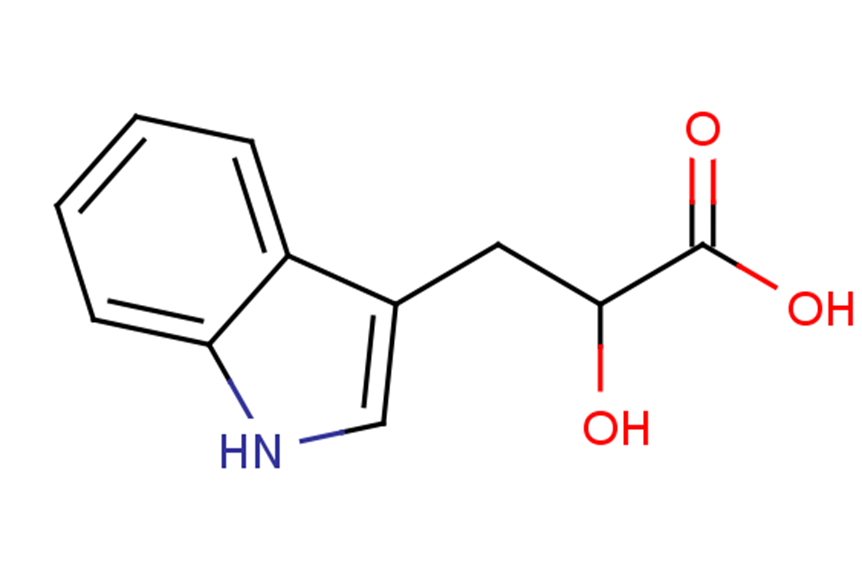
Indolelactic acid
CAS No. 1821-52-9
Indolelactic acid( —— )
Catalog No. M22552 CAS No. 1821-52-9
Indolelactic acid is a metabolite of tryptophan in Azotobacter vinelandii cultures.
Purity : >98% (HPLC)
 COA
Datasheet
HNMR
HPLC
MSDS
Handing Instructions
COA
Datasheet
HNMR
HPLC
MSDS
Handing Instructions
| Size | Price / USD | Stock | Quantity |
| 1 mL x 10 mM in DMSO | 38 | In Stock |


|
| 5MG | 33 | In Stock |
|
| 10MG | 53 | In Stock |
|
| 25MG | 101 | In Stock |
|
| 50MG | 160 | In Stock |
|
| 100MG | 272 | In Stock |
|
| 200MG | Get Quote | In Stock |
|
| 500MG | Get Quote | In Stock |
|
| 1G | Get Quote | In Stock |
|
Biological Information
-
Product NameIndolelactic acid
-
NoteResearch use only, not for human use.
-
Brief DescriptionIndolelactic acid is a metabolite of tryptophan in Azotobacter vinelandii cultures.
-
DescriptionIndolelactic acid is a metabolite of tryptophan in Azotobacter vinelandii cultures.
-
In VitroIndolelactic acid (1 mM, 5 days) upregulates CXCR3, granzyme B, and immunoregulatory galectin-1 in Th2 cells.Indolelactic acid (0.1-10mM, 1 h) significantly inhibits LPS-induced inflammation in RAW blue macrophages and Caco-2 cells.Indolelactic acid (0.1-10mM, 1 h) inhibits TNF-α induced inflammation in HT-29 cells.Indolelactic acid (10mM, 1 h) activates the AhR and downstream Nrf2 pathway in Caco-2 cells.Indolelactic acid (5 μM, 24 h) enhances the IFIT2 and RSAD2 mRNA expression in H4 cells stimulated by IL-1β. RT-PCR Cell Line:HT-29 cells Concentration:0.1, 1, 10?mMIncubation Time:1 h Result:Decreased IL-8 level induced by TNF-α, and increased β-defensin 2 and SERT level.
-
In VivoIndolelactic acid (gavage feeding, 10 μM, 5 μL, 5 days, C57BL/6 mice) benefits the immature intestine preferentially. Animal Model:C57BL/6 mice Dosage:10 μM, 5 μL Administration:Gavage feeding, 5 days Result:Upregulated the innate immune response genes in immature mouse intestine (C57-pup-ileum), with no effects on pup-colon or adult intestine.
-
Synonyms——
-
PathwayProteasome/Ubiquitin
-
TargetEndogenous Metabolite
-
RecptorEndogenous Metabolite
-
Research Area——
-
Indication——
Chemical Information
-
CAS Number1821-52-9
-
Formula Weight205.21
-
Molecular FormulaC11H11NO3
-
Purity>98% (HPLC)
-
SolubilityDMSO:82 mg/mL (399.59mM; Need ultrasonic)
-
SMILESO=C(O)C(O)Cc2cnc1ccccc12
-
Chemical Name——
Shipping & Storage Information
-
Storage(-20℃)
-
ShippingWith Ice Pack
-
Stability≥ 2 years
Reference
1.Francisco García-Tabares, et al. Production of 3-indoleacetic acid and 3-indolelactic acid in Azotobacter vinelandii cultures supplemented with tryptophan. Appl Microbiol Biotechnol.1987 Mar, 25 (6):502–506.
molnova catalog



related products
-
3-Hydroxyanthranilic...
3-Hydroxyanthranilic acid also known as 2-amino-3-hydroxy-benzoate or 3-ohaa belongs to the class of organic compounds known as hydroxybenzoic acid derivatives. 3-Hydroxyanthranilic acid has been found in human epidermis and bladder tissues and has also been detected in multiple biofluids such as urine and blood.
-
Erucic acid
Increased levels of erucic acid (22:1n9) have been found in the red blood cell membranes of autistic subjects with developmental regression.
-
5-Methylcytidine
5-Methylcytidine is a modified nucleoside derived from 5-methylcytosine and is a minor constituent of RNA as well as DNA for certain organisms.
