


 Cart
Cart
 sales@molnova.com



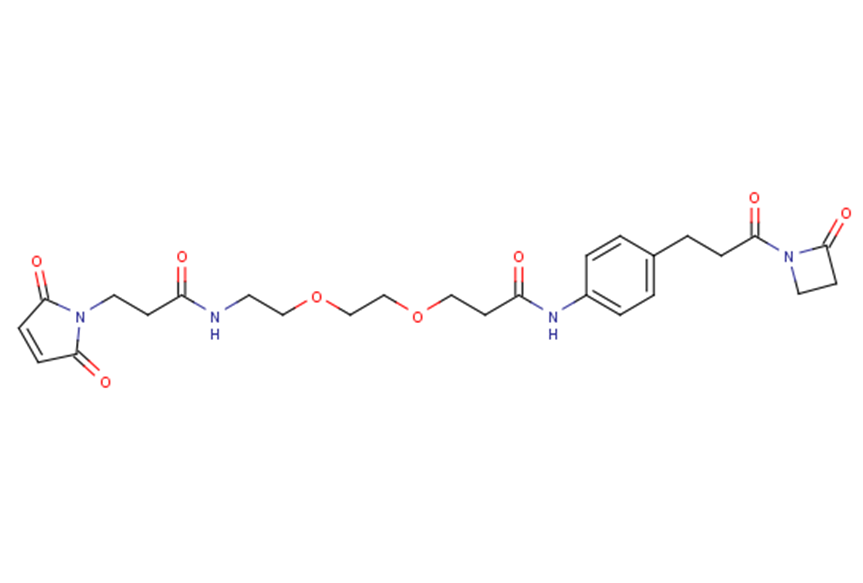
PF-05231023
CAS No. 1037589-69-7
PF-05231023( —— )
Catalog No. M22505 CAS No. 1037589-69-7
PF-05231023 is a long-acting fibroblast growth factor 21 (FGF21) analog and is an FGF21-receptor agonist. It is also suitable for development as a potential treatment for T2DM. PF-05231023 is a analog of long-acting fibroblast growth factor 21.
Purity : >98% (HPLC)
 COA
Datasheet
HNMR
HPLC
MSDS
Handing Instructions
COA
Datasheet
HNMR
HPLC
MSDS
Handing Instructions
| Size | Price / USD | Stock | Quantity |
| 1 mL x 10 mM in DMSO | 56 | In Stock |


|
| 5MG | 44 | In Stock |
|
| 10MG | 69 | In Stock |
|
| 25MG | 130 | In Stock |
|
| 50MG | 207 | In Stock |
|
| 100MG | 333 | In Stock |
|
| 200MG | Get Quote | In Stock |
|
| 500MG | Get Quote | In Stock |
|
| 1G | Get Quote | In Stock |
|
Biological Information
-
Product NamePF-05231023
-
NoteResearch use only, not for human use.
-
Brief DescriptionPF-05231023 is a long-acting fibroblast growth factor 21 (FGF21) analog and is an FGF21-receptor agonist. It is also suitable for development as a potential treatment for T2DM. PF-05231023 is a analog of long-acting fibroblast growth factor 21.
-
DescriptionPF-05231023 is a long-acting fibroblast growth factor 21 (FGF21) analog and is an FGF21-receptor agonist. It is also suitable for development as a potential treatment for T2DM. PF-05231023 is a analog of long-acting fibroblast growth factor 21.PF-05231023 suppresses oxidative-stress-induced inflammation in photoreceptors. PF-05231023 decreases the variability of retinal NRF2 levels and displays a trend (non-significant) towards increased NRF2 levels in Akita mice. PF-05231023 decreases retinal IL-1β mRNA expression in Akita mice. PF-05231023 enhances cone-specific arrestin4 expression in Akita mice. PF-05231023 restores photoreceptor morphology in Akita mice. Administration of native FGF21 and PF-05231023 (3 mg/kg or 10 mg/kg; subcutaneously twice a week for two weeks) improves glucose tolerance and liver insulin sensitivity in Zucker rats. PF-05231023 (10 mg/kg; intraperitoneally injected) reduces retinal inflammation in diabetic mice.(In Vivo):Animal Model: Eight week old Zucker ratsDosage: 3 mg/kg and 10 mg/kg.Administration: Subcutaneously twice a week for two weeks.Result: There was no change of BW observed, and food intake was not changed in the treated groups compared to control. Caused a significant decrease of glucose excursion during the oral glucose tolerance test (OGTT) compared to control.
-
In Vitro——
-
In VivoAnimal Model:Eight week old Zucker rats Dosage:3?mg/kg and 10?mg/kg Administration:Subcutaneously twice a week for two weeksResult:There was no change of BW observed, and food intake was not changed in the treated groups compared to control. Caused a significant decrease of glucose excursion during the oral glucose tolerance test (OGTT) compared to control. Animal Model:7-to-8-month-old Akita mice with type 1 diabete model Dosage:10 mg/kg Administration:Intraperitoneally injected; twice a week; for four weeks Result:Administration improved retinal function in diabetic Akita mice.
-
Synonyms——
-
PathwayOthers
-
TargetOther Targets
-
RecptorFGF21-receptor
-
Research Area——
-
Indication——
Chemical Information
-
CAS Number1037589-69-7
-
Formula Weight528.55
-
Molecular FormulaC26H32N4O8
-
Purity>98% (HPLC)
-
SolubilityDMSO:125 mg/mL (236.50 mM; Need ultrasonic)
-
SMILESO=C(CCN1C(=O)C=CC1=O)NCCOCCOCCC(=O)Nc1ccc(CCC(=O)N2CCC2=O)cc1
-
Chemical Name——
Shipping & Storage Information
-
Storage(-20℃)
-
ShippingWith Ice Pack
-
Stability≥ 2 years
Reference



-
Cinnamyl alcohol
Cinnamyl alcohol readily autoxidizes upon air exposure, and forms strong sensitizers as determined by the local lymph node assay.
-
Cyclic MKEY TFA
Cyclic MKEY TFA is a synthetic cyclic peptide inhibitor of CXCL4-CCL5 heterodimer formation, which protects against atherosclerosis and aortic aneurysm formation by mediating inflammation.
-
OD1
Potent rat Nav1.7, human Nav1.4 and rat Nav1.6 channel activator (EC50 values are 7, 10 and 47 nM, respectively). Exhibits minimal activation at mammalian Nav1.2, Nav1.3 and Nav1.5 (EC50 values >3 μM). Inhibits fast inactivation on all channels. Increases peak currents at all voltages and stimulates a persistent Na+ current at hNav1.7 channel. Increases hyperpolarization at Nav1.4 and Nav1.6 channels. Induces spontaneous pain in vivo.
