


 Cart
 sales@molnova.com




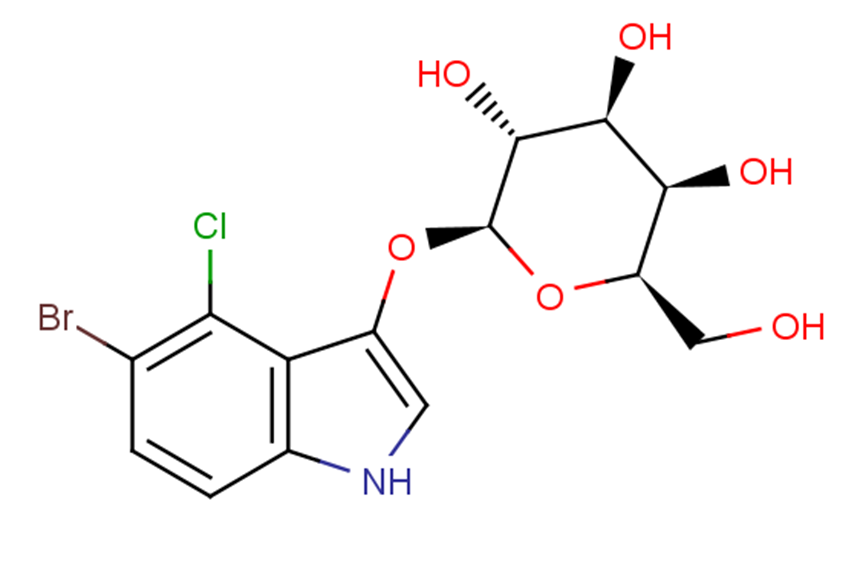
X-GAL
CAS No. 7240-90-6
X-GAL( BCIG )
Catalog No. M22504 CAS No. 7240-90-6
X-GAL is a widely used substrate of chromogenic β-galactosidase. β-galactosidase cleaves X-GAL and produces an insoluble blue compound.
Purity : >98% (HPLC)
 COA
Datasheet
HNMR
HPLC
MSDS
Handing Instructions
| Size | Price / USD | Stock | Quantity |
| 100MG | Get Quote | In Stock |


|
| 200MG | Get Quote | In Stock |
|
| 500MG | 52 | In Stock |
|
| 1G | 91 | In Stock |
|
Biological Information
-
Product NameX-GAL
-
NoteResearch use only, not for human use.
-
Brief DescriptionX-GAL is a widely used substrate of chromogenic β-galactosidase. β-galactosidase cleaves X-GAL and produces an insoluble blue compound.
-
DescriptionX-GAL is a widely used substrate of chromogenic β-galactosidase. β-galactosidase cleaves X-GAL and produces an insoluble blue compound.
-
In Vitro——
-
In Vivo——
-
SynonymsBCIG
-
PathwayOthers
-
TargetOther Targets
-
RecptorOthers
-
Research Area——
-
Indication——
Chemical Information
-
CAS Number7240-90-6
-
Formula Weight408.63
-
Molecular FormulaC14H15BrClNO6
-
Purity>98% (HPLC)
-
SolubilityDMSO:39 mg/mL (95.44 mM)
-
SMILESOC[C@H]1O[C@@H](Oc2c[nH]c3ccc(Br)c(Cl)c23)[C@H](O)[C@@H](O)[C@H]1O
-
Chemical Name——
Shipping & Storage Information
-
Storage(-20℃)
-
ShippingWith Ice Pack
-
Stability≥ 2 years
Reference
molnova catalog



related products
-
guvacine hydrobromid...
Guvacine hydrobromide, an alkaloid found in the nut of Areca catechu, is a potent GABA uptakp inhibitor. Guvacine hydrobromide inhibits rat GAT-1, rat GAT-2 and rat GAT-3 with IC50 values of 39 μM, 58 μM and 378 μM, respectively.
-
3-Deoxysappanchalcon...
3-Deoxysappanchalcone is an effective HO-1 inducer at the translational level.
-
β-MSH (monkey)
β-MSH (monkey) is a polypeptide that can be found by peptide screening. Peptide screening is a research tool that pools active peptides primarily by immunoassay. Peptide screening can be used for protein interaction, functional analysis, epitope screening, especially in the field of agent research and development.
