


 Cart
Cart
 sales@molnova.com



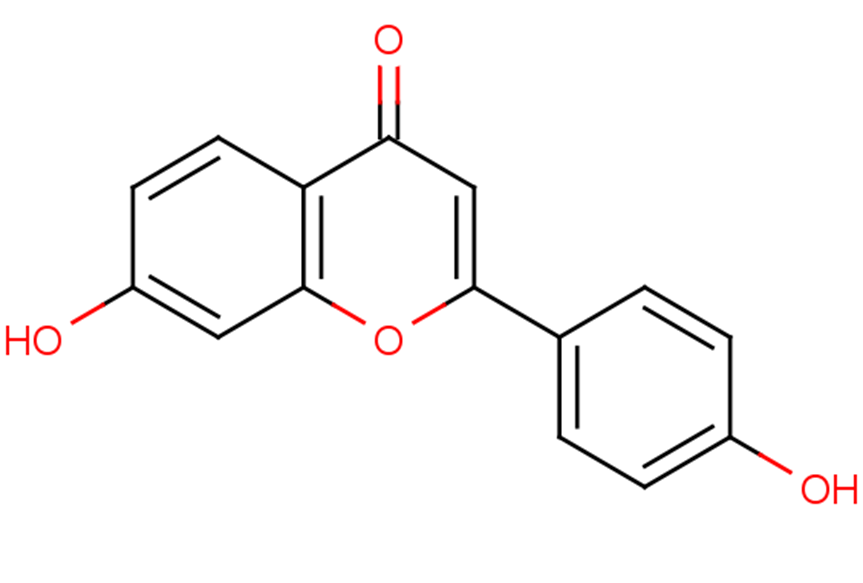
4',7-Dihydroxyflavone
CAS No. 2196-14-7
4',7-Dihydroxyflavone( 7,4'-Dihydroxyflavone )
Catalog No. M22169 CAS No. 2196-14-7
4',7-Dihydroxyflavone can induce transcription of nodulation (nod) genes in Rhizobium meliloti. It has inhibitory activities against COX-2.Root exudate from 3-day-old alfalfa seedlings was purified and then assayed for biological activity with a nodABC-lacZ fusion in R. meliloti.
Purity : >98% (HPLC)
 COA
Datasheet
HNMR
HPLC
MSDS
Handing Instructions
COA
Datasheet
HNMR
HPLC
MSDS
Handing Instructions
| Size | Price / USD | Stock | Quantity |
| 1 mL x 10 mM in DMSO | 30 | In Stock |


|
| 5MG | 29 | In Stock |
|
| 100MG | Get Quote | In Stock |
|
| 200MG | Get Quote | In Stock |
|
| 500MG | Get Quote | In Stock |
|
| 1G | Get Quote | In Stock |
|
Biological Information
-
Product Name4',7-Dihydroxyflavone
-
NoteResearch use only, not for human use.
-
Brief Description4',7-Dihydroxyflavone can induce transcription of nodulation (nod) genes in Rhizobium meliloti. It has inhibitory activities against COX-2.Root exudate from 3-day-old alfalfa seedlings was purified and then assayed for biological activity with a nodABC-lacZ fusion in R. meliloti.
-
Description4',7-Dihydroxyflavone can induce transcription of nodulation (nod) genes in Rhizobium meliloti. It has inhibitory activities against COX-2.Root exudate from 3-day-old alfalfa seedlings was purified and then assayed for biological activity with a nodABC-lacZ fusion in R. meliloti. Indentities of major nod inducers were established by spectroscopic analyses (ultraviolet/visible, proton nuclear magnetic resonance, and mass spectroscopy) and comparison with authentic standards. Major nod inducers, which were identified as 4',7-Dihydroxyflavone, 4'-7-dihydroxyflavanone, and 4,4'-dihydroxy-2'-methoxychalcone, were released from seedling roots at 54, 22, and 20 picomole.plant(-1).day(-1), respectively. Luteolin was not found in these root exudates.
-
In VitroWestern Blot Analysis Cell Line:NCI-H292 cells stimulated with 10?ng/mL PMA for 30?min Concentration:2 and 10?μM Incubation Time:24?h Result:Inhibited PMA-stimulated NF-κB (p65) activation and STAT6 phosphorylation.
-
In Vivo——
-
Synonyms7,4'-Dihydroxyflavone
-
PathwayChromatin/Epigenetic
-
TargetCOX
-
RecptorCOX|NOD1
-
Research Area——
-
Indication——
Chemical Information
-
CAS Number2196-14-7
-
Formula Weight254.1
-
Molecular FormulaC15H10O4
-
Purity>98% (HPLC)
-
SolubilityDMSO:250 mg/mL (983.32 mM)
-
SMILESOc1ccc(cc1)-c1cc(=O)c2ccc(O)cc2o1
-
Chemical Name——
Shipping & Storage Information
-
Storage(-20℃)
-
ShippingWith Ice Pack
-
Stability≥ 2 years
Reference
1.A Chalcone and Two Related Flavonoids Released from Alfalfa Roots Induce nod Genes of Rhizobium meliloti.Plant Physiol., 1989, 91(3):842-7.
molnova catalog



related products
-
Imrecoxib
Imrecoxib is a novel and selective cyclooxygenase 2 (COX-2) inhibitor (IC50: 18 nM).
-
Vinflunine Tartrate
Vinflunine Tartrat is a new vinca alkaloid uniquely fluorinated with the properties of mitotic-arresting and tubulin-interacting activity.
-
Ruscogenin
Ruscogenin has anti-inflammatory activity, suppressed zymosan A-evoked peritoneal total leukocyte migration in mice in a dose-dependent manner.
