


 Cart
Cart
 sales@molnova.com



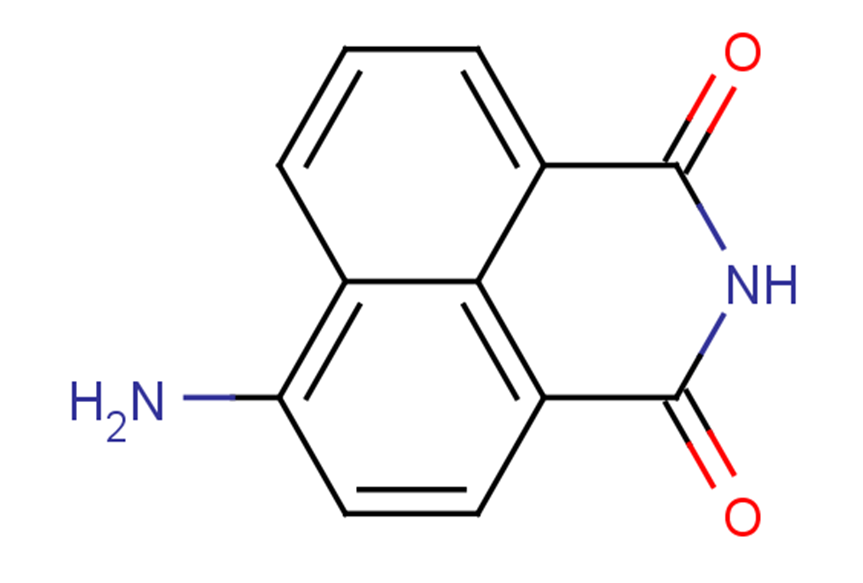
4-amino-1,8-Naphthalimide
CAS No. 1742-95-6
4-amino-1,8-Naphthalimide( —— )
Catalog No. M22109 CAS No. 1742-95-6
4-amino-1,8-Naphthalimide (4-ANI) is a PARP inhibitor with IC50 of 180 nM.
Purity : >98% (HPLC)
 COA
Datasheet
HNMR
HPLC
MSDS
Handing Instructions
COA
Datasheet
HNMR
HPLC
MSDS
Handing Instructions
| Size | Price / USD | Stock | Quantity |
| 1 mL x 10 mM in DMSO | 28 | In Stock |


|
| 25MG | 50 | In Stock |
|
| 50MG | 82 | In Stock |
|
| 100MG | 133 | In Stock |
|
| 200MG | 197 | In Stock |
|
| 500MG | Get Quote | In Stock |
|
| 1G | Get Quote | In Stock |
|
Biological Information
-
Product Name4-amino-1,8-Naphthalimide
-
NoteResearch use only, not for human use.
-
Brief Description4-amino-1,8-Naphthalimide (4-ANI) is a PARP inhibitor with IC50 of 180 nM.
-
Description4-amino-1,8-Naphthalimide (4-ANI) is a PARP inhibitor with IC50 of 180 nM.
-
In Vitro——
-
In Vivo——
-
Synonyms——
-
PathwayCell Cycle/DNA Damage
-
TargetPARP
-
RecptorPARP
-
Research Area——
-
Indication——
Chemical Information
-
CAS Number1742-95-6
-
Formula Weight212.2
-
Molecular FormulaC12H8N2O2
-
Purity>98% (HPLC)
-
Solubility——
-
SMILESNc1ccc2C(=O)NC(=O)c3cccc1c23
-
Chemical Name——
Shipping & Storage Information
-
Storage(-20℃)
-
ShippingWith Ice Pack
-
Stability≥ 2 years
Reference
1.SCHLICKER, A. 4-Amino-1,8-naphthalimide: a novel inhibitor of poly(ADP-ribose) polymerase and radiation sensitizer[J]. International Journal of Radiation Biology, 1999, 75(1):91-100.
molnova catalog



related products
-
Fluzoparib
fluzoparib is a novel, potent, and orally available inhibitor of PARP, potentially for the treatment of solid tumours.Fluzoparib potently inhibited PARP1 enzyme activity and induced DNA double-strand breaks, G2 /M arrest, and apoptosis in homologous recombination repair (HR)-deficient cells.?
-
UNC2025 2HCl
UNC2025 is a potent and orally bioavailable Mer/Flt3 dual inhibitor with IC50 of 0.8/0.74 nM for Mer/Flt3.
-
RBN012759
RBN012759, a potent and selective PARP14 inhibitor, decreases pro-tumor macrophage function and elicits inflammatory responses in tumor explants.
