


 Cart
Cart
 sales@molnova.com



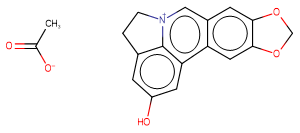
Lycobetaine acetate
CAS No. 61221-41-8
Lycobetaine acetate( Oxylycorine )
Catalog No. M21622 CAS No. 61221-41-8
Lycobetaine acetate is a potential biofungicide against Penicillium roqueforti and Aspergillus niger.2. Ungeremine have strong antibacterial activity against Flavobacterium columnare.
Purity : >98% (HPLC)
 COA
Datasheet
HNMR
HPLC
MSDS
Handing Instructions
COA
Datasheet
HNMR
HPLC
MSDS
Handing Instructions
| Size | Price / USD | Stock | Quantity |
| 5MG | 77 | In Stock |


|
| 10MG | 111 | In Stock |
|
| 25MG | 182 | In Stock |
|
| 50MG | 263 | In Stock |
|
| 100MG | 389 | In Stock |
|
| 200MG | Get Quote | In Stock |
|
| 500MG | Get Quote | In Stock |
|
| 1G | Get Quote | In Stock |
|
Biological Information
-
Product NameLycobetaine acetate
-
NoteResearch use only, not for human use.
-
Brief DescriptionLycobetaine acetate is a potential biofungicide against Penicillium roqueforti and Aspergillus niger.2. Ungeremine have strong antibacterial activity against Flavobacterium columnare.
-
DescriptionLycobetaine acetate is a potential biofungicide against Penicillium roqueforti and Aspergillus niger. Ungeremine have strong antibacterial activity against Flavobacterium columnare.
-
In Vitro——
-
In Vivo——
-
SynonymsOxylycorine
-
PathwayOthers
-
TargetOther Targets
-
RecptorOthers
-
Research Area——
-
Indication——
Chemical Information
-
CAS Number61221-41-8
-
Formula Weight325.3
-
Molecular FormulaC18H15NO5?
-
Purity>98% (HPLC)
-
Solubility——
-
SMILESCC([O-])=O.Oc1cc2CC[n+]3cc4cc5OCOc5cc4c(c1)c23
-
Chemical Name2-hydroxy-45-dihydro-[13]dioxolo[45-j]pyrrolo[321-de]phenanthridin-6-ium acetate
Shipping & Storage Information
-
Storage(-20℃)
-
ShippingWith Ice Pack
-
Stability≥ 2 years
Reference
1.Armelle T Mbaveng Gabin T M Bitchagno Victor Kueteet al.Cytotoxicity of Ungeremine Towards Multi-Factorial Drug Resistant Cancer Cells and Induction of Apoptosis Ferroptosis Necroptosis and Autophagy.Phytomedicine. 2019 Jul;60:152832.
molnova catalog



related products
-
Leachianol G
Leachianol G is a natural product for research related to life sciences.
-
(Z)-RegalosideH
(Z)-RegalosideH
-
Rhoduline Acid
Rhoduline Acid (Di-J acid) is an intermediate in the synthesis of diazo dyes and tetranitazole dyes.
