


 Cart
 sales@molnova.com




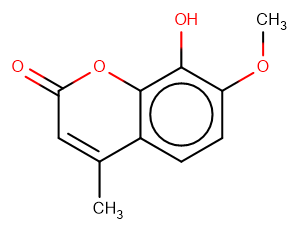
7-methoxy-8-hydroxy-4-methylcoumarin
CAS No. 22084-94-2
7-methoxy-8-hydroxy-4-methylcoumarin( —— )
Catalog No. M21448 CAS No. 22084-94-2
7-Methoxy-4-methyl-coumarin-8-ol (compound 31) is a compound isolated from sour orange (Citrus aurantium).
Purity : >98% (HPLC)
 COA
Datasheet
HNMR
HPLC
MSDS
Handing Instructions
| Size | Price / USD | Stock | Quantity |
| 1 mL x 10 mM in DMSO | 64 | In Stock |


|
| 5MG | 67 | In Stock |
|
| 100MG | Get Quote | In Stock |
|
| 200MG | Get Quote | In Stock |
|
| 500MG | Get Quote | In Stock |
|
| 1G | Get Quote | In Stock |
|
Biological Information
-
Product Name7-methoxy-8-hydroxy-4-methylcoumarin
-
NoteResearch use only, not for human use.
-
Brief Description7-Methoxy-4-methyl-coumarin-8-ol (compound 31) is a compound isolated from sour orange (Citrus aurantium).
-
Description7-Methoxy-4-methyl-coumarin-8-ol (compound 31) is a compound isolated from sour orange (Citrus aurantium).
-
In Vitro——
-
In Vivo——
-
Synonyms——
-
PathwayOthers
-
TargetOther Targets
-
RecptorOthers
-
Research Area——
-
Indication——
Chemical Information
-
CAS Number22084-94-2
-
Formula Weight206.19
-
Molecular FormulaC11H10O4
-
Purity>98% (HPLC)
-
SolubilityIn Vitro:?DMSO : 100 mg/mL (484.99 mM)
-
SMILESCC(c(c(O1)c2O)ccc2OC)=CC1=O
-
Chemical Name——
Shipping & Storage Information
-
Storage(-20℃)
-
ShippingWith Ice Pack
-
Stability≥ 2 years
Reference
molnova catalog


related products
-
5'-O-(4,4'-Dimethoxy...
5'-O-(4,4'-Dimethoxytrityl)-2'-deoxyuridine is a competitive dUTP nucleotidohydrolase (dUTPase) inhibitor(Ki > 1 mM) in E. coli.
-
β-Endorphin, equine ...
β-Endorphin, equine (TFA) is an endogenous opioid peptide, which binds at high affinity to both μ/δ opioid receptors.
-
Luxdegalutamide
Luxdegalutamide (ARV-766) is a novel, potent, and orally bioavailable proteolytic targeting chimera (PROTAC) protein degrader that degrades not only wild-type AR but also clinically relevant AR LBD mutants, including the most prevalent AR L702H, H875Y, and T878A mutations.
