


 Cart
Cart
 sales@molnova.com



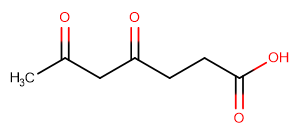
46-Dioxoheptanoic acid
CAS No. 51568-18-4
46-Dioxoheptanoic acid( Succinylacetone )
Catalog No. M21430 CAS No. 51568-18-4
46-Dioxoheptanoic acid is a potent inhibitor of heme biosynthesis.
Purity : >98% (HPLC)
 COA
Datasheet
HNMR
HPLC
MSDS
Handing Instructions
COA
Datasheet
HNMR
HPLC
MSDS
Handing Instructions
| Size | Price / USD | Stock | Quantity |
| 1 mL x 10 mM in DMSO | 42 | In Stock |


|
| 10MG | 38 | In Stock |
|
| 25MG | 59 | In Stock |
|
| 50MG | 83 | In Stock |
|
| 100MG | 137 | In Stock |
|
| 200MG | Get Quote | In Stock |
|
| 500MG | Get Quote | In Stock |
|
| 1G | Get Quote | In Stock |
|
Biological Information
-
Product Name46-Dioxoheptanoic acid
-
NoteResearch use only, not for human use.
-
Brief Description46-Dioxoheptanoic acid is a potent inhibitor of heme biosynthesis.
-
Description46-Dioxoheptanoic acid is a potent inhibitor of heme biosynthesis.
-
In Vitro4,6-Dioxoheptanoic acid (Succinylacetone, SA) is examined with regard to its ability to a) inhibit the second enzyme of the heme pathway, δ-aminolevulinic acid (ALA) dehydratase, b) lower the heme concentration, and c) inhibit cell growth of murine erythroleukemia (MEL) cells in culture.
-
In Vivo——
-
SynonymsSuccinylacetone
-
PathwayOthers
-
TargetOther Targets
-
RecptorOthers
-
Research Area——
-
Indication——
Chemical Information
-
CAS Number51568-18-4
-
Formula Weight158.15
-
Molecular FormulaC7H10O4
-
Purity>98% (HPLC)
-
SolubilityDMSO:1 mg/mL (632.31 mM)
-
SMILESCC(CC(CCC(O)=O)=O)=O
-
Chemical Name46-dioxoheptanoic acid
Shipping & Storage Information
-
Storage(-20℃)
-
ShippingWith Ice Pack
-
Stability≥ 2 years
Reference
1.Ebert PS et al. Succinylacetone a potent inhibitor of heme biosynthesis: effect on cell growth heme contentand delta-aminolevulinic acid dehydratase activity of malignant murine erythroleukemia cells. Biochem Biophys Res Commun. 1979 Jun 27;88(4):1382-90.
molnova catalog



related products
-
Ac-MBP (4-14) Peptid...
Ac-MBP (4-14) Peptide
-
Pterosin D
Sesquiterpenoids.
-
[Gln22] - 25359 - Am...
[Gln22] - 25359 - Amyloid (6 - 40)
