


 Cart
Cart
 sales@molnova.com



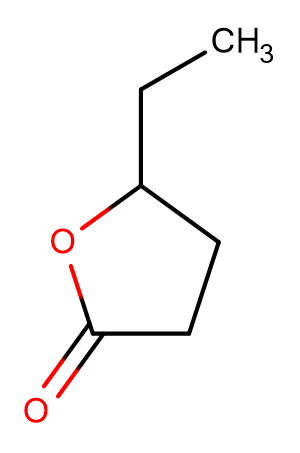
γ-caprolactone
CAS No. 695-06-7
γ-caprolactone( γ-Hexalactone )
Catalog No. M21388 CAS No. 695-06-7
Gamma-Caprolactone also known as 4-ethyl-4-butanolide or 4-hexanolide belongs to the class of organic compounds known as gamma butyrolactones.
Purity : >98% (HPLC)
 COA
Datasheet
HNMR
HPLC
MSDS
Handing Instructions
COA
Datasheet
HNMR
HPLC
MSDS
Handing Instructions
| Size | Price / USD | Stock | Quantity |
| 1 mL x 10 mM in DMSO | 28 | In Stock |


|
| 100MG | Get Quote | In Stock |
|
| 200MG | Get Quote | In Stock |
|
| 500MG | Get Quote | In Stock |
|
| 1G | 38 | In Stock |
|
Biological Information
-
Product Nameγ-caprolactone
-
NoteResearch use only, not for human use.
-
Brief DescriptionGamma-Caprolactone also known as 4-ethyl-4-butanolide or 4-hexanolide belongs to the class of organic compounds known as gamma butyrolactones.
-
DescriptionGamma-Caprolactone also known as 4-ethyl-4-butanolide or 4-hexanolide belongs to the class of organic compounds known as gamma butyrolactones. Gamma butyrolactones are compounds containing a gamma butyrolactone moiety which consists of an aliphatic five-member ring with four carbon atoms one oxygen atom and bears a ketone group on the carbon adjacent to the oxygen atom. Thus Gamma-caprolactone is considered to be a fatty ester lipid molecule. Gamma-Caprolactone is a very hydrophobic molecule practically insoluble (in water) and relatively neutral. Gamma-Caprolactone exists in all eukaryotes ranging from yeast to humans. Outside of the human body Gamma-caprolactone has been detected but not quantified in several different foods such as potato cereals and cereal products pomes alcoholic beverages and fruits. This could make Gamma-caprolactone a potential biomarker for the consumption of these foods. 4-hydroxy-Hexanoic acid gamma-lactone is occasionally found as a volatile component of human urine. In some cases differences up to an order of magnitude are observed. 4-hydroxy-Hexanoic acid gamma-lactone has been found in the polar fraction of human blood. Biological fluids such as blood and urine have been shown to contain a large number of components some of them volatiles (low boiling point) apparently present in all individuals while others such are much more variable. Although some of these changes may have dietary origins others seem to be characteristic of the individual.
-
In Vitro——
-
In Vivo——
-
Synonymsγ-Hexalactone
-
PathwayOthers
-
TargetOther Targets
-
RecptorOthers
-
Research Area——
-
Indication——
Chemical Information
-
CAS Number695-06-7
-
Formula Weight114.14
-
Molecular FormulaC6H10O2
-
Purity>98% (HPLC)
-
SolubilityIn Vitro:?DMSO : 100 mg/mL (876.12 mM)
-
SMILESCCC1CCC(=O)O1
-
Chemical Name——
Shipping & Storage Information
-
Storage(-20℃)
-
ShippingWith Ice Pack
-
Stability≥ 2 years
Reference
1.E-Nose and GC-MS Reveal a Difference in the Volatile Profiles of White- and Red-Fleshed Peach Fruit. Sensors (Basel). 2018 Mar 2;18(3).
molnova catalog



related products
-
Neobritannilactone B
Neobritannilactone B has cytotoxic activity.
-
Senkyunolide H
Senkyunolide H is a natural compound found in Ligusticum chuanxiong Hort.
-
Thiopental sodium
Thiopental sodium (DEA controlled substance) is administered intravenously for the production of complete anesthesia of short duration or for the induction of general anesthesia. It is also used for the control of convulsive states and for hypnosis. It has been used to reduce increased intracranial pressure.
