


 Cart
Cart
 sales@molnova.com



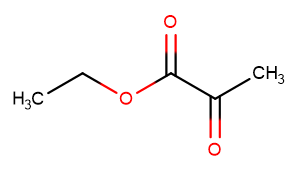
Ethyl pyruvate
CAS No. 617-35-6
Ethyl pyruvate( —— )
Catalog No. M21386 CAS No. 617-35-6
Ethyl pyruvate is a simple aliphatic ester of pyruvic acid and has been shown to have robust neuroprotective effects via its anti-inflammatory anti-oxidative and anti-apoptotic functions.
Purity : >98% (HPLC)
 COA
Datasheet
HNMR
HPLC
MSDS
Handing Instructions
COA
Datasheet
HNMR
HPLC
MSDS
Handing Instructions
| Size | Price / USD | Stock | Quantity |
| 1 mL x 10 mM in DMSO | 29 | In Stock |


|
| 100MG | Get Quote | In Stock |
|
| 200MG | 32 | In Stock |
|
| 500MG | 49 | In Stock |
|
| 1G | 72 | In Stock |
|
Biological Information
-
Product NameEthyl pyruvate
-
NoteResearch use only, not for human use.
-
Brief DescriptionEthyl pyruvate is a simple aliphatic ester of pyruvic acid and has been shown to have robust neuroprotective effects via its anti-inflammatory anti-oxidative and anti-apoptotic functions.
-
DescriptionEthyl pyruvate is a simple aliphatic ester of pyruvic acid and has been shown to have robust neuroprotective effects via its anti-inflammatory anti-oxidative and anti-apoptotic functions.
-
In VitroCell Viability Assay Cell Line:N9 microglial Concentration:1-100 mM Incubation Time:1 h Result:Did not show cytotoxic effects in the range of 1–10 mM.Western Blot Analysis Cell Line:N9 microglial Concentration:10 mM Incubation Time:1 h Result:Suppressed LPS (HY-D1056)- and ATP (HY-B2176)-induced IL-1β and IL-18 protein and mRNA levels.Reduced NLRP3, Caspase-1, and ASC Specks.Reduced NF-κB activation and HMGB1 expression level.Apoptosis Analysis Cell Line:MC38 Concentration:10, 20, 40 mM Incubation Time: 6, 24 h Result:Induced an increase in autophagy and apoptosis in a dose-and time-dependent manner.
-
In VivoAnimal Model:Liver tumor model in miceDosage:80 mg/kg Administration:i.p., 30 min before tumor injection and daily up to 9 days and daily from 7 to 10 days after infusion of tumor cells.Result:Decreased innate immune cells (NK cells, monocytes) and T and B cell lymphocytic infiltrates.Inhibited the release of HMBG1.Animal Model:Paraquat-intoxicated rats Dosage:2 or 40 mg/kg Administration:30 min before or 1 h after paraquat (50 mg/kg i.p.)Result:Decreased the MDA concentrations at 6 and 24 h.Decreased NO concentrations significantly at 6 h and GSH concentrations in the lung.
-
Synonyms——
-
PathwayOthers
-
TargetAntioxidant
-
RecptorAntioxidant|Apoptosis
-
Research Area——
-
Indication——
Chemical Information
-
CAS Number617-35-6
-
Formula Weight116.11
-
Molecular FormulaC5H8O3
-
Purity>98% (HPLC)
-
SolubilityIn Vitro:?H2O : 100 mg/mL (861.18 mM)
-
SMILESCCOC(=O)C(C)=O
-
Chemical Nameethyl 2-oxopropanoate
Shipping & Storage Information
-
Storage(-20℃)
-
ShippingWith Ice Pack
-
Stability≥ 2 years
Reference
1.E-Nose and GC-MS Reveal a Difference in the Volatile Profiles of White- and Red-Fleshed Peach Fruit. Sensors (Basel). 2018 Mar 2;18(3).
molnova catalog



related products
-
Oleoylestrone
Oleoylestrone (MP-101) is present in plasma and adipose tissue, has potential antioxidant effects, induces loss of body fat in rats, and can be used for weight loss.
-
Raxofelast
Raxofelast (IRFI-016) is a hydrophilic, non-systemic, vitamin-like antioxidant that reduces ischemia-reperfusion injury in testis.
-
Cosmosiin
Cosmosiin may be beneficial for diabetic complications through their enhanced adiponectin secretion, tyrosine phosphorylation of insulin receptor-β and GLUT4 translocation.
