


 Cart
Cart
 sales@molnova.com



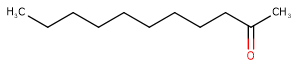
Methylnonylketone
CAS No. 112-12-9
Methylnonylketone( 2-Undecanone )
Catalog No. M21330 CAS No. 112-12-9
Methylnonylketone is a natural non-toxic insect repellant compound.
Purity : >98% (HPLC)
 COA
Datasheet
HNMR
HPLC
MSDS
Handing Instructions
COA
Datasheet
HNMR
HPLC
MSDS
Handing Instructions
| Size | Price / USD | Stock | Quantity |
| 1 mL x 10 mM in DMSO | 28 | In Stock |


|
| 100MG | Get Quote | In Stock |
|
| 200MG | Get Quote | In Stock |
|
| 500MG | Get Quote | In Stock |
|
| 1G | 27 | In Stock |
|
Biological Information
-
Product NameMethylnonylketone
-
NoteResearch use only, not for human use.
-
Brief DescriptionMethylnonylketone is a natural non-toxic insect repellant compound.
-
DescriptionMethylnonylketone is a natural non-toxic insect repellant compound.
-
In Vitro——
-
In Vivo——
-
Synonyms2-Undecanone
-
PathwayOthers
-
TargetOther Targets
-
RecptorOthers
-
Research Area——
-
Indication——
Chemical Information
-
CAS Number112-12-9
-
Formula Weight170.29
-
Molecular FormulaC11H22O
-
Purity>98% (HPLC)
-
SolubilityIn Vitro:?DMSO : 100 mg/mL (587.20 mM)
-
SMILESCCCCCCCCCC(C)=O
-
Chemical Name——
Shipping & Storage Information
-
Storage(-20℃)
-
ShippingWith Ice Pack
-
Stability≥ 2 years
Reference
1.Fischer D Imholt C Prokop A et al. Efficacy of methyl nonyl ketone as an in-soil repellent for common voles (Microtus arvalis)[J]. Pest Management Science 2013 69(3).
molnova catalog



related products
-
TRAP-6 (2-6)
FLLRN is a biological active peptide. (PAR1-specific antagonist peptide)
-
4H-xanthalongin
Desacetylxanthanol (Compound 4) is a sesquiterpenoid derived from Xanthium strumarium. Desacetylxanthanol has anti-tumor necrosis factor-associated apoptosis-inducing ligand (TRAIL) activity.
-
Chromium(III) acetat...
Chromium(III) acetate (Chromium acetate) is a small molecule ionic crosslinker that is used as a feedstock for the synthesis of other compounds.
