


 Cart
Cart
 sales@molnova.com



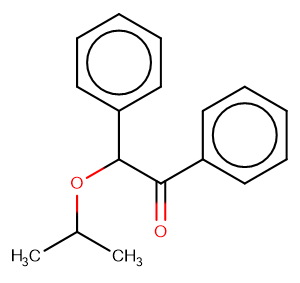
2-Isopropoxy-2-Phenylacetophenone
CAS No. 6652-28-4
2-Isopropoxy-2-Phenylacetophenone( —— )
Catalog No. M21311 CAS No. 6652-28-4
2-Isopropoxy-2-Phenylacetophenone is a natural compound.
Purity : >98% (HPLC)
 COA
Datasheet
HNMR
HPLC
MSDS
Handing Instructions
COA
Datasheet
HNMR
HPLC
MSDS
Handing Instructions
| Size | Price / USD | Stock | Quantity |
| 100MG | 34 | In Stock |


|
| 200MG | Get Quote | In Stock |
|
| 500MG | 82 | In Stock |
|
| 1G | 122 | In Stock |
|
Biological Information
-
Product Name2-Isopropoxy-2-Phenylacetophenone
-
NoteResearch use only, not for human use.
-
Brief Description2-Isopropoxy-2-Phenylacetophenone is a natural compound.
-
Description2-Isopropoxy-2-Phenylacetophenone is a natural compound.
-
In Vitro——
-
In Vivo——
-
Synonyms——
-
PathwayOthers
-
TargetOther Targets
-
RecptorOthers
-
Research Area——
-
Indication——
Chemical Information
-
CAS Number6652-28-4
-
Formula Weight254.32
-
Molecular FormulaC17H18O2
-
Purity>98% (HPLC)
-
Solubility——
-
SMILESCC(C)OC(C(=O)c1ccccc1)c1ccccc1
-
Chemical Name——
Shipping & Storage Information
-
Storage(-20℃)
-
ShippingWith Ice Pack
-
Stability≥ 2 years
Reference
molnova catalog



related products
-
Solanidine
Solanidine is a cholestane alkaloid isolated from several potato species. It can inhibit proliferation and exhibit obvious antitumor effect.
-
Secretin (28-54), hu...
Secretin (28-54), human TFA is a 27-amino acid peptide that works on the human Secretin receptor.
-
L-Mimosine
L-Mimosine is a non-protein amino acid, and acts as an iron chelator.
