


 Cart
Cart
 sales@molnova.com



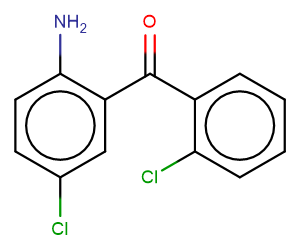
2-Amino-2-dichlorobenzophenone
CAS No. 2958-36-3
2-Amino-2-dichlorobenzophenone( —— )
Catalog No. M21247 CAS No. 2958-36-3
2-Amino-2-dichlorobenzophenone is a natural compound.
Purity : >98% (HPLC)
 COA
Datasheet
HNMR
HPLC
MSDS
Handing Instructions
COA
Datasheet
HNMR
HPLC
MSDS
Handing Instructions
| Size | Price / USD | Stock | Quantity |
| 1 mL x 10 mM in DMSO | 37 | In Stock |


|
| 100MG | Get Quote | In Stock |
|
| 200MG | Get Quote | In Stock |
|
| 500MG | Get Quote | In Stock |
|
| 1G | 27 | In Stock |
|
Biological Information
-
Product Name2-Amino-2-dichlorobenzophenone
-
NoteResearch use only, not for human use.
-
Brief Description2-Amino-2-dichlorobenzophenone is a natural compound.
-
Description2-Amino-2-dichlorobenzophenone is a natural compound.
-
In Vitro——
-
In Vivo——
-
Synonyms——
-
PathwayOthers
-
TargetOther Targets
-
RecptorOthers
-
Research Area——
-
Indication——
Chemical Information
-
CAS Number2958-36-3
-
Formula Weight266.12
-
Molecular FormulaC13H9Cl2NO
-
Purity>98% (HPLC)
-
Solubility——
-
SMILESNc1ccc(Cl)cc1C(=O)c1ccccc1Cl
-
Chemical Name——
Shipping & Storage Information
-
Storage(-20℃)
-
ShippingWith Ice Pack
-
Stability≥ 2 years
Reference
molnova catalog



related products
-
Ganoweberianic acid ...
Ganoweberianic acid K
-
Isosulfan blue
Isosulfan blue is a blue dye for the identification of lymph vessels during lymphangiography and is possible to have an allergic reaction during breast cancer operations.
-
Liriope muscari bail...
Liriope muscari baily saponins C has an anti-thrombotic activity due to down-regulation of the increased mRNA expression levels of TF and IL-6.
