


 Cart
Cart
 sales@molnova.com



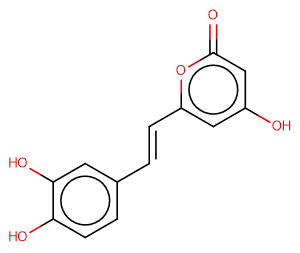
Hispidin
CAS No. 555-55-5
Hispidin( —— )
Catalog No. M21068 CAS No. 555-55-5
Hispidin is a polyphenol originally including antioxidant anti-inflammatory and cytoprotective properties.
Purity : >98% (HPLC)
 COA
Datasheet
HNMR
HPLC
MSDS
Handing Instructions
COA
Datasheet
HNMR
HPLC
MSDS
Handing Instructions
| Size | Price / USD | Stock | Quantity |
| 1 mL x 10 mM in DMSO | 206 | In Stock |


|
| 5MG | 187 | In Stock |
|
| 10MG | 297 | In Stock |
|
| 25MG | 534 | In Stock |
|
| 50MG | 732 | In Stock |
|
| 100MG | 995 | In Stock |
|
| 200MG | Get Quote | In Stock |
|
| 500MG | Get Quote | In Stock |
|
| 1G | Get Quote | In Stock |
|
Biological Information
-
Product NameHispidin
-
NoteResearch use only, not for human use.
-
Brief DescriptionHispidin is a polyphenol originally including antioxidant anti-inflammatory and cytoprotective properties.
-
DescriptionHispidin is a polyphenol originally including antioxidant anti-inflammatory and cytoprotective properties.
-
In Vitro——
-
In Vivo——
-
Synonyms——
-
PathwayAngiogenesis
-
TargetPKC
-
RecptorPKCβ
-
Research Area——
-
Indication——
Chemical Information
-
CAS Number555-55-5
-
Formula Weight246.22
-
Molecular FormulaC13H10O5
-
Purity>98% (HPLC)
-
SolubilityIn Vitro:?DMSO : 19.23 mg/mL (78.10 mM)
-
SMILESO=c1cc(O)cc(/C=C/c2ccc(O)c(O)c2)o1
-
Chemical Name6-(34-Dihydroxystyryl)-4-hydroxy-2-pyrone
Shipping & Storage Information
-
Storage(-20℃)
-
ShippingWith Ice Pack
-
Stability≥ 2 years
Reference
1.Jang J S Lee J S Lee J H et al. Hispidin produced from Phellinus linteus protects pancreatic β-cells from damage by hydrogen peroxide[J]. Archives of Pharmacal Research 2010 33(6):p.853-861.
molnova catalog



related products
-
Go 6983
Go 6983 is a pan-PKC inhibitor against for PKCα, PKCβ, PKCγ and PKCδ with IC50 of 7 nM, 7 nM, 6 nM and 10 nM, respectively.
-
AS2521780
AS2521780 is a?potent, selective, orally bioavailable PKCθ inhibitor that inhibits combinant human PKCθ enzyme with IC50 of 0.48 nM.
-
TV 3279
TV 3279 is a novel ChE-MAI inhibitor , and the neuroprotective properties depend on their ability to induce the anti-apoptotic proteins PKC, Bcl-2, Bcl-x, and SOD, and to block the nuclear translocation of the pro-apoptotic enzyme glyceraldehyde phosphate dehydrogenase in PC-12 and neuroblastoma cells.
