


 Cart
 sales@molnova.com




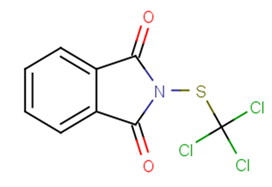
Folpet
CAS No. 133-07-3
Folpet( Faltan )
Catalog No. M20532 CAS No. 133-07-3
Folpeta widely used dicarboximide fungicideinduces tumors in the mouse gastrointestinal tractprimarily in the duodenumand is also cytotoxic effect on human bronchial epithelial cells.
Purity : >98% (HPLC)
 COA
Datasheet
HNMR
HPLC
MSDS
Handing Instructions
| Size | Price / USD | Stock | Quantity |
| 100MG | Get Quote | In Stock |


|
| 200MG | Get Quote | In Stock |
|
| 500MG | Get Quote | In Stock |
|
| 1G | 37 | In Stock |
|
Biological Information
-
Product NameFolpet
-
NoteResearch use only, not for human use.
-
Brief DescriptionFolpeta widely used dicarboximide fungicideinduces tumors in the mouse gastrointestinal tractprimarily in the duodenumand is also cytotoxic effect on human bronchial epithelial cells.
-
DescriptionFolpeta widely used dicarboximide fungicideinduces tumors in the mouse gastrointestinal tractprimarily in the duodenumand is also cytotoxic effect on human bronchial epithelial cells.
-
In Vitro——
-
In Vivo——
-
SynonymsFaltan
-
PathwayMicrobiology/Virology
-
TargetAntifungal
-
RecptorAntifungal
-
Research Area——
-
Indication——
Chemical Information
-
CAS Number133-07-3
-
Formula Weight296.56
-
Molecular FormulaC9H4Cl3NO2S
-
Purity>98% (HPLC)
-
SolubilityDMSO:125 mg/mL (421.50 mM)
-
SMILESClC(Cl)(Cl)SN1C(=O)c2ccccc2C1=O
-
Chemical Name——
Shipping & Storage Information
-
Storage(-20℃)
-
ShippingWith Ice Pack
-
Stability≥ 2 years
Reference
1.Canal-Raffin M Béatrice l'Azou Jorly J et al. Cytotoxicity of folpet fungicide on human bronchial epithelial cells[J]. Toxicology 2008 249(2):160-166.
molnova catalog



related products
-
Ametoctradin
Ametoctradin is an inhibitor of the Qo site of mitochondrial respiratory complex III.
-
Pentamidine
Pentamidine is an antifungal and antiprotozoal agent, interacting directly with the pathogen genome by binding to AT-rich regions of duplex DNA and the minor groove of DNA, thereby interfering with DNA replication.Pentamidine is effective in therapy for the hemolymphatic stage of Gambian trypanosomiasis, antimony-resistant leishmaniasis, and Pneumocystis carinii pneumonia.
-
Triadimenol
Triadimenol (UK 199) is a triazole fungicide that is cardiotoxic, promotes reactive oxygen species (ROS) production and apoptosis in zebrafish, and induces morphologic changes in zebrafish eyes and body length, as well as yolk sac and cardiac edema.
