


 Cart
 sales@molnova.com




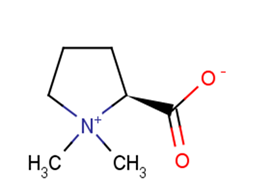
Stachydrine
CAS No. 471-87-4
Stachydrine( Proline betaine | L-stachydrine | Methyl hygrate betaine | NN-Dimethyl-L-proline )
Catalog No. M20448 CAS No. 471-87-4
Stachydrine is a major constituent of Chinese herb leonurus heterophyllus sweet used to promote blood circulation and dispel blood stasis. Stachydrine can inhibit the NF-κB signal pathway. Stachydrine is a biomarker for the consumption of citrus fruits.
Purity : >98% (HPLC)
 COA
Datasheet
HNMR
HPLC
MSDS
Handing Instructions
| Size | Price / USD | Stock | Quantity |
| 1 mL x 10 mM in DMSO | 35 | In Stock |


|
| 5MG | 29 | In Stock |
|
| 10MG | 46 | In Stock |
|
| 25MG | 71 | In Stock |
|
| 50MG | 94 | In Stock |
|
| 100MG | 130 | In Stock |
|
| 200MG | Get Quote | In Stock |
|
| 500MG | Get Quote | In Stock |
|
| 1G | Get Quote | In Stock |
|
Biological Information
-
Product NameStachydrine
-
NoteResearch use only, not for human use.
-
Brief DescriptionStachydrine is a major constituent of Chinese herb leonurus heterophyllus sweet used to promote blood circulation and dispel blood stasis. Stachydrine can inhibit the NF-κB signal pathway. Stachydrine is a biomarker for the consumption of citrus fruits.
-
DescriptionStachydrine is a major constituent of Chinese herb leonurus heterophyllus sweet used to promote blood circulation and dispel blood stasis. Stachydrine can inhibit the NF-κB signal pathway. Stachydrine is a biomarker for the consumption of citrus fruits.
-
In VitroStachydrine can inhibit the NF-κB signal pathway, and this may be related to the mechanism of anti-hypertrophic. Intervention of stachydrine significantly suppresses the level of p-IκB protein in the cytosol and NF-κB protein in the nucleus . Tissue factor mRNA is decreased in stachydrine-treated human umbilical vein endothelial cells. Stachydrine attenuates the decline of human umbilical vein endothelial cells viability and the increase of LDH activity induced by anoxia-reoxygenation. A dose dependent decrease in expression of mRNA, and protein levels are observed in stachydrine-treated human prostate cancer cells (PC-3 and LNcaP).
-
In VivoStachydrine attenuates norepinephrine-induced cardiomyocyte hypertrophy and has potential protective effects against β-adrenergic receptor induced Ca2+ mishandling. Stachydrine treatment reduces the expressions of PERK, CHOP, and caspase-3 in the endoplasmic reticulum stress-related apoptosis pathway.
-
SynonymsProline betaine | L-stachydrine | Methyl hygrate betaine | NN-Dimethyl-L-proline
-
PathwayApoptosis
-
TargetNF-κB
-
Recptorp65
-
Research Area——
-
Indication——
Chemical Information
-
CAS Number471-87-4
-
Formula Weight143.18
-
Molecular FormulaC7H13NO2
-
Purity>98% (HPLC)
-
SolubilityDMSO:26 mg/mL (181.59 mM);H2O:32 mg/mL (223.49 mM)
-
SMILESC[N+]1(C)CCC[C@H]1C([O-])=O
-
Chemical Name——
Shipping & Storage Information
-
Storage(-20℃)
-
ShippingWith Ice Pack
-
Stability≥ 2 years
Reference


-
Narasin (sodium salt...
Narasin induces tumor necrosis factor-related apoptosis-induced ligand (TRAIL)-mediated apoptosis by ER stress in glioma cells and inhibits NF-κB signaling by suppressing the phosphorylation of IκBα.
-
Indigo
Indigo is extracted from Indigo blue.
-
Cyanidin-3-Sambubios...
Cyanidin 3-sambubioside (chloride) (Standard) is the analytical standard of Cyanidin 3-sambubioside (chloride). This product is intended for research and analytical applications. Cyanidin 3-sambubioside chloride (Cyanidin-3-O-sambubioside chloride), a major anthocyanin, a natural colorant, and is a potent NO inhibitor. Cyanidin 3-sambubioside chloride is a H274Y mutation inhibitor, and inhibits influenza neuraminidase activity with an IC50 of 72 μM. Cyanidin 3-sambubioside chloride inhibits angiotensin-converting enzyme (ACE) activity and has antioxidant, anti-angiogenic and antiviral properties.
