


 Cart
Cart
 sales@molnova.com



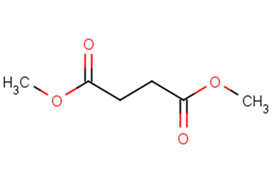
Dimethyl succinate
CAS No. 106-65-0
Dimethyl succinate( —— )
Catalog No. M20376 CAS No. 106-65-0
Dimethyl succinate is found in nuts. Dimethyl succinate is present in roasted filberts. Dimethyl succinate is a flavouring ingredient.
Purity : >98% (HPLC)
 COA
Datasheet
HNMR
HPLC
MSDS
Handing Instructions
COA
Datasheet
HNMR
HPLC
MSDS
Handing Instructions
| Size | Price / USD | Stock | Quantity |
| 1 mL x 10 mM in DMSO | 42 | In Stock |


|
| 100MG | Get Quote | In Stock |
|
| 200MG | Get Quote | In Stock |
|
| 500MG | 37 | In Stock |
|
| 1G | 52 | In Stock |
|
Biological Information
-
Product NameDimethyl succinate
-
NoteResearch use only, not for human use.
-
Brief DescriptionDimethyl succinate is found in nuts. Dimethyl succinate is present in roasted filberts. Dimethyl succinate is a flavouring ingredient.
-
DescriptionDimethyl succinate is found in nuts. Dimethyl succinate is present in roasted filberts. Dimethyl succinate is a flavouring ingredient.
-
In Vitro——
-
In Vivo——
-
Synonyms——
-
PathwayOthers
-
TargetOther Targets
-
RecptorOthers
-
Research Area——
-
Indication——
Chemical Information
-
CAS Number106-65-0
-
Formula Weight146.14
-
Molecular FormulaC6H10O4
-
Purity>98% (HPLC)
-
Solubility——
-
SMILESCOC(=O)CCC(=O)OC
-
Chemical Name——
Shipping & Storage Information
-
Storage(-20℃)
-
ShippingWith Ice Pack
-
Stability≥ 2 years
Reference
1.Brett G L Miedziak P J He Q et al. Gold-Nanoparticle-Based Catalysts for the Oxidative Esterification of 14-Butanediol into Dimethyl Succinate[J]. ChemSusChem 2013 6(10):1952-1958.
molnova catalog



related products
-
[Nle253]-HSV-1 UL 26...
[Nle253]-HSV-1 UL 26 Open Reading Frame (238-257)
-
5-Hydroxypseudobapti...
The herbs of Lupinus luteus.
-
DL-Valine
DL-Valine is 2-amino-3-methylbutanoic acid.It is synthesized in plants via several steps starting from pyruvic acid.
