


 Cart
Cart
 sales@molnova.com



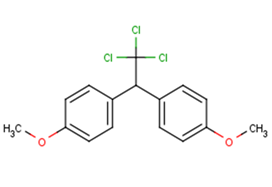
Methoxychlor
CAS No. 72-43-5
Methoxychlor( —— )
Catalog No. M20354 CAS No. 72-43-5
Methoxychlor an organochlorine pesticide is thought to be an endocrine disrupter that affects Ca2 homeostasis and cell viability in different cell models.
Purity : >98% (HPLC)
 COA
Datasheet
HNMR
HPLC
MSDS
Handing Instructions
COA
Datasheet
HNMR
HPLC
MSDS
Handing Instructions
| Size | Price / USD | Stock | Quantity |
| 1 mL x 10 mM in DMSO | 28 | In Stock |


|
| 25MG | 28 | In Stock |
|
| 100MG | Get Quote | In Stock |
|
| 200MG | Get Quote | In Stock |
|
| 500MG | Get Quote | In Stock |
|
| 1G | Get Quote | In Stock |
|
Biological Information
-
Product NameMethoxychlor
-
NoteResearch use only, not for human use.
-
Brief DescriptionMethoxychlor an organochlorine pesticide is thought to be an endocrine disrupter that affects Ca2 homeostasis and cell viability in different cell models.
-
DescriptionMethoxychlor an organochlorine pesticide is thought to be an endocrine disrupter that affects Ca2 homeostasis and cell viability in different cell models.
-
In Vitro——
-
In Vivo——
-
Synonyms——
-
PathwayOthers
-
TargetOther Targets
-
RecptorOthers
-
Research Area——
-
Indication——
Chemical Information
-
CAS Number72-43-5
-
Formula Weight345.64
-
Molecular FormulaC16H15Cl3O2
-
Purity>98% (HPLC)
-
Solubility——
-
SMILESCOc1ccc(cc1)C(c1ccc(OC)cc1)C(Cl)(Cl)Cl
-
Chemical Name——
Shipping & Storage Information
-
Storage(-20℃)
-
ShippingWith Ice Pack
-
Stability≥ 2 years
Reference
1.Horng C T Chou C T Tseng H W et al. Effect of Methoxychlor on Ca2? Homeostasis and Apoptosis in HA59T Human Hepatoma Cells[J]. Chin J Physiol 2015 58(1):1-8.
molnova catalog



related products
-
PH-46A
A potent, first-in-class, oral small-molecule agent for the treatment of inflammatory bowel diseases.
-
DS-2330
DS-2330 is a phosphorous lowering agent for treating hyperphosphatemia in chronic kidney disease.
-
Xenopsin TFA
Xenopsin TFA is a neurotensin-like octapeptide derived from the skin of xenopus xenopus.Xenopsin TFA is an inhibitor of tetrachloroside to stimulate gastric acid secretion.
