


 Cart
Cart
 sales@molnova.com



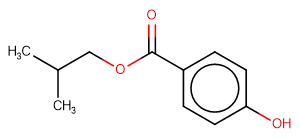
Isobutylparaben
CAS No. 4247-02-3
Isobutylparaben( —— )
Catalog No. M20343 CAS No. 4247-02-3
Isobutylparaben is a preservative and preservative insecticide.
Purity : >98% (HPLC)
 COA
Datasheet
HNMR
HPLC
MSDS
Handing Instructions
COA
Datasheet
HNMR
HPLC
MSDS
Handing Instructions
| Size | Price / USD | Stock | Quantity |
| 1 mL x 10 mM in DMSO | 28 | In Stock |


|
| 100MG | Get Quote | In Stock |
|
| 200MG | Get Quote | In Stock |
|
| 500MG | Get Quote | In Stock |
|
| 1G | 27 | In Stock |
|
Biological Information
-
Product NameIsobutylparaben
-
NoteResearch use only, not for human use.
-
Brief DescriptionIsobutylparaben is a preservative and preservative insecticide.
-
DescriptionIsobutylparaben is a preservative and preservative insecticide.
-
In Vitro——
-
In Vivo——
-
Synonyms——
-
PathwayOthers
-
TargetOther Targets
-
RecptorOthers
-
Research Area——
-
Indication——
Chemical Information
-
CAS Number4247-02-3
-
Formula Weight194.23
-
Molecular FormulaC11H14O3
-
Purity>98% (HPLC)
-
SolubilityIn Vitro:?DMSO : 100 mg/mL (514.85 mM)
-
SMILESCC(C)COC(=O)c1ccc(O)cc1
-
Chemical Name——
Shipping & Storage Information
-
Storage(-20℃)
-
ShippingWith Ice Pack
-
Stability≥ 2 years
Reference
1.Kim M J Kwack S J Lim S K et al. Toxicological evaluation of isopropylparaben and isobutylparaben mixture in Sprague-Dawley rats following 28 days of dermal exposure[J]. Regulatory Toxicology and Pharmacology 2015 73(2):544-551.
molnova catalog



related products
-
SMAP 29, Sheep Myelo...
SMAP 29, Sheep Myeloid Antimicrobial Peptide 29
-
Itolizumab
Itolizumab (Anti-Human CD6 Recombinant Antibody) is a recombinant anti-CD6 monoclonal antibody that targets the extracellular SRCR distal domain 1 of CD6, thereby slowing T cell proliferation and inhibiting pro-inflammatory cytokine production.
-
(1R,2R)-2-PCCA hydro...
(1R,2R)-2-PCCA hydrochloride is a potent, selective, and blood-brain-barrier-crossing GPR88 receptor agonist with an EC50 value of 1140 n in striatal membranes of WT mice; it can be used to study the central nervous system.
