


 Cart
Cart
 sales@molnova.com



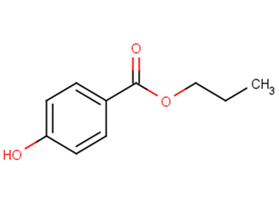
Propylparaben
CAS No. 94-13-3
Propylparaben( Propyl parahydroxybenzoate | Propyl 4-hydroxybenzoate )
Catalog No. M20302 CAS No. 94-13-3
Propylparaben is an antimicrobial agent preservative flavouring agent.
Purity : >98% (HPLC)
 COA
Datasheet
HNMR
HPLC
MSDS
Handing Instructions
COA
Datasheet
HNMR
HPLC
MSDS
Handing Instructions
| Size | Price / USD | Stock | Quantity |
| 1 mL x 10 mM in DMSO | 28 | In Stock |


|
| 10MG | 49 | In Stock |
|
| 25MG | 77 | In Stock |
|
| 50MG | 116 | In Stock |
|
| 100MG | Get Quote | In Stock |
|
| 200MG | Get Quote | In Stock |
|
| 500MG | Get Quote | In Stock |
|
| 1G | Get Quote | In Stock |
|
Biological Information
-
Product NamePropylparaben
-
NoteResearch use only, not for human use.
-
Brief DescriptionPropylparaben is an antimicrobial agent preservative flavouring agent.
-
DescriptionPropylparaben is an antimicrobial agent preservative flavouring agent.
-
In Vitro——
-
In Vivo——
-
SynonymsPropyl parahydroxybenzoate | Propyl 4-hydroxybenzoate
-
PathwayProteasome/Ubiquitin
-
TargetEndogenous Metabolite
-
RecptorHuman Endogenous Metabolite
-
Research Area——
-
Indication——
Chemical Information
-
CAS Number94-13-3
-
Formula Weight180.2
-
Molecular FormulaC10H12O3
-
Purity>98% (HPLC)
-
SolubilityDMSO:125 mg/mL?(693.67 mM)
-
SMILESCCCOC(=O)c1ccc(O)cc1
-
Chemical Name4-Hydroxybenzoic acid propyl ester
Shipping & Storage Information
-
Storage(-20℃)
-
ShippingWith Ice Pack
-
Stability≥ 2 years
Reference
1.Gal A Gedye K Craig ZR Ziv-Gal A.Propylparaben inhibits mouse cultured antral follicle growth alters steroidogenesis and upregulates levels of cell-cycle and apoptosis regulators[J].Reprod Toxicol. 2019 Jul 12;89:100-106.
molnova catalog



related products
-
24-Dihydroxybenzoic ...
24-Dihydroxybenzoic acid is found in alcoholic beverages.2 4-Dihydroxybenzoic acid is a food flavour ingredient and flavour modifie.
-
2-Ethylpyrazine
2-Ethylpyrazine is present in roasted coffee beans and is a volatile compound .2-Ethylpyrazine induces vasodilation through the activity of endothelium-derived relaxing factors.
-
(R)-(-)-1,3-Butanedi...
(R)-(-)-1,3-Butanediol is a novel ketogenic ester that rapidly elevates circulating r- and s-?-hydroxybutyric acid levels in healthy adults, making it useful for studying metabolic system-related diseases.
