


 Cart
Cart
 sales@molnova.com



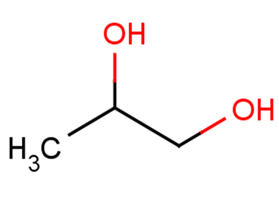
12-Propanediol
CAS No. 57-55-6
12-Propanediol( 12-Dihydroxypropane | Propylene glycol | Methyl ethyl glycol )
Catalog No. M20276 CAS No. 57-55-6
Propylene Glycol is a propanediol that consists of propane where the hydrogens at positions 1 and 2 are substituted by hydroxyl groups AND often used as an excipient in medicines
Purity : >98% (HPLC)
 COA
Datasheet
HNMR
HPLC
MSDS
Handing Instructions
COA
Datasheet
HNMR
HPLC
MSDS
Handing Instructions
| Size | Price / USD | Stock | Quantity |
| 100MG | Get Quote | In Stock |


|
| 200MG | Get Quote | In Stock |
|
| 500MG | Get Quote | In Stock |
|
| 1G | Get Quote | In Stock |
|
Biological Information
-
Product Name12-Propanediol
-
NoteResearch use only, not for human use.
-
Brief DescriptionPropylene Glycol is a propanediol that consists of propane where the hydrogens at positions 1 and 2 are substituted by hydroxyl groups AND often used as an excipient in medicines
-
DescriptionPropylene Glycol is a propanediol that consists of propane where the hydrogens at positions 1 and 2 are substituted by hydroxyl groups AND often used as an excipient in medicines.
-
In Vitro——
-
In Vivo——
-
Synonyms12-Dihydroxypropane | Propylene glycol | Methyl ethyl glycol
-
PathwayOthers
-
TargetOther Targets
-
RecptorOthers
-
Research Area——
-
Indication——
Chemical Information
-
CAS Number57-55-6
-
Formula Weight76.09
-
Molecular FormulaC3H8O2
-
Purity>98% (HPLC)
-
SolubilityIn Vitro:?DMSO : 100 mg/mL (1314.23 mM)
-
SMILESCC(O)CO
-
Chemical Name——
Shipping & Storage Information
-
Storage(-20℃)
-
ShippingWith Ice Pack
-
Stability≥ 2 years
Reference
1.Massarsky A Abdel A Glazer L et al. Neurobehavioral effects of 12-propanediol in zebrafish ( Danio rerio )[J]. NeuroToxicology 2018:S0161813X18300378.
molnova catalog



related products
-
LY303511 hydrochlori...
LY303511 (NV-128)is a potent mTOR inhibitor.
-
DMPS-Na
DMPS-Na is an arsenicolytic agent with toxicity that can be used to study cell membranes.
-
Laurocapram
Laurocapram is a percutaneous enhancer. Upon application to the skin, laurocapram interacts with lipids in the stratum corneum and may enhance the ability of the skin to absorb a hydrophilic chemical.
