


 Cart
Cart
 sales@molnova.com



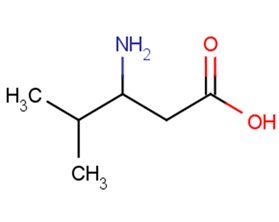
3-Amino-4-methylpentanoic acid
CAS No. 5699-54-7
3-Amino-4-methylpentanoic acid( beta-Leucine | DL-Homovaline | DL-beta-leucine | beta-Aminoisocaproic acid )
Catalog No. M20275 CAS No. 5699-54-7
Beta-leucine is a beta-amino acid that is pentanoic acid substituted at positions 3 and 4 by amino and methyl groups respectively. It has a role as a human metabolite.
Purity : >98% (HPLC)
 COA
Datasheet
HNMR
HPLC
MSDS
Handing Instructions
COA
Datasheet
HNMR
HPLC
MSDS
Handing Instructions
| Size | Price / USD | Stock | Quantity |
| 100MG | 27 | In Stock |


|
| 200MG | Get Quote | In Stock |
|
| 500MG | Get Quote | In Stock |
|
| 1G | Get Quote | In Stock |
|
Biological Information
-
Product Name3-Amino-4-methylpentanoic acid
-
NoteResearch use only, not for human use.
-
Brief DescriptionBeta-leucine is a beta-amino acid that is pentanoic acid substituted at positions 3 and 4 by amino and methyl groups respectively. It has a role as a human metabolite.
-
DescriptionBeta-leucine is a beta-amino acid that is pentanoic acid substituted at positions 3 and 4 by amino and methyl groups respectively. It has a role as a human metabolite.
-
In Vitro——
-
In Vivo——
-
Synonymsbeta-Leucine | DL-Homovaline | DL-beta-leucine | beta-Aminoisocaproic acid
-
PathwayProteasome/Ubiquitin
-
TargetEndogenous Metabolite
-
RecptorHuman Endogenous Metabolite
-
Research Area——
-
Indication——
Chemical Information
-
CAS Number5699-54-7
-
Formula Weight131.18
-
Molecular FormulaC6H13NO2
-
Purity>98% (HPLC)
-
SolubilityDMSO:10 mM
-
SMILESCC(C)C(N)CC(O)=O
-
Chemical Name——
Shipping & Storage Information
-
Storage(-20℃)
-
ShippingWith Ice Pack
-
Stability≥ 2 years
Reference
molnova catalog



related products
-
L-Leucine-1-13C
L-Leucine-1-13C (L-Leucine-13C) is a 13C-labeled L-Leucine that significantly enhances the affinity of GLP-4.
-
Indole-3-carboxylic ...
Indole-3-carboxylic acid is a normal urinary indolic tryptophan metabolite .
-
Dinoprost
Dinoprost is a naturally occurring prostaglandin. It is used in medicine to induce labor and as an abortifacient.
