


 Cart
Cart
 sales@molnova.com



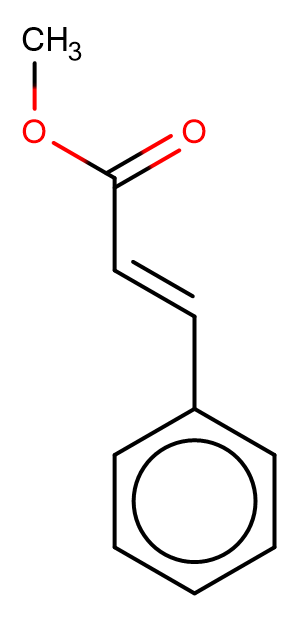
Methyl cinnamate
CAS No. 103-26-4
Methyl cinnamate( —— )
Catalog No. M20228 CAS No. 103-26-4
Methyl cinnamate a tyrosinase inhibitor and a flavoring compound has antimicrobial antiadipogenic vasorelaxant and anti-inflammatory effects.
Purity : >98% (HPLC)
 COA
Datasheet
HNMR
HPLC
MSDS
Handing Instructions
COA
Datasheet
HNMR
HPLC
MSDS
Handing Instructions
| Size | Price / USD | Stock | Quantity |
| 1 mL x 10 mM in DMSO | 28 | In Stock |


|
| 100MG | Get Quote | In Stock |
|
| 200MG | Get Quote | In Stock |
|
| 500MG | 38 | In Stock |
|
| 1G | Get Quote | In Stock |
|
Biological Information
-
Product NameMethyl cinnamate
-
NoteResearch use only, not for human use.
-
Brief DescriptionMethyl cinnamate a tyrosinase inhibitor and a flavoring compound has antimicrobial antiadipogenic vasorelaxant and anti-inflammatory effects.
-
DescriptionMethyl cinnamate a tyrosinase inhibitor and a flavoring compound has antimicrobial antiadipogenic vasorelaxant and anti-inflammatory effects.(In Vitro):In 3T3-L1 cell model, Methyl cinnamate (Methyl 3-phenylpropenoate) inhibits adipocyte differentiation by attenuating expression of the adipogenic transcription factors SREBP-1, PPARγ, and C/EBPα and the transcriptional activity of PPARγ. In addition, Methyl cinnamate (Methyl 3-phenylpropenoate) activates the CaMKK2 AMPK signaling cascade involved in the regulation of adipogenesis.
-
In VitroIn 3T3-L1 cell model, Methyl cinnamate (Methyl 3-phenylpropenoate) inhibits adipocyte differentiation by attenuating expression of the adipogenic transcription factors SREBP-1, PPARγ, and C/EBPα and the transcriptional activity of PPARγ. In addition, Methyl cinnamate (Methyl 3-phenylpropenoate) activates the CaMKK2?AMPK signaling cascade involved in the regulation of adipogenesis.
-
In Vivo——
-
Synonyms——
-
PathwayProteasome/Ubiquitin
-
TargetTyrosinase
-
RecptorTyrosinase
-
Research Area——
-
Indication——
Chemical Information
-
CAS Number103-26-4
-
Formula Weight162.19
-
Molecular FormulaC10H10O2
-
Purity>98% (HPLC)
-
SolubilityDMSO: 30 mg/mL (184.97 mM);Water: Insoluble
-
SMILESCOC(=O)\C=C\c1ccccc1
-
Chemical Name——
Shipping & Storage Information
-
Storage(-20℃)
-
ShippingWith Ice Pack
-
Stability≥ 2 years
Reference
1.Vasconcelos-Silva AA et al. Vasorelaxation induced by methyl cinnamate the major constituent of the essential oil of Ocimum micranthum in rat isolated aorta. Clin Exp Pharmacol Physiol. 2014 Oct;41(10):755-62.
molnova catalog



related products
-
2-(4-(4-methoxybenzy...
Detail unknown.
-
(±)-Taxifolin
(±)-Taxifolin ((±)-Dihydroquercetin) is the racemate of Taxifolin, a flavonoid with anti-tyrosinase and anti-fibrotic activity, commonly found in onion, silymarin, French maritime pine bark, and Douglas fir bark. It inhibits collagenase with an IC50 value of 193.3 μM and acts as a free radical scavenger with antioxidant capacity.
-
Aloesin
Aloesin is a C-glycosylated chromone compound found in aloe (Liliaceae) that inhibits tyrosinase (IC50 = 0.9 mM) an enzyme responsible for catalyzing the first step of the conversion of tyrosine to melanin.
