


 Cart
 sales@molnova.com




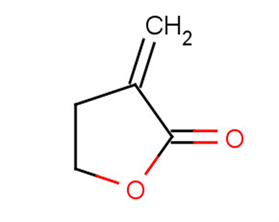
Tulipalin A
CAS No. 547-65-9
Tulipalin A( 2-Methylenebutyrolactone | α-methylene-γ-butyrolactone )
Catalog No. M20080 CAS No. 547-65-9
Tulipalin A (2-Methylenebutyrolactone) which has some phytotoxicity is a natural compound extracted from Tulipa gesneriana.
Purity : >98% (HPLC)
 COA
Datasheet
HNMR
HPLC
MSDS
Handing Instructions
| Size | Price / USD | Stock | Quantity |
| 1 mL x 10 mM in DMSO | 28 | In Stock |


|
| 100MG | Get Quote | In Stock |
|
| 200MG | Get Quote | In Stock |
|
| 500MG | Get Quote | In Stock |
|
| 1G | 35 | In Stock |
|
Biological Information
-
Product NameTulipalin A
-
NoteResearch use only, not for human use.
-
Brief DescriptionTulipalin A (2-Methylenebutyrolactone) which has some phytotoxicity is a natural compound extracted from Tulipa gesneriana.
-
DescriptionTulipalin A (2-Methylenebutyrolactone) which has some phytotoxicity is a natural compound extracted from Tulipa gesneriana.
-
In Vitro——
-
In Vivo——
-
Synonyms2-Methylenebutyrolactone | α-methylene-γ-butyrolactone
-
PathwayOthers
-
TargetOther Targets
-
RecptorOthers
-
Research Area——
-
Indication——
Chemical Information
-
CAS Number547-65-9
-
Formula Weight98.1
-
Molecular FormulaC5H6O2
-
Purity>98% (HPLC)
-
SolubilityDMSO:10 mM
-
SMILESC=C1CCOC1=O
-
Chemical Name——
Shipping & Storage Information
-
Storage(-20℃)
-
ShippingWith Ice Pack
-
Stability≥ 2 years
Reference
1.McCluskey J et al. Tulipalin A induced phytotoxicity. Int J Crit Illn Inj Sci. 2014 Apr;4(2):181-3.
molnova catalog



related products
-
Ziconotide TFA (1074...
Ziconotide TEA acts by binding to N-type calcium channels situated on the terminal part of primary afferent neurons of the nociceptive pathway therefore reducing synaptic transmission with potent antinociceptive effects.
-
Cyclo(Tyr-Gly)
Cyclo(Tyr-Gly) is a natural product for research related to life sciences.
-
8-Epideoxyloganic ac...
8-Epideoxyloganic acid possesses bioactivities of analgesia, homeostasis and anti-inflammatory. It has the potential to serve as anti-inflammatory agents during oxidative stress, the inhibition of ROS production, possibly through modulation of NOX activity and/or the radical scavenging effect, and beta2 integrin expression in leucocytes.
