


 Cart
Cart
 sales@molnova.com



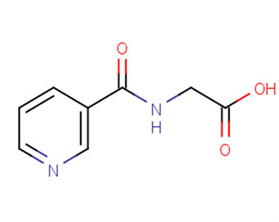
Nicotinuric acid
CAS No. 583-08-4
Nicotinuric acid( —— )
Catalog No. M20058 CAS No. 583-08-4
Nicotinuric acid is an acyl glycine which is normally minor metabolites of fatty acids. Acyl glycines are produced through the action of glycine N-acyltransferase.
Purity : >98% (HPLC)
 COA
Datasheet
HNMR
HPLC
MSDS
Handing Instructions
COA
Datasheet
HNMR
HPLC
MSDS
Handing Instructions
| Size | Price / USD | Stock | Quantity |
| 1 mL x 10 mM in DMSO | 29 | In Stock |


|
| 100MG | Get Quote | In Stock |
|
| 200MG | Get Quote | In Stock |
|
| 500MG | 27 | In Stock |
|
| 1G | 46 | In Stock |
|
Biological Information
-
Product NameNicotinuric acid
-
NoteResearch use only, not for human use.
-
Brief DescriptionNicotinuric acid is an acyl glycine which is normally minor metabolites of fatty acids. Acyl glycines are produced through the action of glycine N-acyltransferase.
-
DescriptionNicotinuric acid is an acyl glycine which is normally minor metabolites of fatty acids. Acyl glycines are produced through the action of glycine N-acyltransferase.
-
In Vitro——
-
In Vivo——
-
Synonyms——
-
PathwayOthers
-
TargetOther Targets
-
RecptorOthers
-
Research Area——
-
Indication——
Chemical Information
-
CAS Number583-08-4
-
Formula Weight180.16
-
Molecular FormulaC8H8N2O3
-
Purity>98% (HPLC)
-
SolubilityDMSO:10 mM
-
SMILESOC(=O)CNC(=O)c1cccnc1
-
Chemical Name——
Shipping & Storage Information
-
Storage(-20℃)
-
ShippingWith Ice Pack
-
Stability≥ 2 years
Reference
1.Figge HL et al. Comparison of excretion of nicotinuric acid after ingestion of two controlled release nicotinic acid preparations in man. J Clin Pharmacol. 1988 Dec;28(12):1136-40.
molnova catalog



related products
-
Justicidinoside C
The herbs of Phyllanthus piscatorum.
-
Vincamine
Vincamine is a peripheral vasodilator, that increases blood flow to the brain.
-
TDRL-551
TDRL-551 is a novel and potent replication protein A (RPA) inhibitor (IC50=18 μM) with potential anticancer activity.
