


 Cart
Cart
 sales@molnova.com



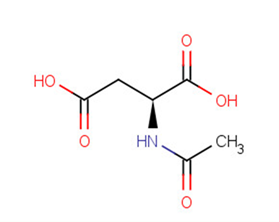
N-Acetyl-L-aspartic acid
CAS No. 997-55-7
N-Acetyl-L-aspartic acid( AC-ASP-OH | N-Acetylaspartic acid )
Catalog No. M19988 CAS No. 997-55-7
N-Acetylaspartic acid is a derivative of aspartic acid. It is the second most concentrated molecule in the brain after the amino acid glutamate. It is synthesized in neurons from the amino acid aspartate and acetyl coenzyme A (acetyl CoA).
Purity : >98% (HPLC)
 COA
Datasheet
HNMR
HPLC
MSDS
Handing Instructions
COA
Datasheet
HNMR
HPLC
MSDS
Handing Instructions
| Size | Price / USD | Stock | Quantity |
| 1 mL x 10 mM in DMSO | 33 | In Stock |


|
| 100MG | 29 | In Stock |
|
| 200MG | Get Quote | In Stock |
|
| 500MG | Get Quote | In Stock |
|
| 1G | Get Quote | In Stock |
|
Biological Information
-
Product NameN-Acetyl-L-aspartic acid
-
NoteResearch use only, not for human use.
-
Brief DescriptionN-Acetylaspartic acid is a derivative of aspartic acid. It is the second most concentrated molecule in the brain after the amino acid glutamate. It is synthesized in neurons from the amino acid aspartate and acetyl coenzyme A (acetyl CoA).
-
DescriptionN-Acetylaspartic acid is a derivative of aspartic acid. It is the second most concentrated molecule in the brain after the amino acid glutamate. It is synthesized in neurons from the amino acid aspartate and acetyl coenzyme A (acetyl CoA). The various functions served by N-acetylaspartic acid are still under investigation but the primary proposed functions include (1) acting as a neuronal osmolyte that is involved in fluid balance in the brain (2) serving as a source of acetate for lipid and myelin synthesis in oligodendrocytes (the glial cells that myelinate neuronal axons) (3) serving as a precursor for the synthesis of the important dipeptide neurotransmitter N-acetylaspartylglutamate (NAAG) and (4) playing a potential role in energy production from the amino acid glutamate in neuronal mitochondria.
-
In Vitro——
-
In Vivo——
-
SynonymsAC-ASP-OH | N-Acetylaspartic acid
-
PathwayOthers
-
TargetOther Targets
-
RecptorOthers
-
Research Area——
-
Indication——
Chemical Information
-
CAS Number997-55-7
-
Formula Weight175.14
-
Molecular FormulaC6H9NO5
-
Purity>98% (HPLC)
-
SolubilityDMSO:10 mM
-
SMILESCC(=O)N[C@@H](CC(O)=O)C(O)=O
-
Chemical Name——
Shipping & Storage Information
-
Storage(-20℃)
-
ShippingWith Ice Pack
-
Stability≥ 2 years
Reference
1.Sreekumar A et al. Metabolomic profiles delineate potential role for sarcosine in prostate cancer progression. Nature. 2009 Feb 12;457(7231):910-4.
molnova catalog



related products
-
DAAO inhibitor-1
DAAO inhibitor-1 is a potent D-amino acid oxidase (DAAO) inhibitor (IC50: 0.12 μM).
-
Dehydrodiconiferyl a...
Dehydrodiconiferyl alcohol (DHCA) is a lignan isolated from calabash that inhibits osteoclast differentiation and oophorectomy induced bone loss by acting as an estrogen receptor agonist.
-
XL413 (hydrochloride...
XL413 inhibits the growth of MDA-MB-231T and COLO 205 cells (IC50s = 118 and 140 nM, respectively) and reduces tumor growth in a COLO 205 mouse xenograft model.
