


 Cart
Cart
 sales@molnova.com



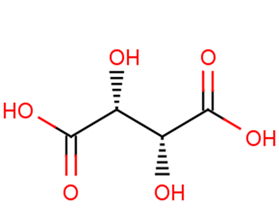
L(+)-Tartaric acid
CAS No. 87-69-4
L(+)-Tartaric acid( (2R3R)-(+)-Tartaric acid )
Catalog No. M19866 CAS No. 87-69-4
Tartaric acid occurs naturally in many plants particularly grapes and tamarinds and is one of the main acids found in wine. It is used as an antioxidant. Salts of tartaric acid are known as tartrates.
Purity : >98% (HPLC)
 COA
Datasheet
HNMR
HPLC
MSDS
Handing Instructions
COA
Datasheet
HNMR
HPLC
MSDS
Handing Instructions
| Size | Price / USD | Stock | Quantity |
| 1 mL x 10 mM in DMSO | 29 | In Stock |


|
| 100MG | Get Quote | In Stock |
|
| 200MG | 28 | In Stock |
|
| 500MG | 39 | In Stock |
|
| 1G | 54 | In Stock |
|
Biological Information
-
Product NameL(+)-Tartaric acid
-
NoteResearch use only, not for human use.
-
Brief DescriptionTartaric acid occurs naturally in many plants particularly grapes and tamarinds and is one of the main acids found in wine. It is used as an antioxidant. Salts of tartaric acid are known as tartrates.
-
DescriptionTartaric acid occurs naturally in many plants particularly grapes and tamarinds and is one of the main acids found in wine. It is used as an antioxidant. Salts of tartaric acid are known as tartrates. Tartaric acid is a muscle toxin which works by inhibiting the production of malic acid and in high doses causes paralysis and death.
-
In Vitro——
-
In VivoAnimal Model:Hypertensive Wistar rat model Dosage:80 mg/kg, 240 mg/kgA dministration:Oral gavage (p.o.); Single dose. After L-NAME treatment (60.mg/kg; p.o.)Result:Reduced systolic blood pressure (SABP) and mild blood pressure (mid-BP) in rats at a dose of 240mg/kg, but had no effect on mean artery pressure, diastolic blood pressure, pulse pressure level, and heart rate.
-
Synonyms(2R3R)-(+)-Tartaric acid
-
PathwayOthers
-
TargetAntioxidant
-
RecptorAntioxidant
-
Research AreaMetabolic Disease
-
IndicationGastric acidityheartburn
Chemical Information
-
CAS Number87-69-4
-
Formula Weight150.09
-
Molecular FormulaC4H6O6
-
Purity>98% (HPLC)
-
SolubilityDMSO:200 mM
-
SMILESO[C@H]([C@@H](O)C(O)=O)C(O)=O
-
Chemical Name(2R3R)-23-dihydroxysuccinic acid
Shipping & Storage Information
-
Storage(-20℃)
-
ShippingWith Ice Pack
-
Stability≥ 2 years
Reference
1.Regueiro J et al. Urinary tartaric acid as a potential biomarker for the dietary assessment of moderate wine consumption: a randomised controlled trial. Br J Nutr. 2014 May;111(9):1680-5.
molnova catalog



related products
-
Homobutein
Homobutein is a dual inhibitor of HDACs and NF-κB with IC50s of 190 and 38 μM. Homobutein is an iron chelator with anticancer, anti-inflammatory, antiparasite, and antioxidation activities.
-
GB 1a
GB 1a is a natural product isolated from the leaves of Garcinia travancorica.
-
Valencene
Valencene (NSC-148969) is a sesquiterpenoid isolated from Cyperus rotundus and is an aroma component of citrus fruits and citrus-derived odors.ValenceneValencene has anti-allergic, anti-inflammatory, anti-melanogenic, and antioxidant activities.
