


 Cart
Cart
 sales@molnova.com



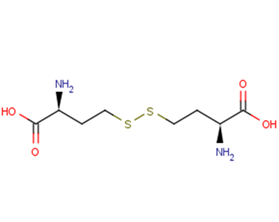
L-Homocystine
CAS No. 626-72-2
L-Homocystine( —— )
Catalog No. M19719 CAS No. 626-72-2
Homocystine is the double-bonded form of homocysteine but it occurs only transiently before being converted to the harmless cystathionine via a vitamin B6-dependent enzyme. Increasing evidence supports a role for an elevation of homocysteine in schizophrenia.
Purity : >98% (HPLC)
 COA
Datasheet
HNMR
HPLC
MSDS
Handing Instructions
COA
Datasheet
HNMR
HPLC
MSDS
Handing Instructions
| Size | Price / USD | Stock | Quantity |
| 100MG | Get Quote | In Stock |


|
| 200MG | 32 | In Stock |
|
| 500MG | 56 | In Stock |
|
| 1G | 79 | In Stock |
|
Biological Information
-
Product NameL-Homocystine
-
NoteResearch use only, not for human use.
-
Brief DescriptionHomocystine is the double-bonded form of homocysteine but it occurs only transiently before being converted to the harmless cystathionine via a vitamin B6-dependent enzyme. Increasing evidence supports a role for an elevation of homocysteine in schizophrenia.
-
DescriptionHomocystine is the double-bonded form of homocysteine but it occurs only transiently before being converted to the harmless cystathionine via a vitamin B6-dependent enzyme. Increasing evidence supports a role for an elevation of homocysteine in schizophrenia. It has been demonstrated that neural tube defects are related to a genetic defect in homocysteine metabolism. Sufficient intake of folic acid is believed to reduce this risk by enhancing methylation of homocysteine and its conversion to methionine thereby compensating for this genetic defect (homocystinuria). Plasma homocysteine levels are elevated when folate levels are in the lower half of the normal range.
-
In Vitro——
-
In VivoA single or multiple doses of L-Homocystine administered to mice during organogenesis can aggravate the developmental disturbances caused by a single dose of VPA administered on GD 8. Whereas, VPA lowers significantly plasma FA and vitamin B12 concentrations, it has no direct impact on the homocysteine concentrations. Therefore, it is proposed that high levels of homocysteine disturb the FA, vitamin B12, and possibly methionine metabolism thus providing a favorable situation for VPA to interfere with the development of susceptible embryos.
-
Synonyms——
-
PathwayProteasome/Ubiquitin
-
TargetEndogenous Metabolite
-
RecptorHuman Endogenous Metabolite
-
Research Area——
-
Indication——
Chemical Information
-
CAS Number626-72-2
-
Formula Weight268.35
-
Molecular FormulaC8H16N2O4S2
-
Purity>98% (HPLC)
-
SolubilityDMSO: 1 mg/mL (3.73 mM; ultrasonic and adjust pH to 5 with HCl); H2O: 1 mg/mL (3.73 mM; ultrasonic and adjust pH to 2 with HCl)
-
SMILESN[C@@H](CCSSCC[C@H](N)C(O)=O)C(O)=O
-
Chemical Name——
Shipping & Storage Information
-
Storage(-20℃)
-
ShippingWith Ice Pack
-
Stability≥ 2 years
Reference
1.Carson N A J Dent C E Field C M B et al. Homocystinuria: Clinical and pathological review of ten cases[J]. Journal of Pediatrics 1965 66(3).
molnova catalog



related products
-
Dinoprost
Dinoprost is a naturally occurring prostaglandin. It is used in medicine to induce labor and as an abortifacient.
-
1-Methylhistamine di...
1-Methylhistamine dihydrochloride is a major metabolite of histamine by histamine N-methyltransferase in the pathway of histidine metabolism.?It has been used as a biomarker of histaminergic system activity in the brains of Alzheimer's disease patients as well as those with hypersomnia and other neurological conditions.
-
C2 Dihydro Ceramide ...
C2 Dihydro Ceramide (d18:0/2:0) (C2 Dihydroceramide) is a short-chain ceramide that is a precursor of ceramide synthesis and stimulates ABCA1-mediated cholesterol efflux.
