


 Cart
Cart
 sales@molnova.com



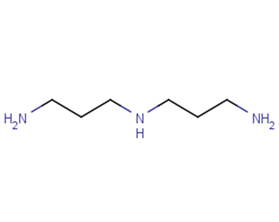
Bis(3-aminopropyl)amine
CAS No. 56-18-8
Bis(3-aminopropyl)amine( Dipropylenetriamine | Norspermidine )
Catalog No. M19708 CAS No. 56-18-8
Bis(3-aminopropyl)amine is a structural homologue of the natural polyamine spermidine with antitumor activity that may make it useful as a antineoplastic agent.
Purity : >98% (HPLC)
 COA
Datasheet
HNMR
HPLC
MSDS
Handing Instructions
COA
Datasheet
HNMR
HPLC
MSDS
Handing Instructions
| Size | Price / USD | Stock | Quantity |
| 100MG | Get Quote | Get Quote |


|
| 200MG | Get Quote | Get Quote |
|
| 500MG | Get Quote | Get Quote |
|
| 1G | Get Quote | Get Quote |
|
Biological Information
-
Product NameBis(3-aminopropyl)amine
-
NoteResearch use only, not for human use.
-
Brief DescriptionBis(3-aminopropyl)amine is a structural homologue of the natural polyamine spermidine with antitumor activity that may make it useful as a antineoplastic agent.
-
DescriptionBis(3-aminopropyl)amine is a structural homologue of the natural polyamine spermidine with antitumor activity that may make it useful as a antineoplastic agent.
-
In Vitro——
-
In Vivo——
-
SynonymsDipropylenetriamine | Norspermidine
-
PathwayOthers
-
TargetOther Targets
-
RecptorOthers
-
Research Area——
-
Indication——
Chemical Information
-
CAS Number56-18-8
-
Formula Weight131.22
-
Molecular FormulaC6H17N3
-
Purity>98% (HPLC)
-
SolubilityDMSO:10 mM
-
SMILESNCCCNCCCN
-
Chemical Name——
Shipping & Storage Information
-
Storage(-20℃)
-
ShippingWith Ice Pack
-
Stability≥ 2 years
Reference
1.Prakash N. et al.: Anticancer Res. 8 563 (1988)
molnova catalog



related products
-
[Ser25] - PKC (19 - ...
[Ser25] - PKC (19 - 31), biotinylated
-
Sacituzumab
Sacituzumab is a humanized IgG1 monoclonal antibody utilized in the synthesis of antibody-active small-molecule couplings (naked antibody to Sacituzumab govitecan).
-
Lapathoside A
Lapathoside A and vanicoside B, inhibited the promotion stages on two-stage carcinogenesis induced by TPA.
